Cables,
interconnects and power chords
Copyright 2020 © Troels Gravesen
Interconnects Tonearm cable Speaker cables
Cables and interconnects are highly controversial subjects and easily end up in a stew of religion and science. I recall someone mailing me about his speaker cables first reaching full potential after 300 hours of burn-in. This is way after I have left the party! Trying out new cables I always go back after a couple of weeks to my former cables to hear if I miss something. What I've had to realise over time is that I have discarded cables and interconnects due to my system not being good enough for revealing its qualities and trying the same thing at a later stage all of a sudden became an improvement in level of transparency, because level of transparency is usually what we're after.
The cables and interconnects seen below is what I use for the time being. This is in no way a recommendation and you may find alternatives that better suit your taste, but I have found these to be a good compromise between cost and performance. In fact cables made from these components will cost you a fraction of some ready-made "super" cables.
I do believe there are differences between cables and interconnects, but we need good gear to hear the difference between two interconnects going from e.g. your preamp to the power amp. Maybe we have severe bottlenecks somewhere else in our system that just doesn't allow us hearing so. There's always the risk that a smooth and easy-on-the-ear cable in fact covers deficiencies in the overall chain of components. If the cable is edgy and aggressive, maybe it's because your system is so and the cable is only a bit more "hifi".
For speaker cable and speaker internal cabling I use PTFE insulated silver plated copper. I know you can find people stating these are rubbish and you need this or that, but there's no other way than try it out for yourself. Long ago someone brought in an interconnect made from pure silver (cotton sleeve) and we hooking this up between CD-player and preamp and it convinced me this was the way to go. So, I bought 0.4 mm pure silver wire and Teflon tubes and changed all interconnects in my system to these. I strongly believe this was for the better.
Some supplier links are shown, but please do not ask for links to suppliers of all the components used below because I haven't kept them. Use google, eBay and the usual suppliers of hifi paraphernalia, e.g. http://www.hificollective.co.uk/components/wire.html. Many of the things you can buy at e.g. hificollective you can find cheaper on eBay, but it takes time to find the dealers and I have to say I'm amazed from what hificollective has managed to put together over the years; quite a range of products. Highly recommended, fast delivery.
Interconnects rca-to-rca
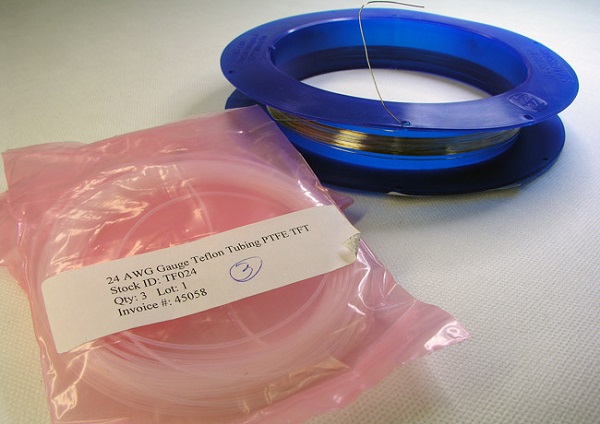
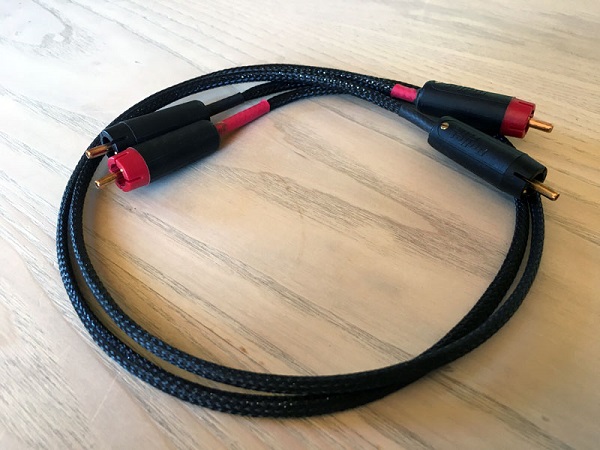
Left: 0.4 mm silver wire and 24 AWG teflon tubing. The silver wire here is oxidised and needs polishing before use. Right: Finalised interconnects shielded with alu foil and protected by expandable polyester sleeve. Others would use cotton sleeves. I like these Eichmann Bullet plugs.
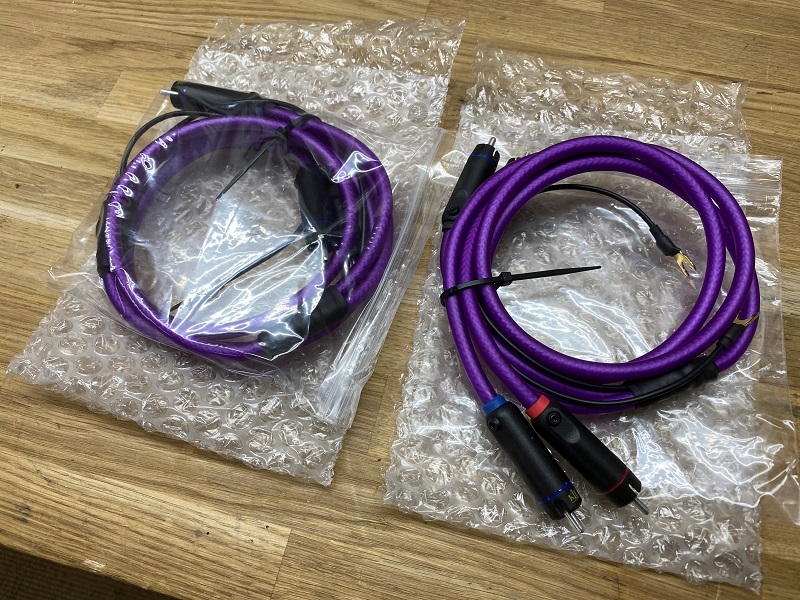
Lately I have bought rca-to-rca, pure silver, Eichmann Bullet plugs from the same guy that makes the tonearm cable. Only thing I can say: Job done!
Balanced interconnects
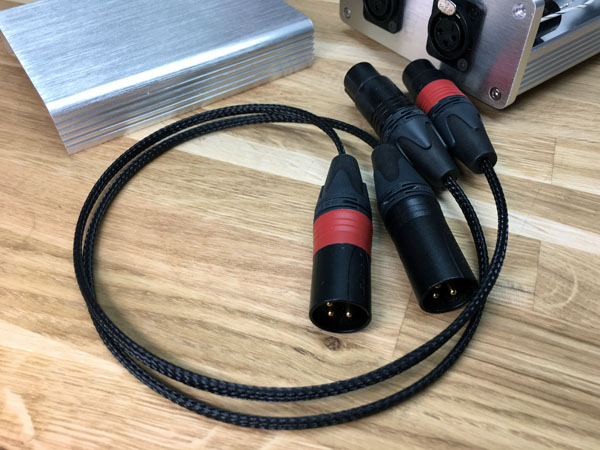
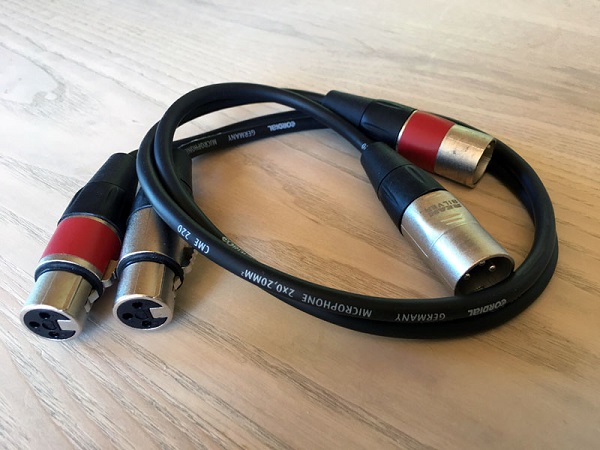
Left: For connecting Hypex modules to my preamplifier, I use standard microphone cables and XLR plugs. Red tape to mark right channel. For connecting my EAR-861 power amps to my EAR-912 pre-amp I use balanced silver cables. 0.4 mm solid silver wire.
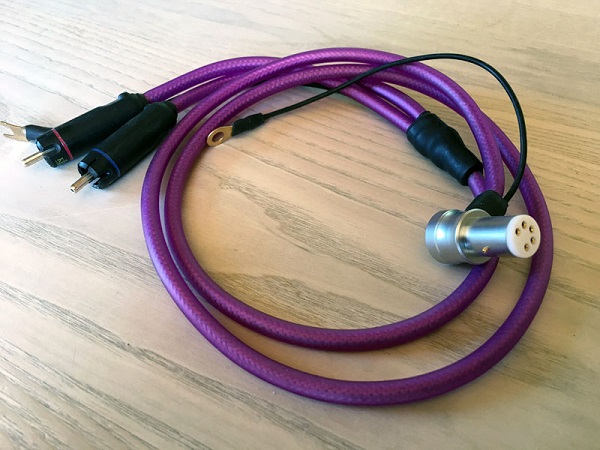
For my turntable I used to make my own cables, but I found these on eBay, made by a guy in Aberystwyth, Wales, and the price was right. Pure silver wires and really nice work. 131 £. I once stayed in Aberystwyth for a night on a Wales holiday week. I love this town and I like these cables just as much.

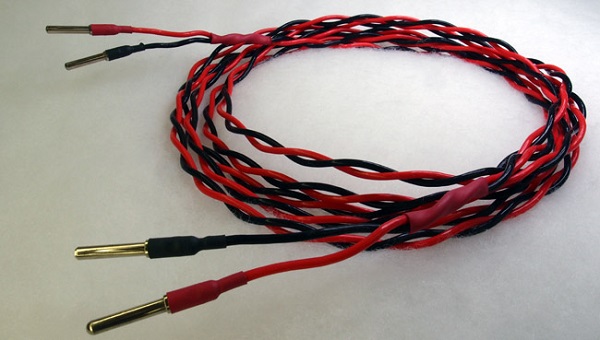
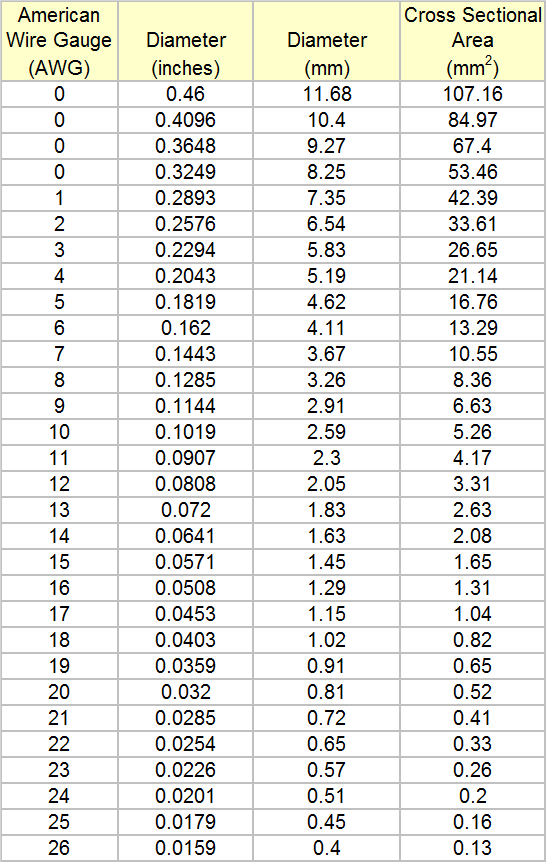
Left: Twisted 2 x 16AWG silver plated copper in PTFE insulation used for
main speaker cables. Available as a kit from Jantzen Audio (page 4):
http://www.jantzen-audio.com/wp-content/uploads/2018/12/Cable-Catalogue.pdf
Right: Sometimes for bass driver/bi-amping if really long: 13 AWG silver plated copper
in PTFE sleeve.
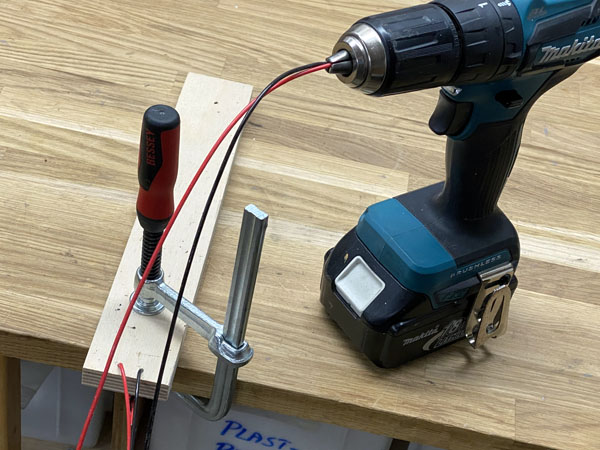
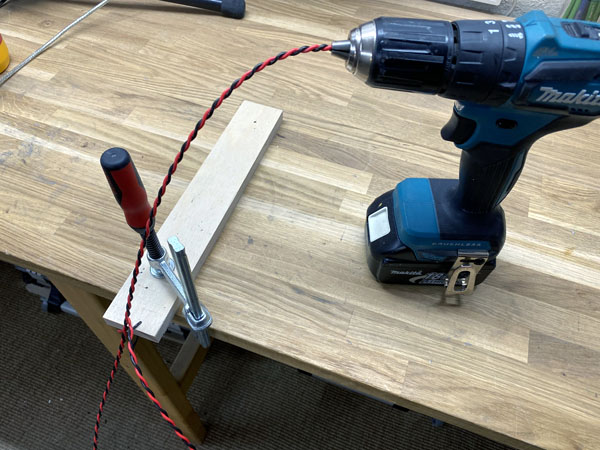
Fasten end of wires to table and stretch wires to be exactly the same length. Insert into power drill, stretch and twist wires until they make a firm twisted wire.
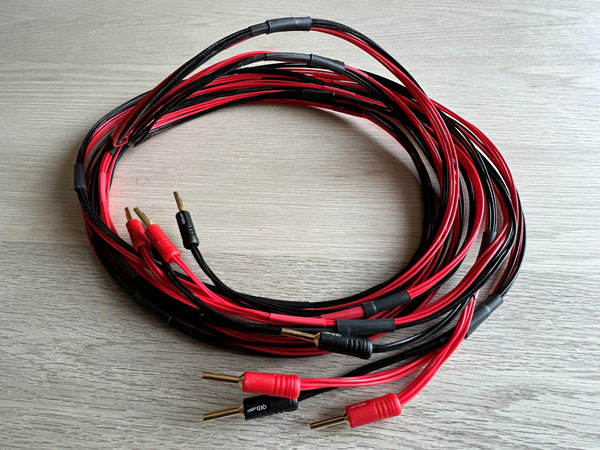
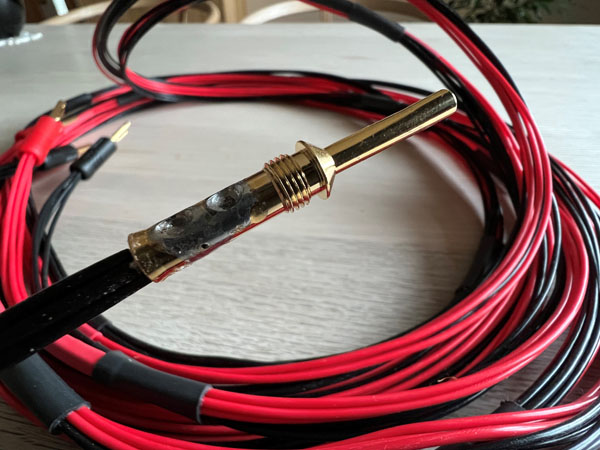
2022: Have made a new pair of speaker cables.
4 strands of 1.3 mm^2 (16 AWG) and I used some really good and rugged QED banana
plugs. And I didn't use the screws, rather some decent solder.
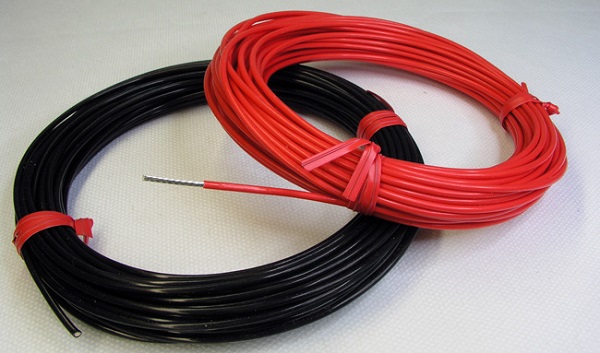
For
all internal cabling I use Jantzen Audio 16 AWG silver
plated copper with PTFE insulation.
If you don't believe 16 AWG is enough for ½ meter from the binding
post to the bass driver, double it. It won't do you any good, but I
can't change beliefs.
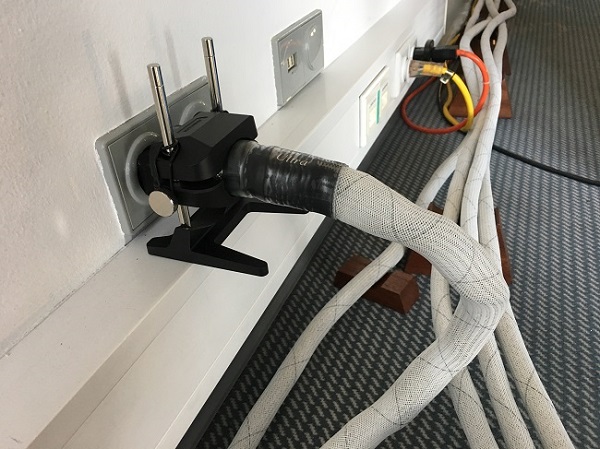
I found this in Munich at the High End show and I find it ridiculous. Behind the wall most likely standard 1.5 sqmm installation cables - and then this monster. I don't say it doesn't work - but if it does, it works as a filter. I've never heard fancy power cords to improve my system, but I'm open for suggestions - - -
Late 2019: So, I finally pulled myself together and did something about
the power supply to my two systems. From a special group in our power
inlet box I pulled a 3 x 2.5 mm^2 wire to the workshop system and living
room system. This time with ground connection via an "earth spear". I
believe the English terms is "earth electrode". Down at the basement we
have a copper spear plunged a couple of meters into the the ground,
providing proper ground connection. Ground connections are not that
common in Denmark, mostly only for the disc washer and washer. From new
regulations it is required that all appliances having a ground wire -
should be connected to ground. This is far from standard in Danish
homes. Today a lot of appliances come with a standard Schuko plug - and
should connected to ground, but they are not, because very few have
Schuko sockets as standard in their homes.
Problem is that very few people die - if any - from not having our
household appliances fully grounded.
Normally you would have the pre-amplifier grounded and all associated
equipment not grounded as the other appliances will get ground
connection from the interconnects.
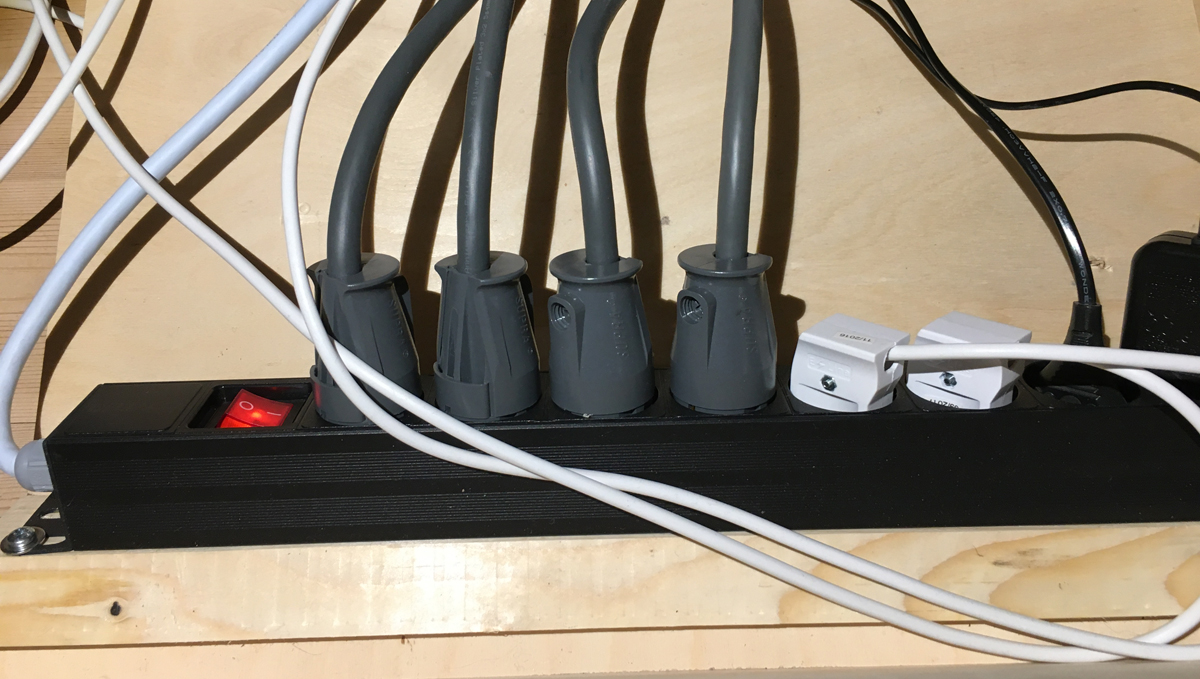
I like these Schuko plugs and
sockets and bought two power lines with Schuko sockets and I replaced
the standard wire with shielded 3 x 2.5 sqmm wire.


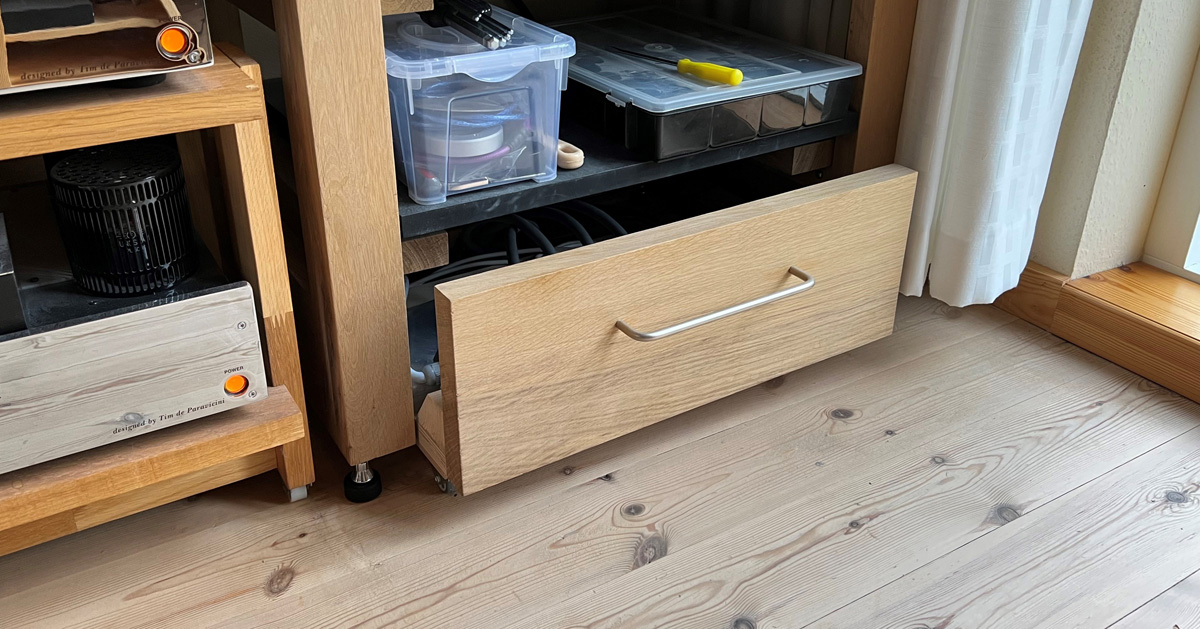
Cables in my cable drawer below the rack.
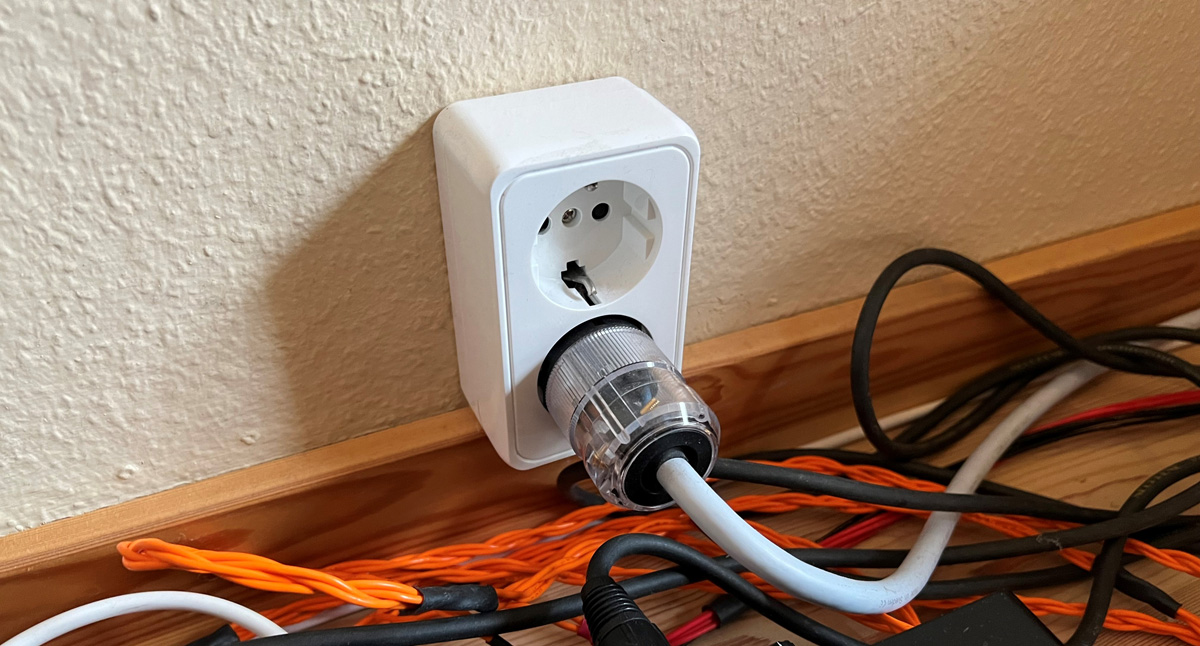
The new power line with
Now - for the first time - my hifi appliances are grounded and did it all help? It did. In particular in the treble range. Less smear, more smoothness and transparency. I'm not done with this - and I would like to borrow a true power conditioner like the P S Audio Regenerator and hear what it does. Damn... they're expensive. If it works, I'll buy one.