|
INTRO
Half through cabinet
construction
I asked my wife to come to the workshop and take a
look. "OK...high WAF!" - she said. Thank you dear, this was
exactly what I wanted you to say. So, high-WAF we go, although I'm sure
opinions will be divided anyway. For some people bare wood is a no-no.
Must be spray paint at least to match modern interior decor.
The "six plus
one"
is hugely popular for many good reasons. Two drivers, a
fairly simple crossover, simple cabinet work and usually high-WAF due
to small footprint. The latter really depends on overall fit'n finish.
A friend of mine recently visited the local HiFi-Klubben and was told
that floor-standers were demonstrated only once a week (!) and most likely it
would be the lady of the house having the final word in which
loudspeaker was purchased. Highest score had small "5+1" or
"6+1" stand-mounts - and they had to be white. High-gloss
white! Now, if it must be a stand-mount, take a look at the Illuminator
Monitor. If WAF is favorable, you may try out this modest
"6+1" having a larger cabinet and eventually will not
take more floor space than a stand-mount. I know this doesn't
count much in WAF terms, but you may give it a shot. Men have to do
something to bring back big loudspeakers to our homes!
I recently had a few questions on
the SP44 and the writer told that his wife thought the facetted front
panels were bad! Now, I hadn't seen that one coming. Please take a
look at Rawin's/Thailand SP44 here.
I think these cabs and front panels are beautiful, but taste cannot be
argued - although we do all the time.
Nothing prevents us
from making the best of midrange and treble from a two-way
floor-stander. It can even be made to produce some decent bass
although don't expect anything near a 15" bass driver and please don't
think feeding a 6" driver 300 watts will make it into a
15" driver, it doesn't work that way. For most people hifi is not
about recreating a live event in their living room, rather having
decent gear giving us an illusion of a live event. I mean,
most music today is enjoyed from MP3 files through iPod ear-plugs
anyway!
For bass
I have
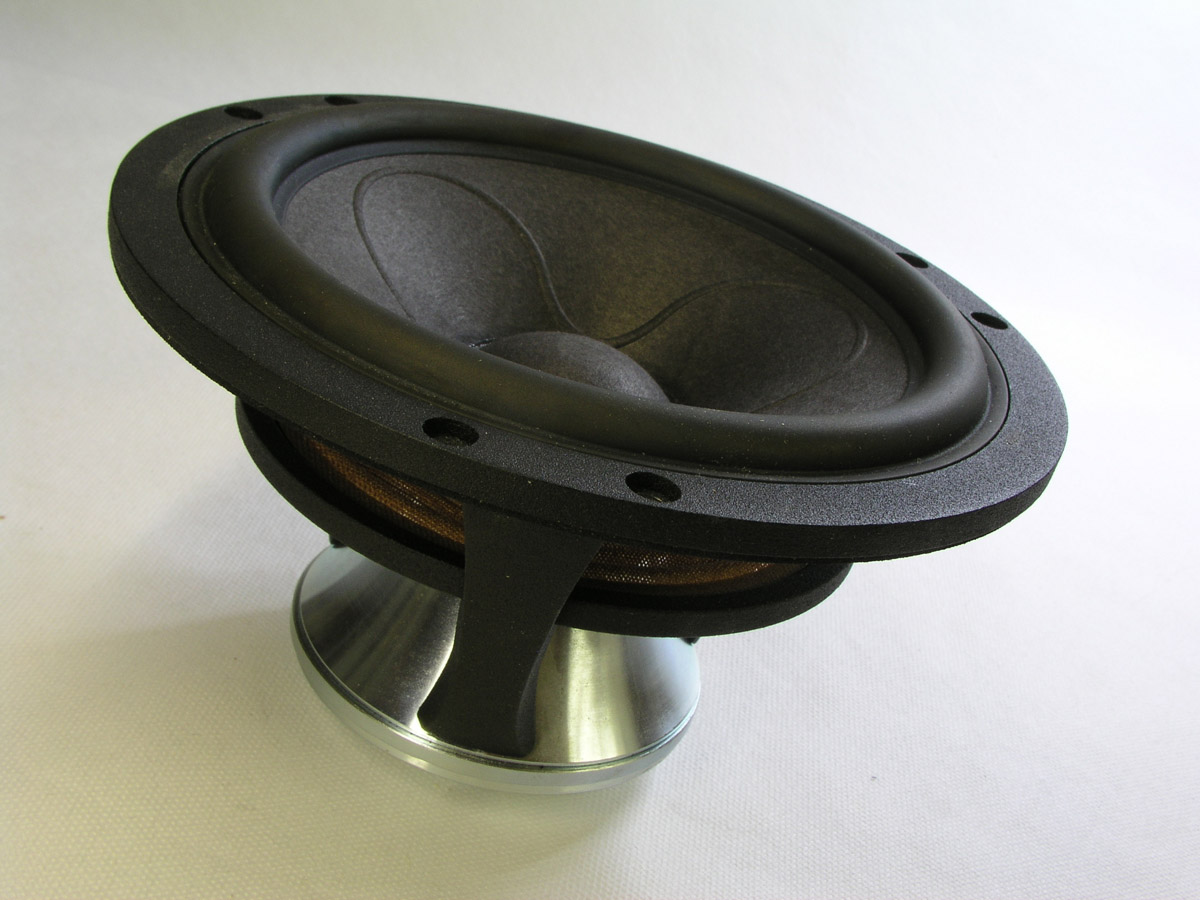
chosen the 4 ohms version of the 18WU range. 4 ohms voice coil makes a
more responsive driver for the same gain setting of your line stage by
drawing more current from your amplifier, but no decent solid state
amp will have trouble driving this speaker because it can't play
immensely loud anyway. 50-100 good solid state watts will do and my 80
wpc Jungson amps just love this speaker.
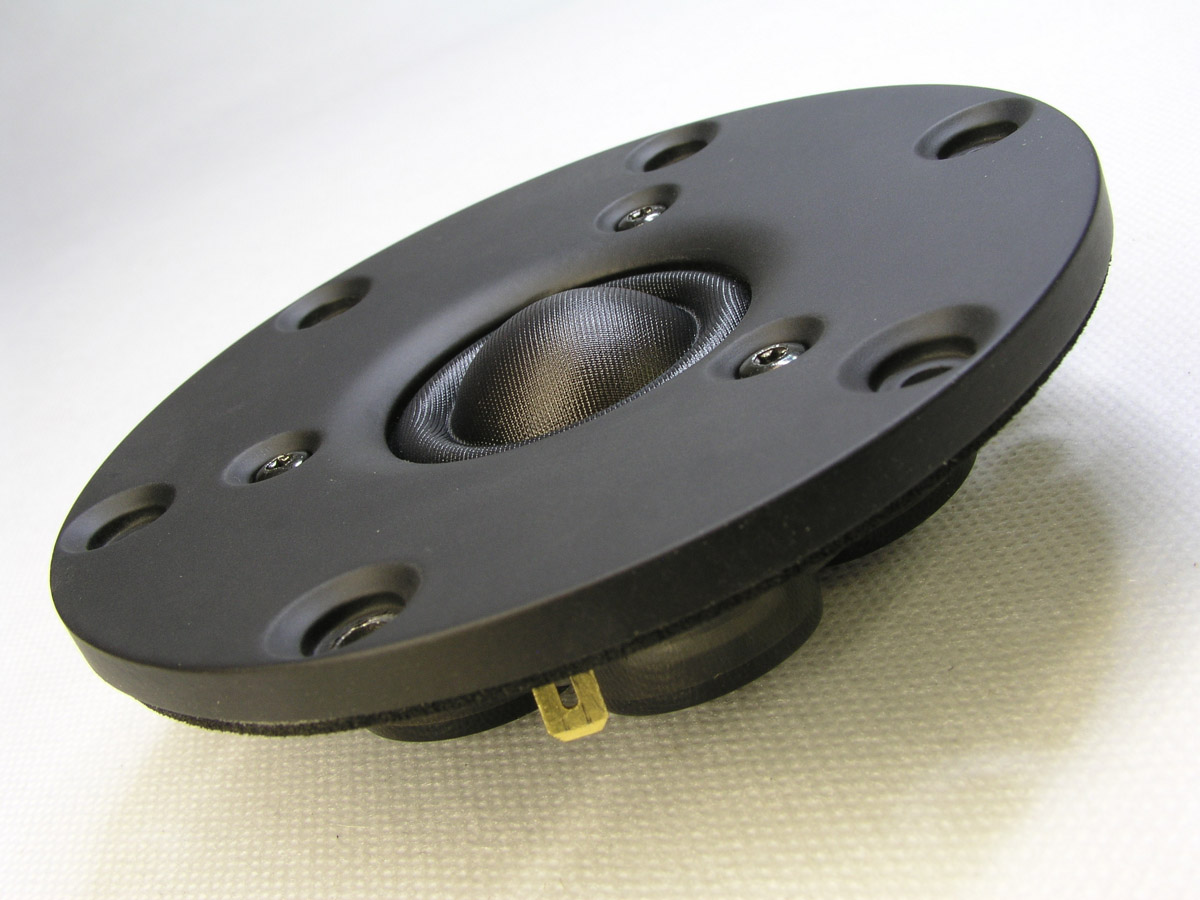
The 6600 tweeter
has been around for quite some time and together with the 7100 tweeter
I consider these soft-domes among the best available. As an
alternative tweeter, the R3004/662000 can be implemented by changing
three resistors. I like this ring radiator!
System sensitivity
is around 87 dB/2.8 volts and minimum impedance is 4 ohms. And it doesn't matter if your amp is
specified for 8 ohms. I have this question regularly.
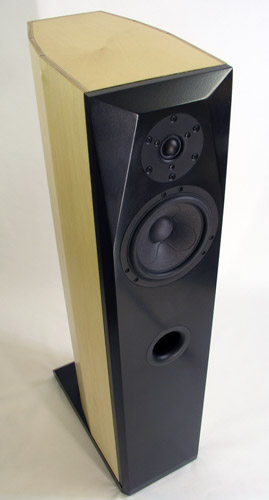
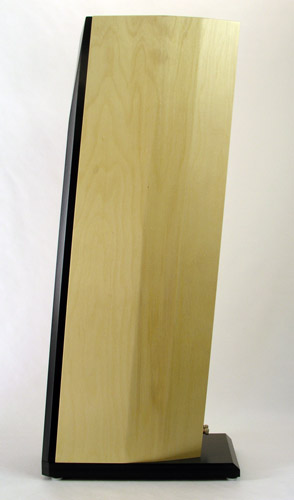
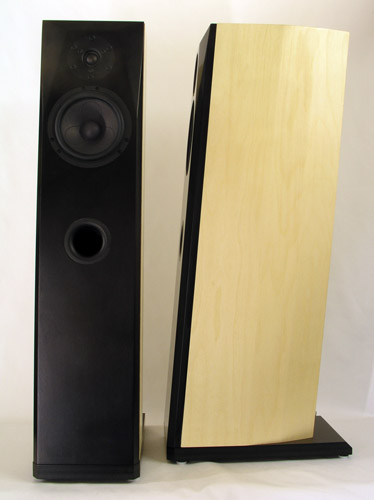
Click images to view large.
The sound
Having had the DTQWTs
and all the Jenzen
speakers in the living room for most of the last year I've gotten
used to the significant soundstage of large 3-ways systems and it took
some time to adjust to a small 2-way floorstander. What helped was the
18WU's ability to throw a dynamic bottom end, the best I've had from a
single 6½-inch driver ever. Doing deep bass combined with a clean
upper mid is not a problem as long as the 18WU is driven to adequate
sound levels. The difference from the large 3-ways is merely derived
from the fact that sound is emitted from a rather small area, more
point source compared to the Jenzens. It has to be said I'm listening
a fairly close range and only the DTQWTs can deliver the same point
source feeling sharing the feature of two front mounted drivers.
Having bass emitted at ~80 cm height is also different compared to a
bass driver at ~60 cm height. They load the room differently.
And not least important, the 18WU does not loose articulation at low
levels! This is a quite unique feature of the 18WU drivers. Too many
6" drivers loose grip at low levels due to high-loss suspensions.
High mechanical Q is one of the things we have to look for.
I may have a preference for the ring radiator tweeter, but generally
the two versions sound much alike with the 6600 having a little more
presence, but this may very much depend on tweeter attenuation. Before
installing the crossovers for good, pull some long wires and try out
all tweeter attenuation options. It must be tried and don't be seduced
by excessive treble levels that may cause ear fatigue in the long run.
Play acoustic instruments like piano, flute, oboe, clarinet, etc., and
find your preferred tuning.
While writing this, I'm running the ring radiators with 1R5 to the
tweeter and with the Jungson in front I have a deep and overall
coherent soundstage. If we had to look for competitors in this price
range we'd have to look for ceramic and sandwich cone drivers
delivering some of the same transparency these Illuminator drivers can
manage. A very few may be better and quite few worse and we're into a
range of drivers where we're dealing with taste. There are many ways
to good sound and the last few years have brought new drivers we
didn't dream of twenty years ago.
I consider the Illumina 66 a small speaker and if it must be small and
we at the same time want decent deep bass we sacrifice efficiency and
can you live with this, the Illumina 66 may be an option for you to
bring the illusion of a live event into your living room. 87 dB is
really not that bad, most "6+1" speakers will make 85 dB.
I obviously do not have all the 2-way floorstanders I've made over
time for comparison, but I do not recall any of them being able to do
what this one can do.
CROSSOVER
back to index
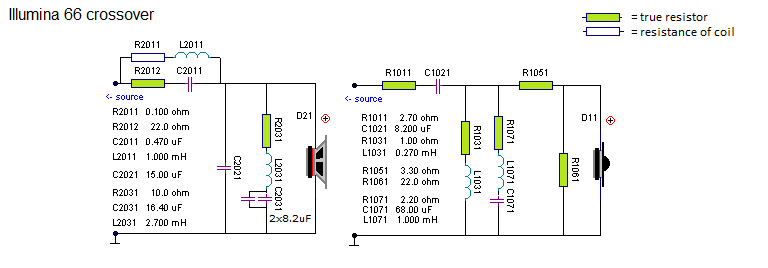
The crossover is tuned
to make the flattest possible response in all of the midrange*, thus
L2011 is fairly small creating the usual peak at 1 kHz. An LCR circuit
is taking care of this and from the value of R2031 it can be seen the
impact of the LCR circuit is modest.
For tweeter we see a fairly standard 2nd order topology. The LCR circuit takes care of the huge impedance peak
at tweeters point of resonance and further helps smoothing tweeter roll-off.
The crossover is an asymmetrical 4th/2nd order kind of thing and not
aimed at textbook phase integration, rather tuned by ear by listening
to acoustic instruments. By adding close to 4th order to the midbass
and 2nd order to the tweeter + tilting the front panel we achieve
positive polarity of both drivers and a fairly flat response from
R1011 = 0.47 ohm. Textbook phase integration only exists in a single
point anyway from non-dual-concentric drivers, and is furthermore
frequency dependent, so don't put too much into this. Due to the
shallow slope of the tweeter crossover, the point of crossover is in
the range of 2.7 kHz but with the shallow slope, the tweeter is adding
its fingerprint to upper midrange in terms of dispersion as can be
seen from horizontal dispersion measurements below.
R1011 = 0.47
ohm may lead to listening fatigue in the long run and I use 2R7 to
render a proper balance of basic notes and overtones. The choice is
yours depending on personal preference, associated gear and acoustic
properties of your room.
For tweeter attenuation there are two options, R1011 and R1051. R1011
can be varied between 1R5 and 3R3 depending on personal preference.
R1051 can be varied from 1R5 to 4R7. Changing R1051 display a higher
working point than R1011 as can be seen from measurements below.
*:
Most
6" drivers will have a rising response towards higher frequences.
When we place these on a narrow baffle we have baffle step loss; for
20 cm width we will be 3 dB down around 580 Hz. These two things
combined often leaves a serious bump around 800-1200 Hz and we need to
flatten the response here, otherwise the sound will become much too
forward. What is seen over and over again is the use of a large series
coil for the bass driver bringing down the upper midrange and the
result is a dip in the middle midrange (320-640 Hz) which often makes
male vocals thin and anemic; we miss some weight in the overall
soundstage as there is a significant amount of energy in almost any
music in this range. Thus, a low-value series coil and a linearising
circuit can solve the problem. For diy people this doesn't impact cost
considerably, but for a commercial designer it's three extra
components and they mostly take the easy way. For the underhung voice
coil Illuminator drivers we have an inherent recession in the same
frequency band and equalising the upper mid becomes even more
imperative.
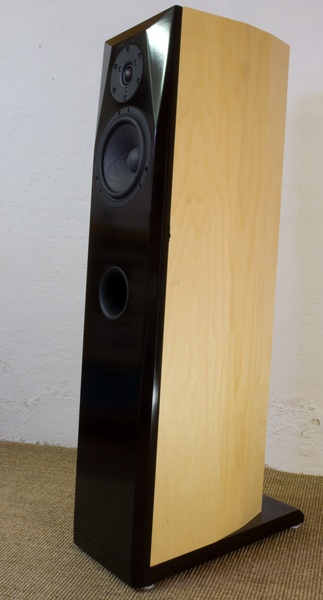
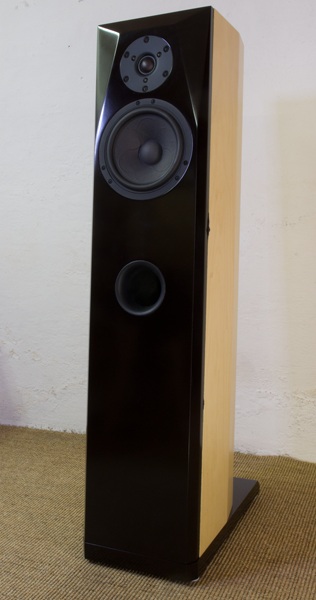
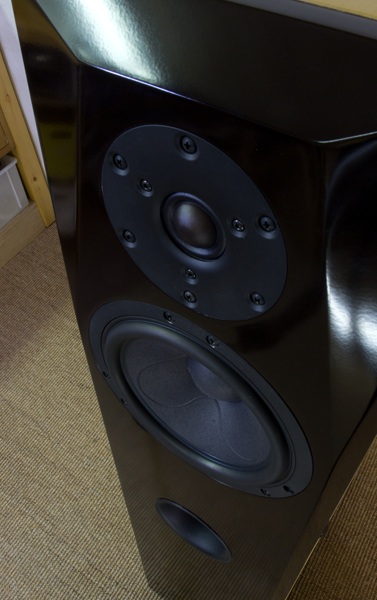
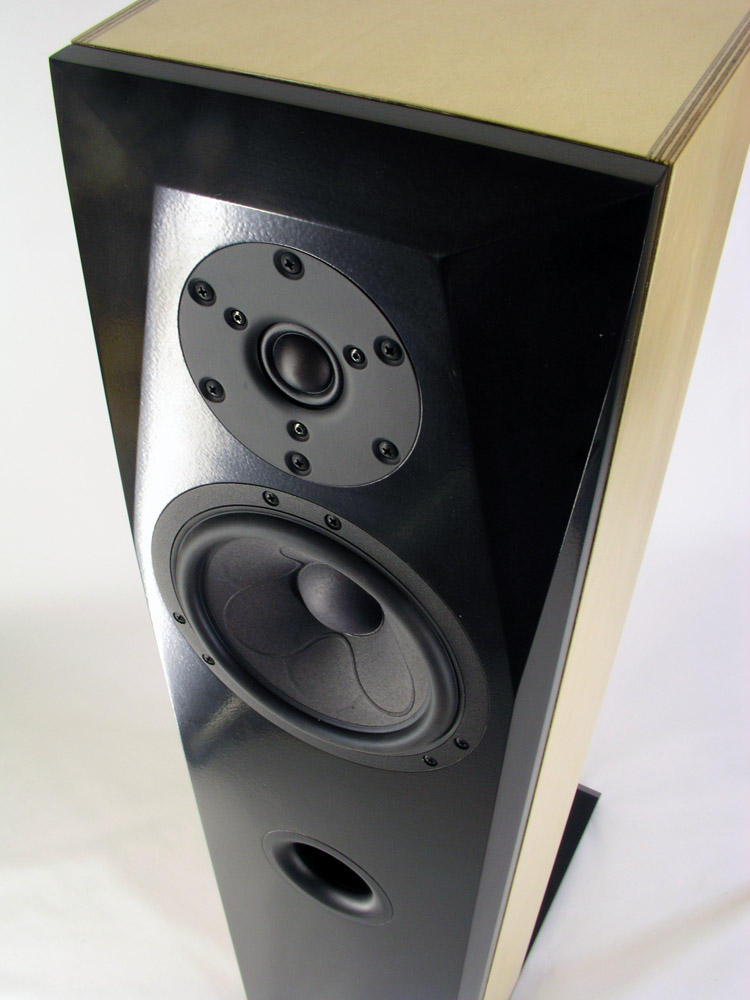
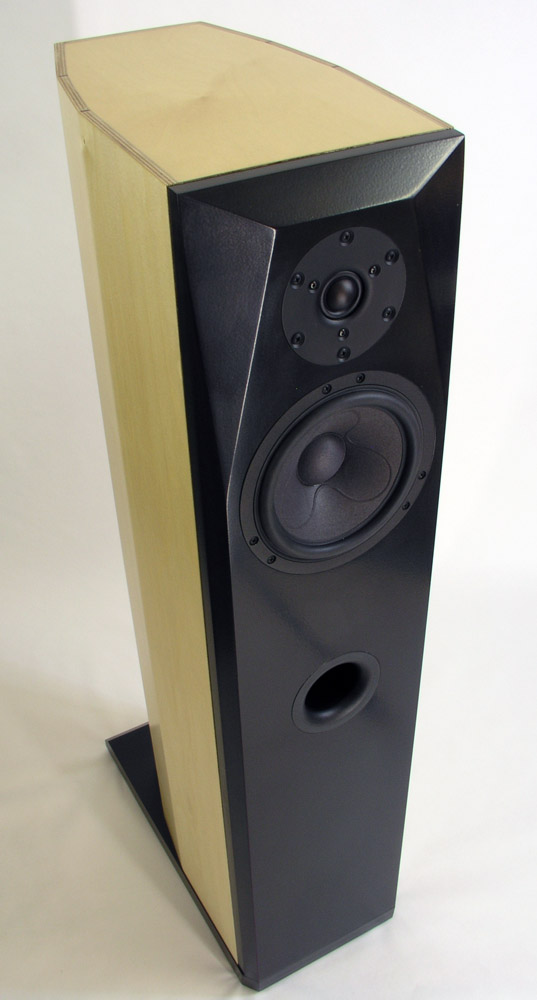
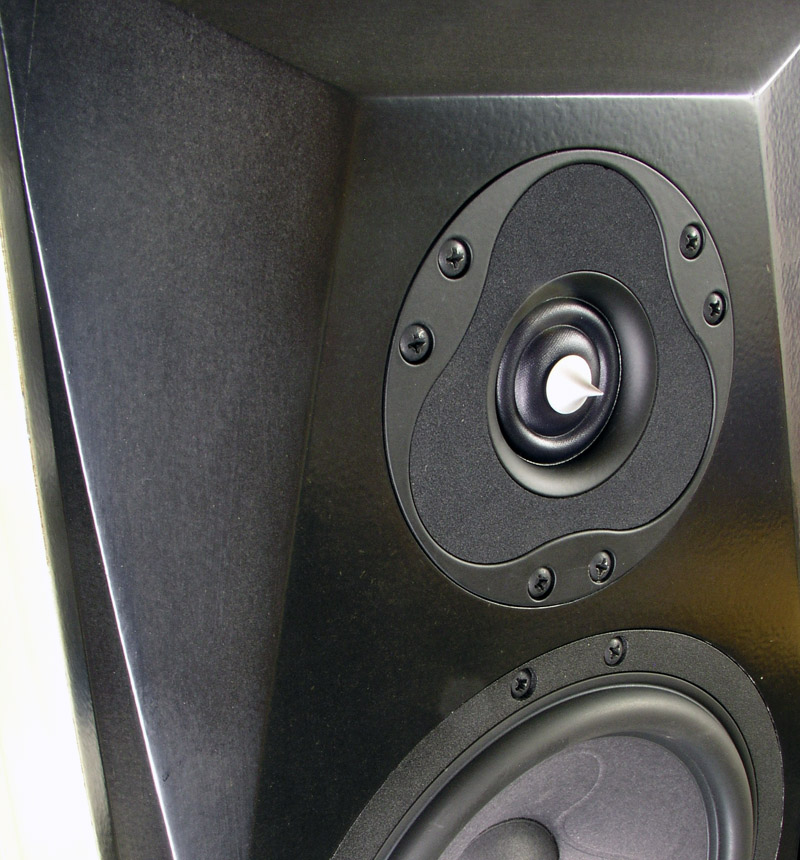
As I wasn't satisfied with my front panel
finish I made new front panels and had them spray lacquered by a
professional.
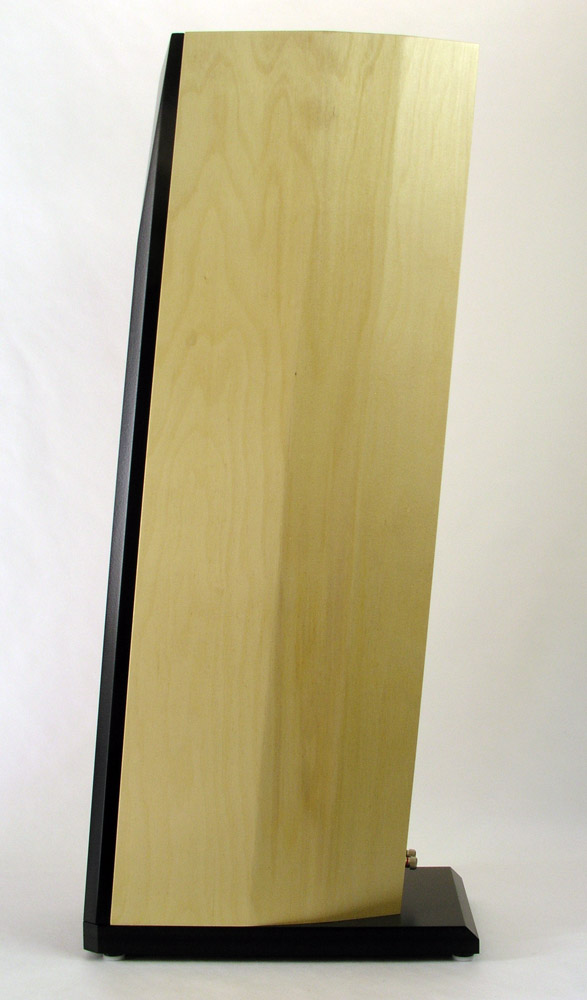
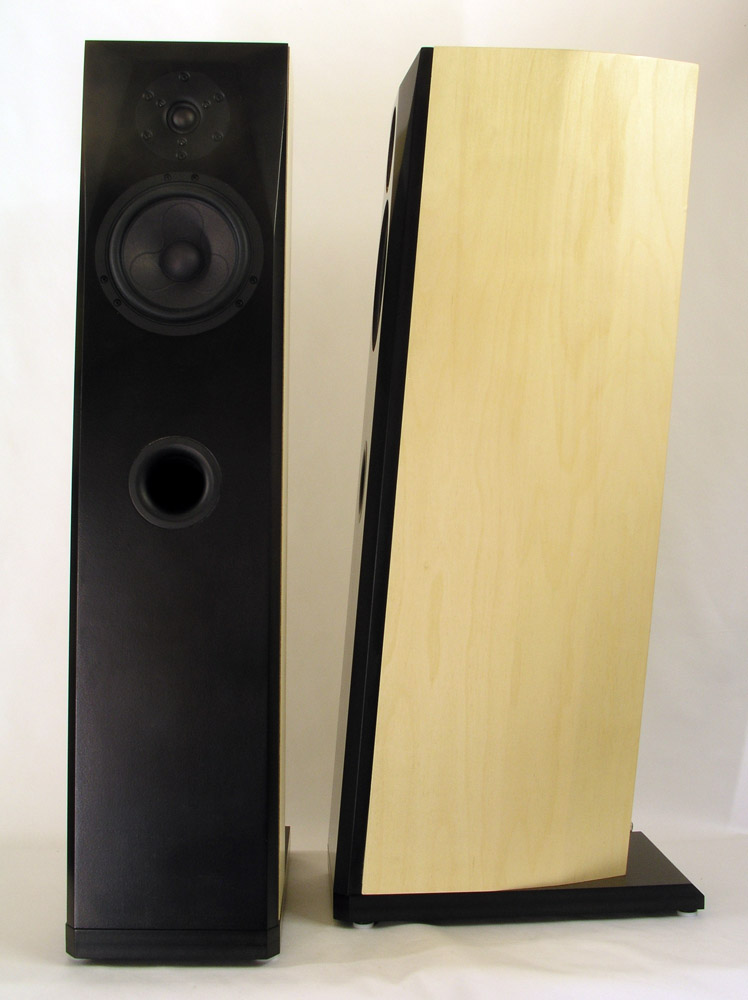
This was what I wanted them to look like. The best
"6+1" I've ever made.
CABINET
back to index
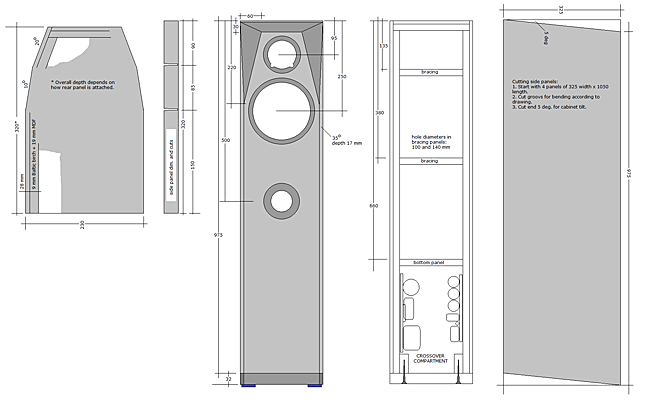
GO
TO ILLUMINA-66 CABINET CONSTRUCTION PAGE
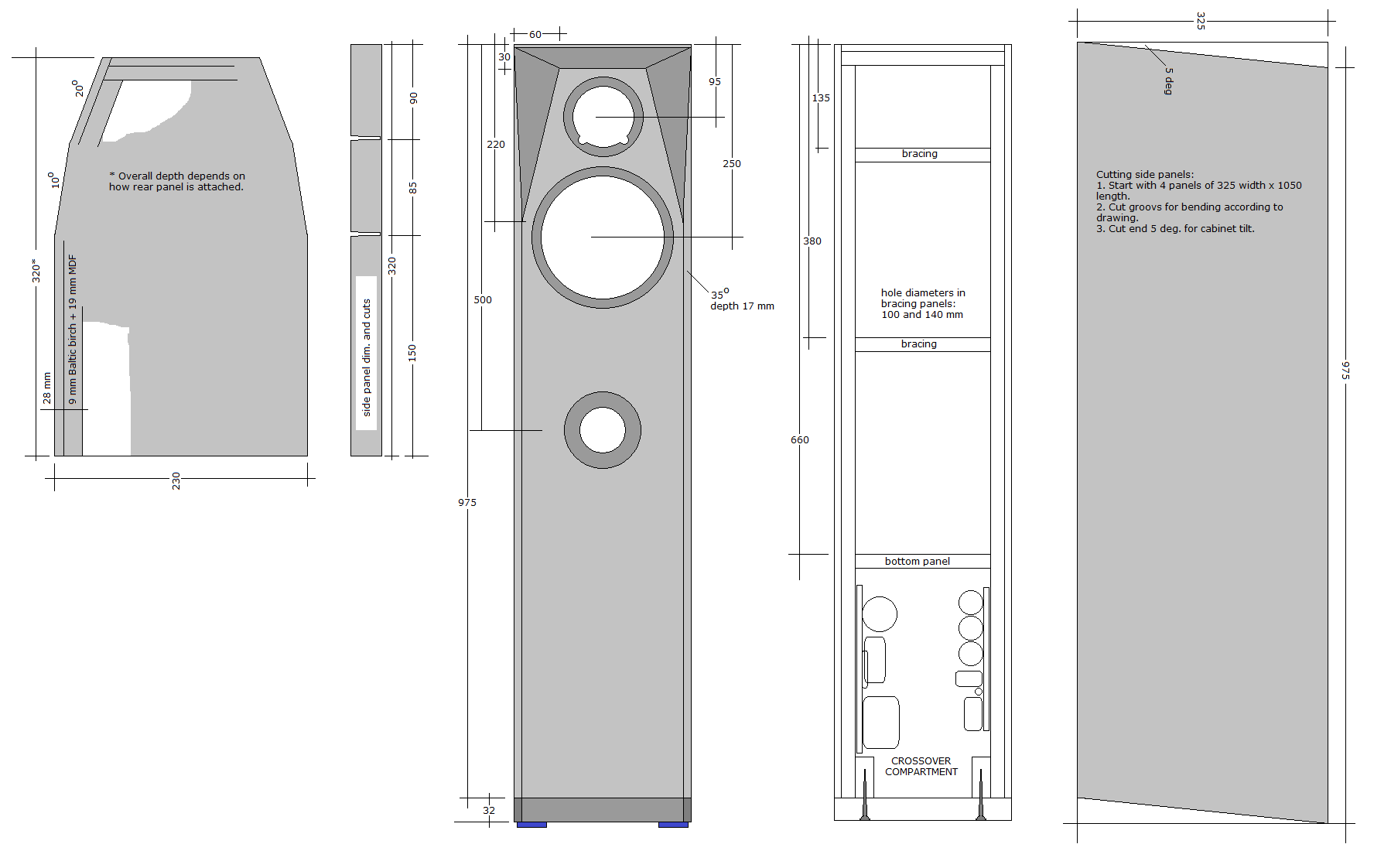
Above the basic
dimensions for making the Illumina 66 cabinet. What's seen from the
drawings and images are certainly not the easiest way of making a pair
of 32 liter floor-standers. Obviously the cabs can be made from
standard rectangular cross-section. Make sure of the following
features:
- keep front panel dimensions, facetting and driver placement as seen
from drawings
- tilt cabinet 5 deg.
- provide 30-32 liter net volume
- use port 68 x 220 mm.
MEASUREMENTS
back to index
|
Measurements may
give us an idea of tonal balance of a system, i.e. too much or
too little energy in certain areas. Measurements may tell us
about bass extension if far-field measurements are merged with
near-field measurements. In addition to this ports may contribute
to bass extension. Most of us diy'ers do not have access to an
anechoic room for full-range measurements from 20-20000 Hz.
What cannot be seen is what kind of bass performance we get in a
given room. Bass performance is highly dependent on in-room
placement of your speaker and the same speaker can be boomy in
one place and lean in another. Actual SPL level at 1 meter
distance and 2.8V input is useful for en estimate of system
sensitivity and combined with the impedance profile may give an
idea of how powerful an amplifier is needed to drive the speaker
to adequate levels.
What measurements do not tell is the very sound of the speaker
unless displaying serious linear distortion. The level of
transparency, the ability to resolve micro-details, the
"speed" of the bass, etc., cannot be derived from these
data. Distortion measurements rarely tell anything unless
seriously bad and most modern drivers display low distortion
within their specified operating range.
Many people put way too much into these graphs and my comments
here are only meant as warning against over-interpretation. There
are way more to good sound than what can be extracted from a few
graphs. Every graph needs interpretation in terms of what it
means sonically and how it impacts our choice of mating drivers,
cabinet and crossover design.
|
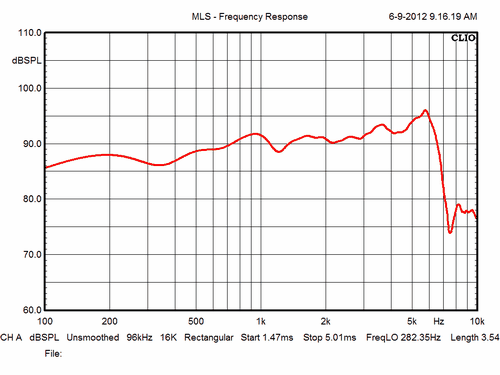
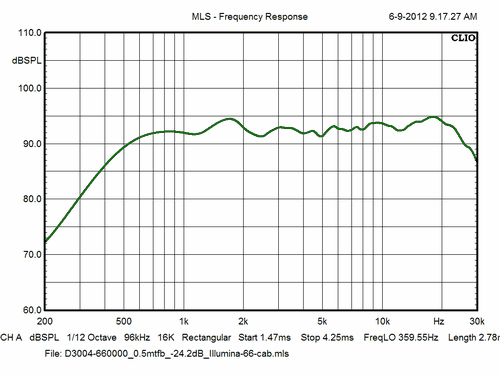
Left: SPL @ 1m/2.8V from 18WU/4741-T00
driver in cabinet. Right: SPL @ 1m/2.8V from D3004/660000 in cabinet.
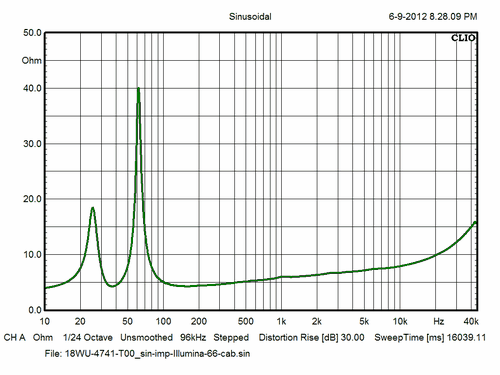
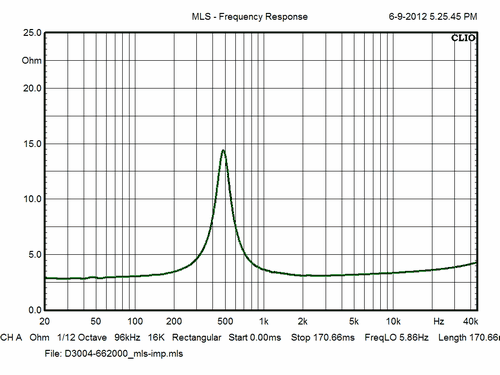
Left: Impedance of 18WU/4741-T00 driver
in cabinet. Right: Impedance D3004/660000 in cabinet.
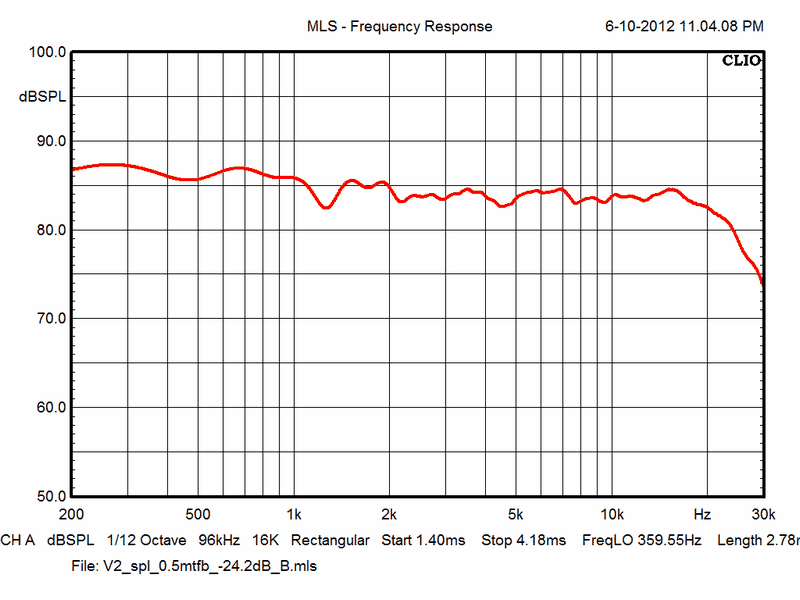
Final system response measured at 0.5 m,
normalised for 1 meter, 2.8V. System sensitivity = 87 dB/2.8V.
Tweeter attenuation: R1011 = 2.2 ohm.
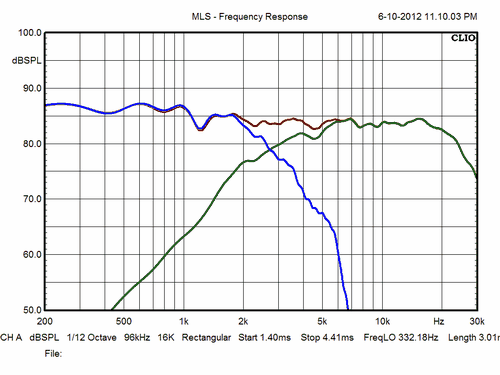
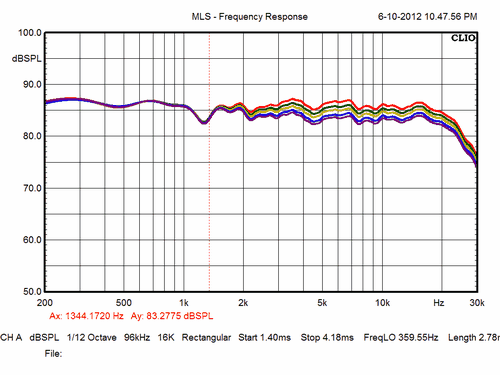
Left: SPL from drivers driven from
crossover. Point of crossover = 2.7 kHz.
Right: Tweeter attenuation by changing R1011, here 0R47, 1R0, 1R5, 2R2
and 2R7. 1R0 provides an nearly flat response.
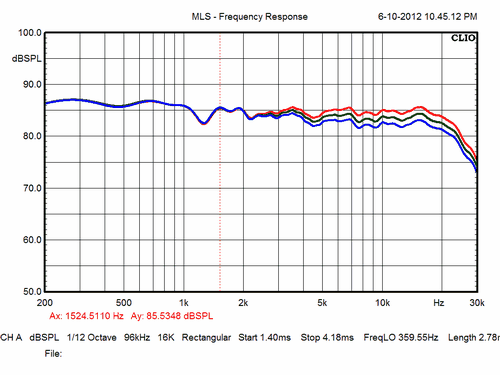
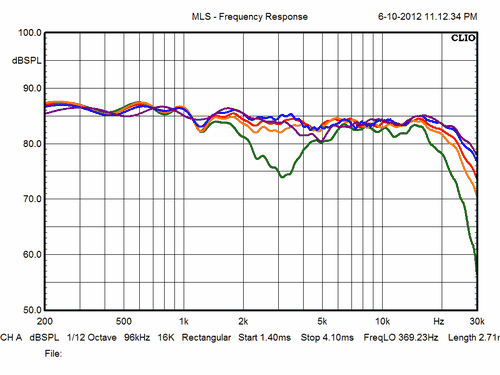
Left: Tweeter attenuation by changfing
R1051, here 2R2, 3R3 and 4R7.
As can be seen, this makes a higher working point for tweeter
attenuation compared to changing R1011.
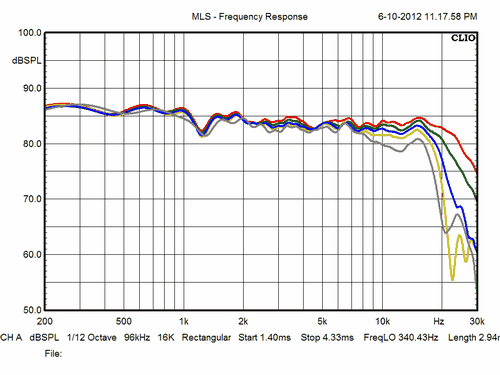
Right: Vertical dispersion measured at 0.5 m at tweeter height (blue)
and downwards. Green = below bass driver.
Left: Horizontal dispersion at 0,
10, 20, 30 and 45 deg. angle. Quite an exceptional even even
dispersion.
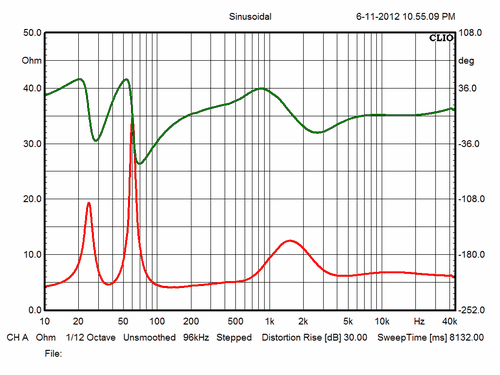
Right: Final system impedance.
Minimum = 4 ohms. Green = phase.
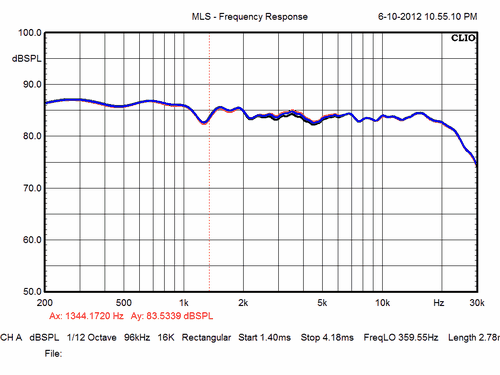
Just this to show the impact of C1021,
here at 6.8 (black), 8.2 (blue) and 10 uF (red). This makes less
impact than we would think.
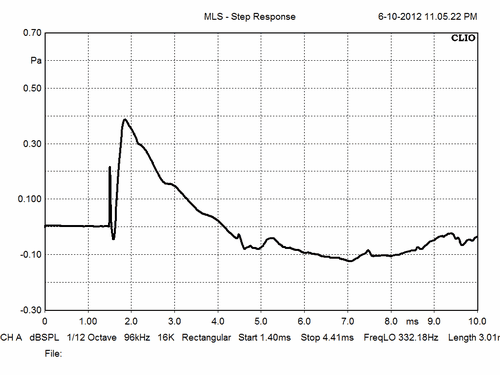
Right: Step response.
CROSSOVER
KIT
back to index
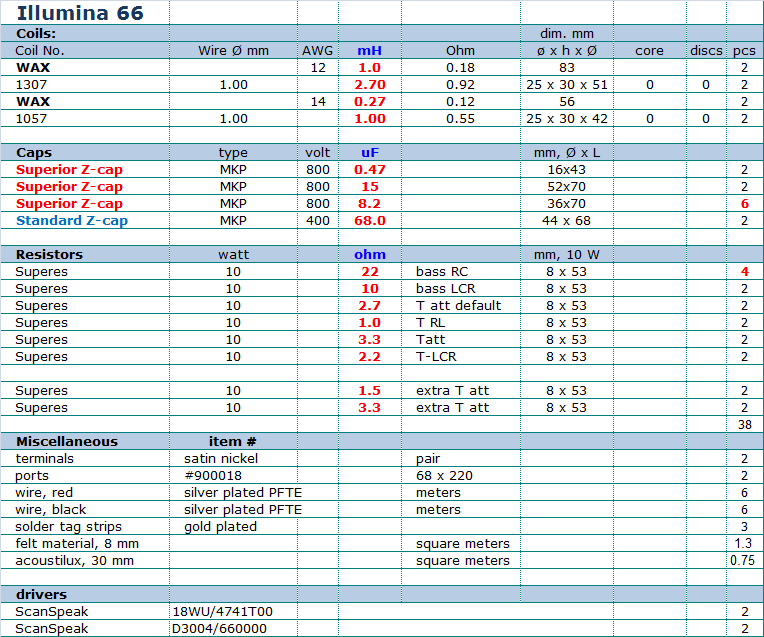
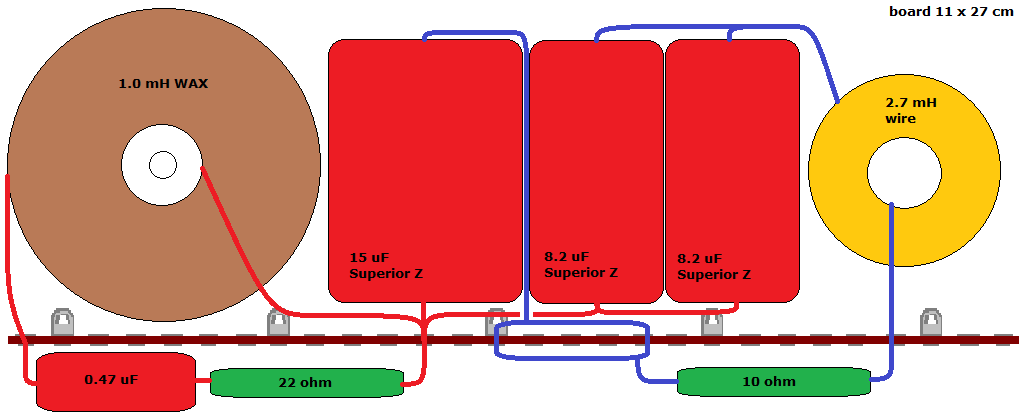
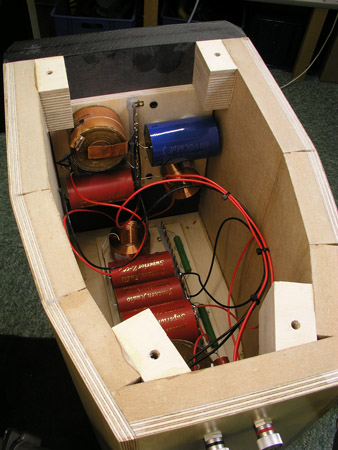
Please source components locally.
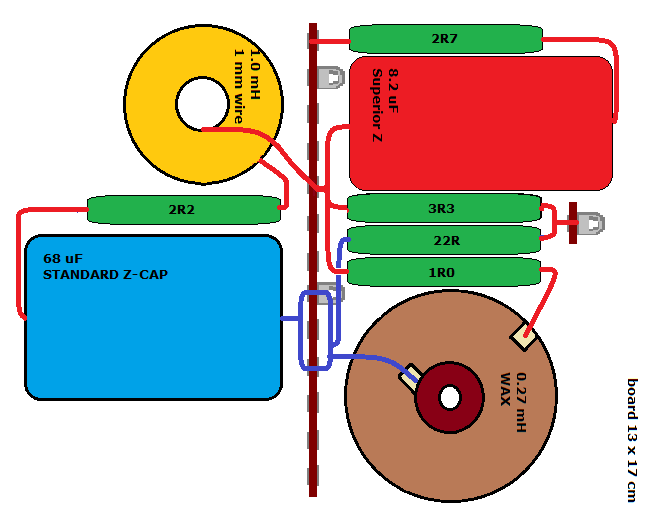
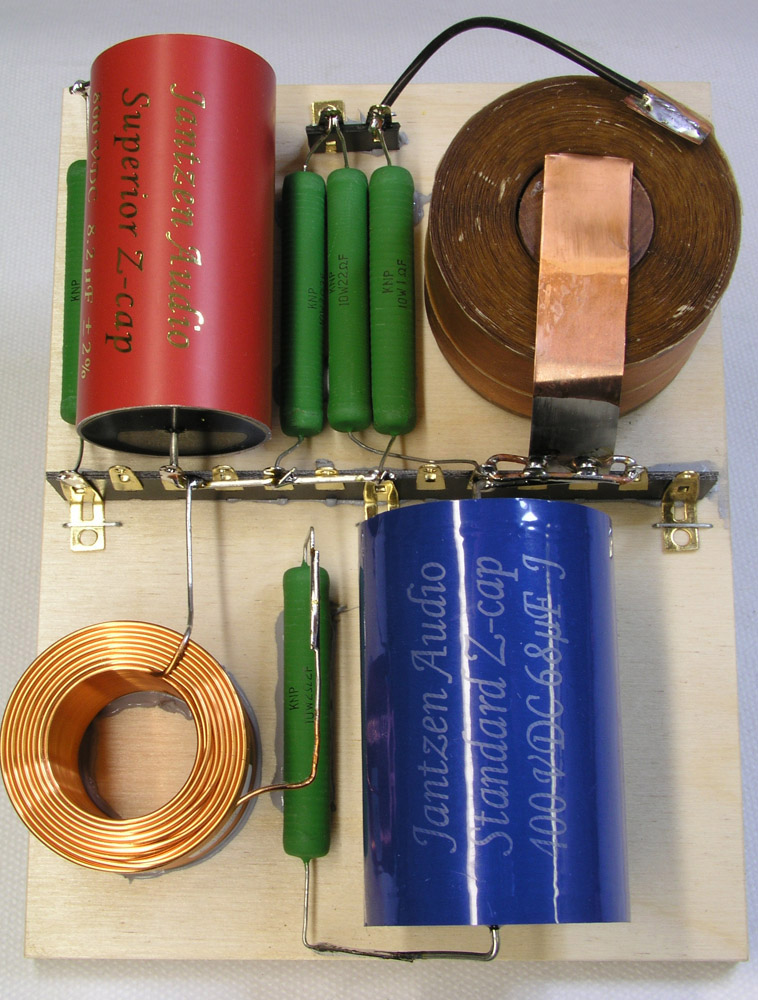
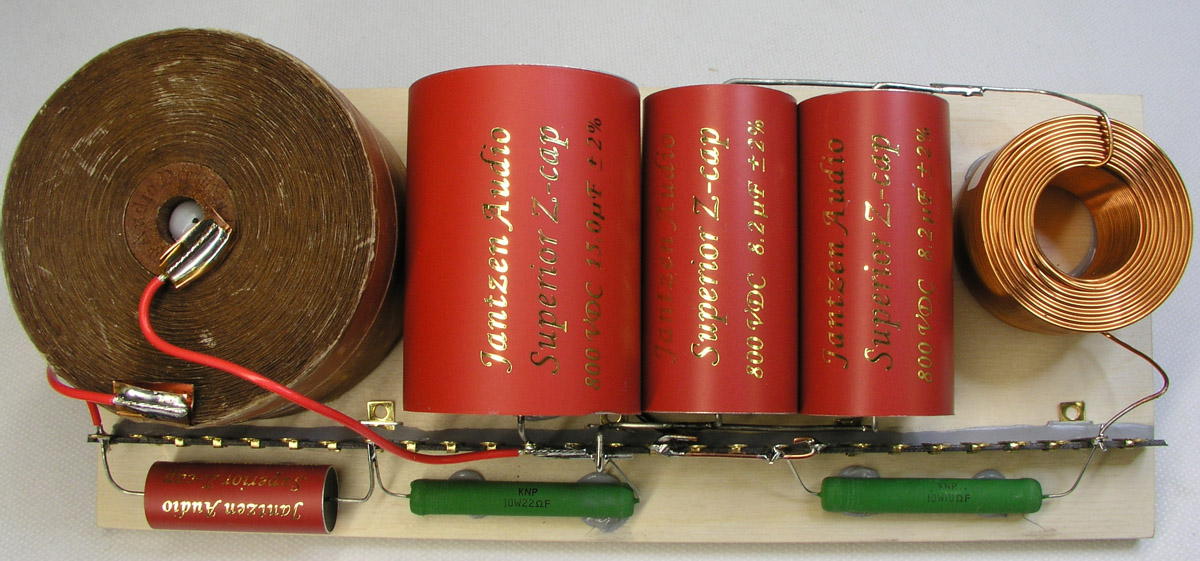
CROSSOVER
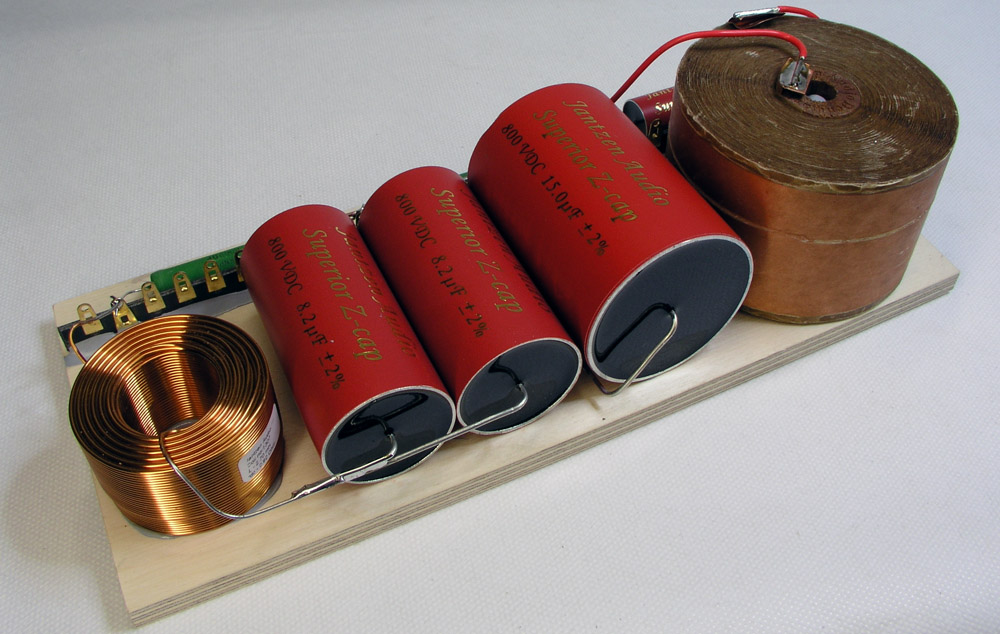
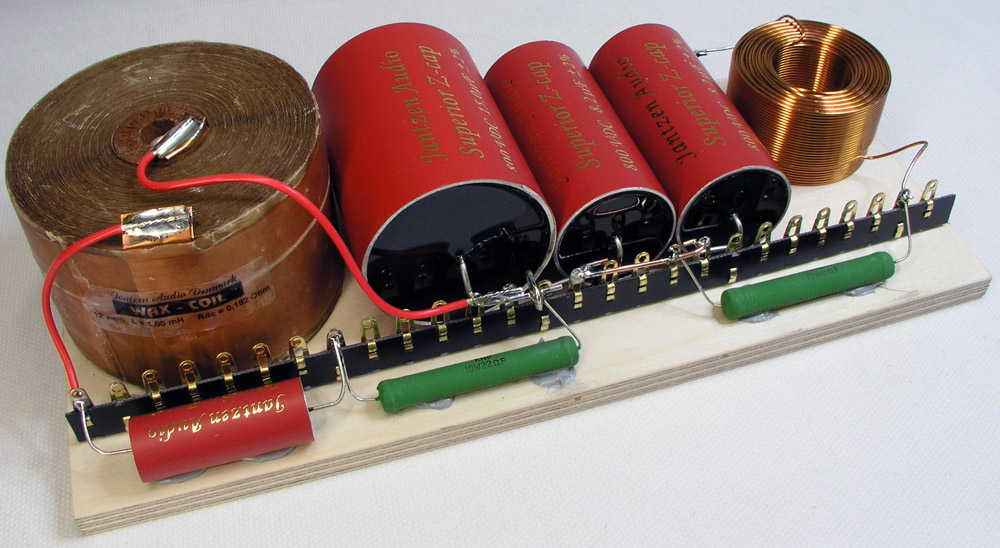
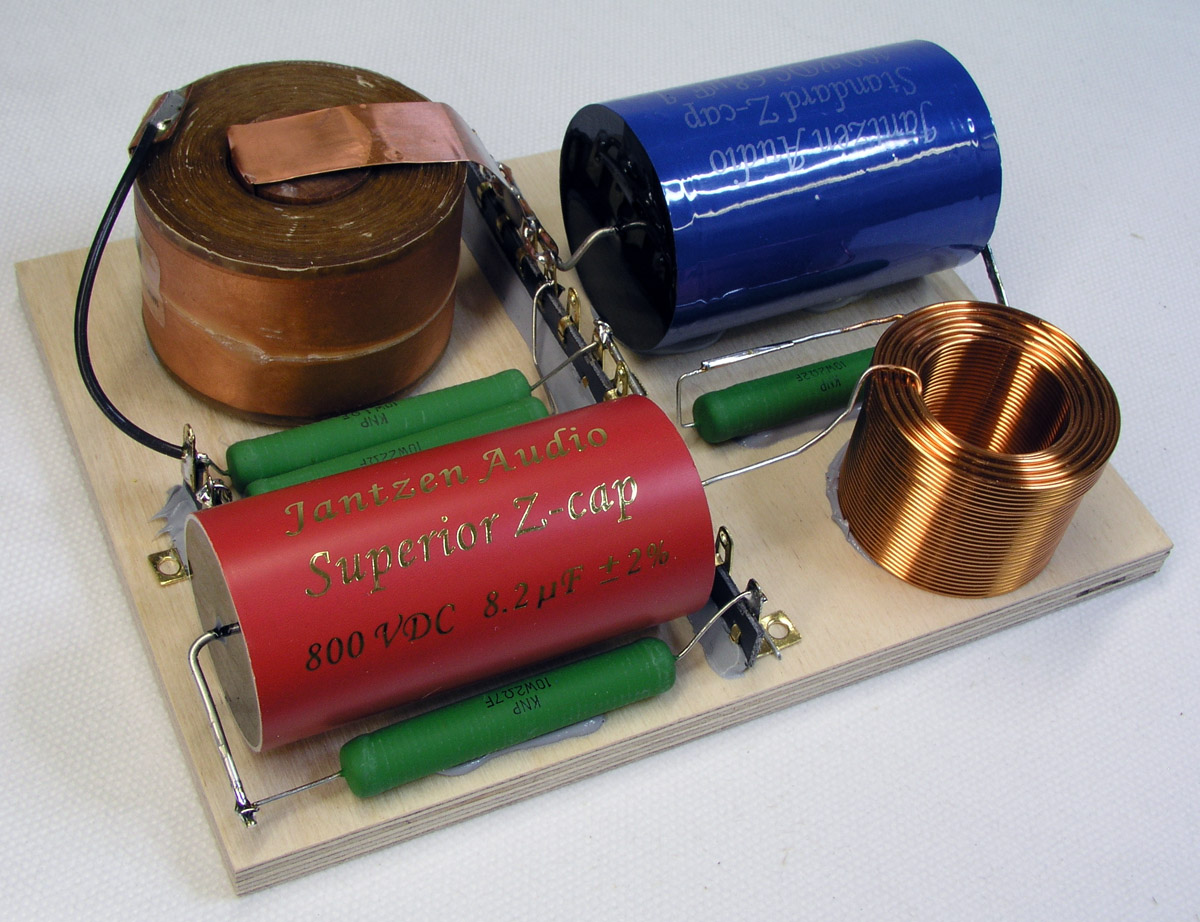
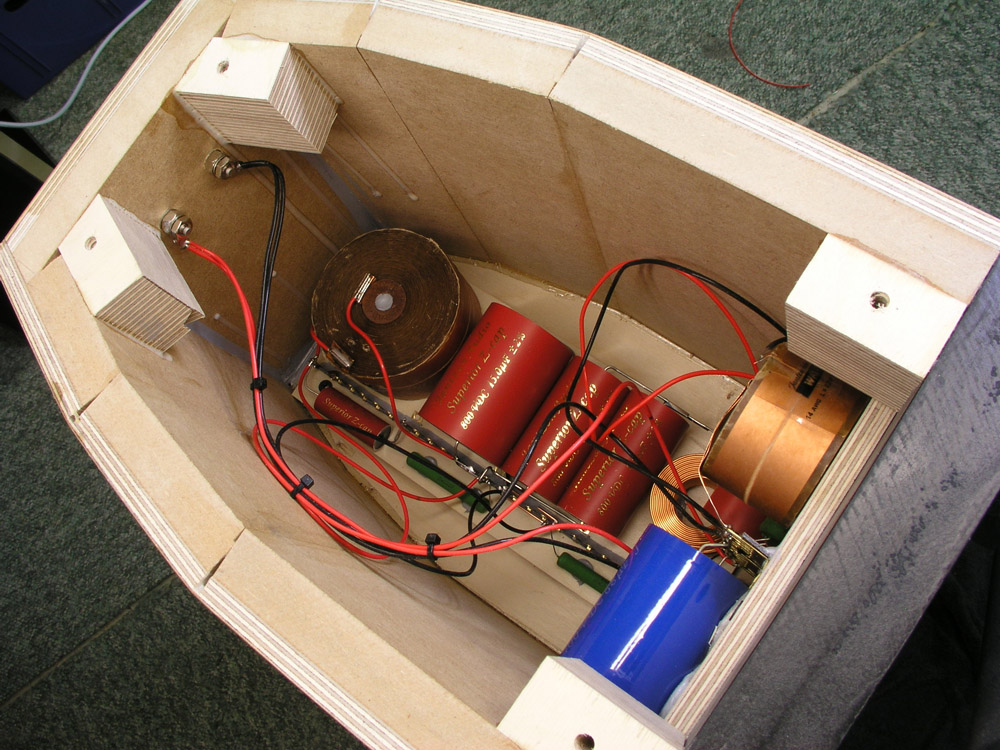
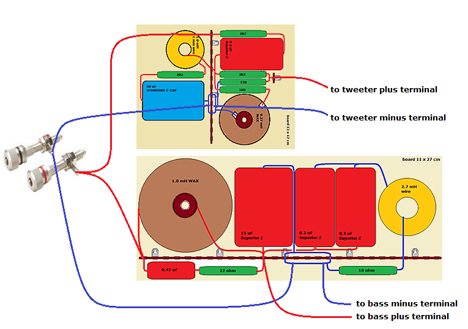
LAYOUT
back to index
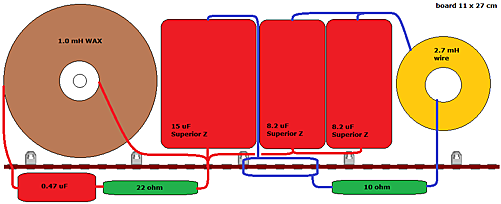
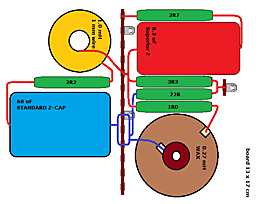
Click images to view large.
Click image to view large.
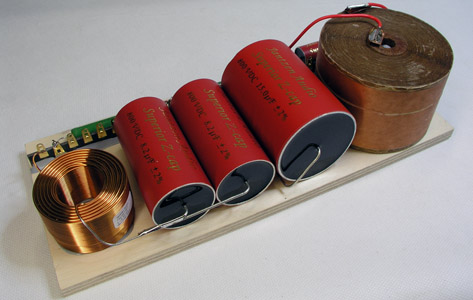
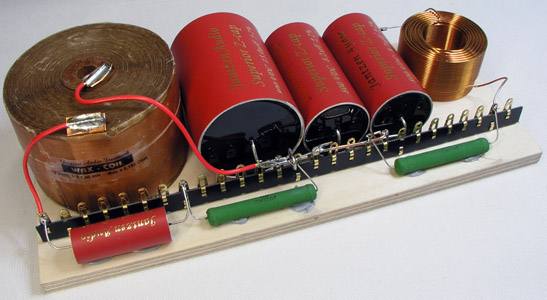
Click images to view large.
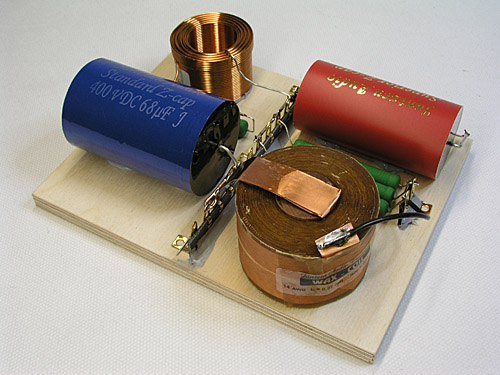
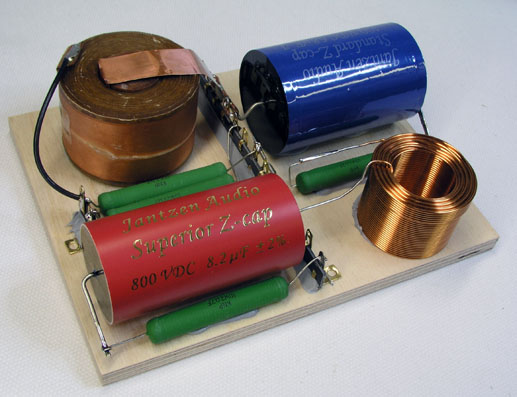
Click images to view large.
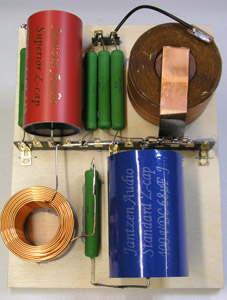
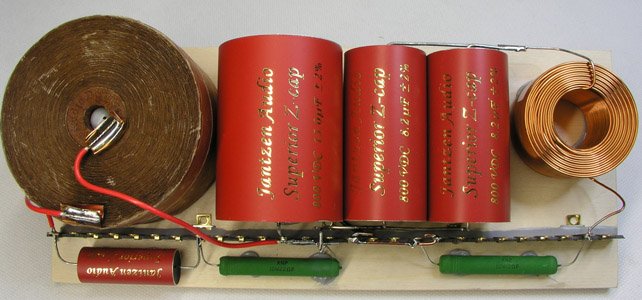
Click images to view large.
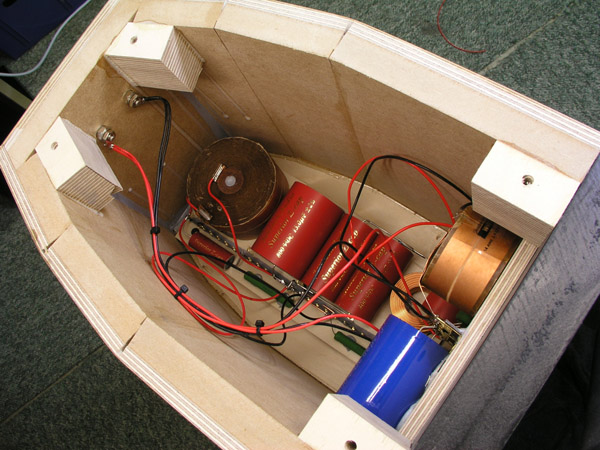
Click images to view large.
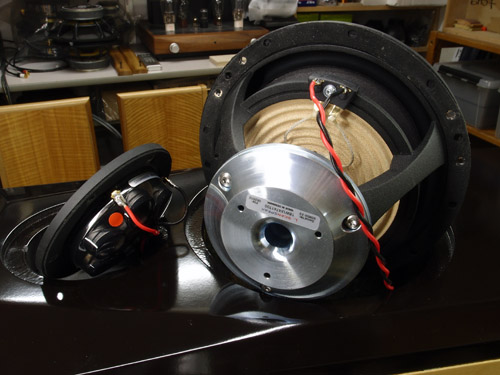
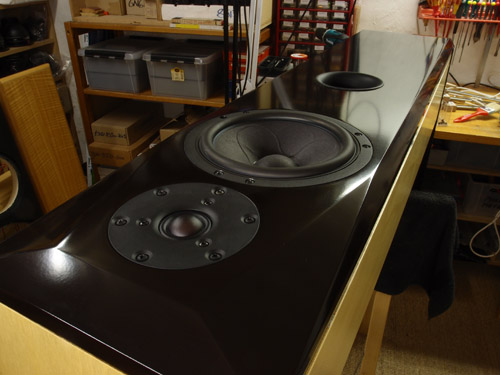
The best part of the whole process: Mounting
the drivers!
R3004/662000
version
back to index
Click image to vie large.
Download specs here.
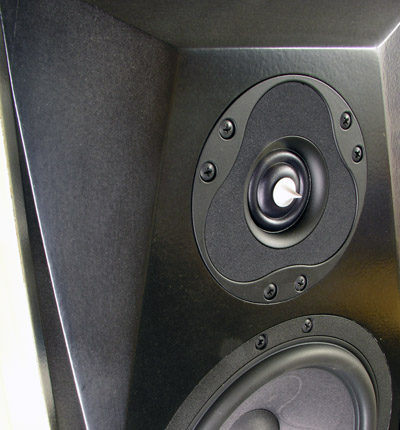
The ring-radiators have
many fans - and I'm one of them. This Revelator diaphragm is here
fitted with the Illuminator magnet system and rear chamber, displaying reduced
sensitivity but far enough for most systems. As always - well, depending
on actual baffle - these ring radiators deliver a smooth frequency
response, here +/- 1.5 dB from 700-20000 Hz.
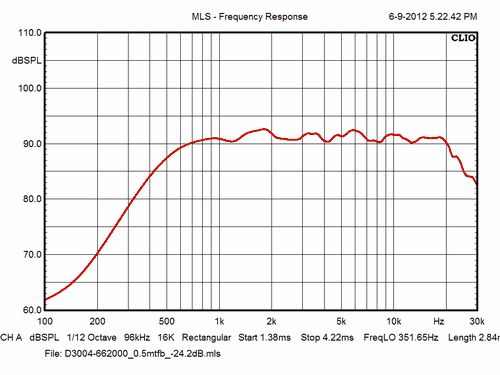
SPL from R3004/662000 on Illumina cabinet front panel.
Makes crossover work easy.
R3004/662000 Crossover
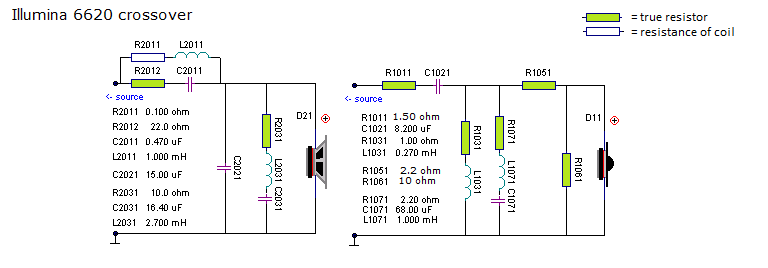
The only changes from
the 6600 options are values of R1011, R1051 and R1061.
6620 version:

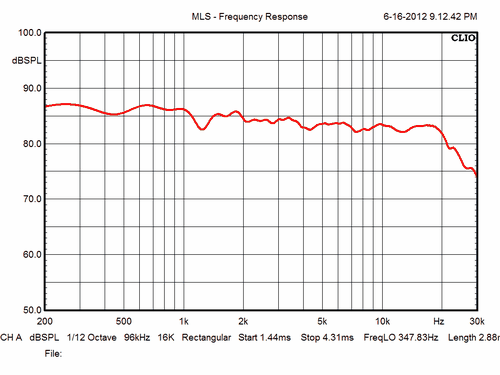
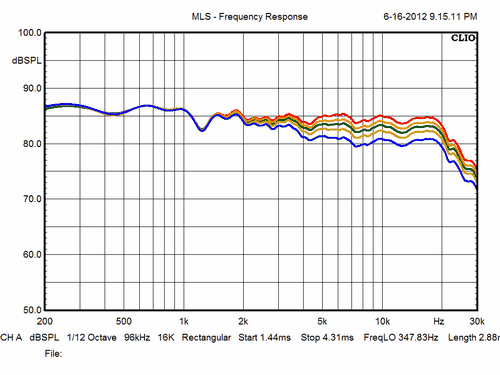
Left: SPL of 6620 version with
1R5 to tweeter (R1011). Right: Tweeter attenuation from R1011 = 0R47,
1R0, 1R5, 2R7 and 3R3.
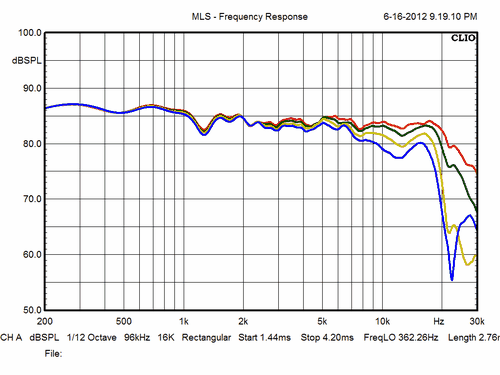
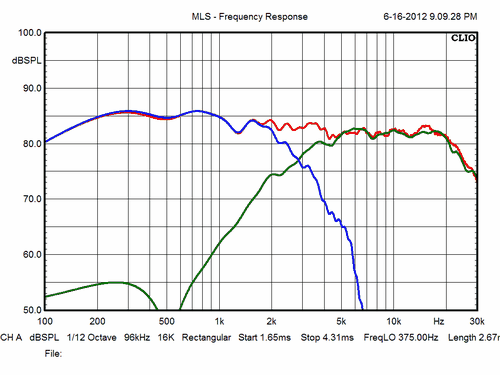
Left: Horizontal dispersion at 0,
10, 20 and 30 deg. Right: SPL of drivers driven from crossover incl.
summed response (red). Point of crossover around 2.7 kHz.
|