Speaker Talk 2021-24
Speaker Talk 2008-2010 Speaker Talk 2011-2014
Speaker Ralk 2014-2018 Speaker Talk 2017-2020
25th April 2024
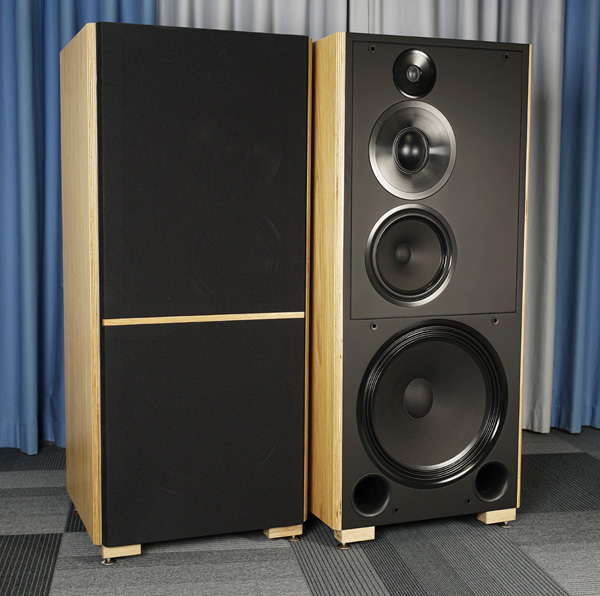
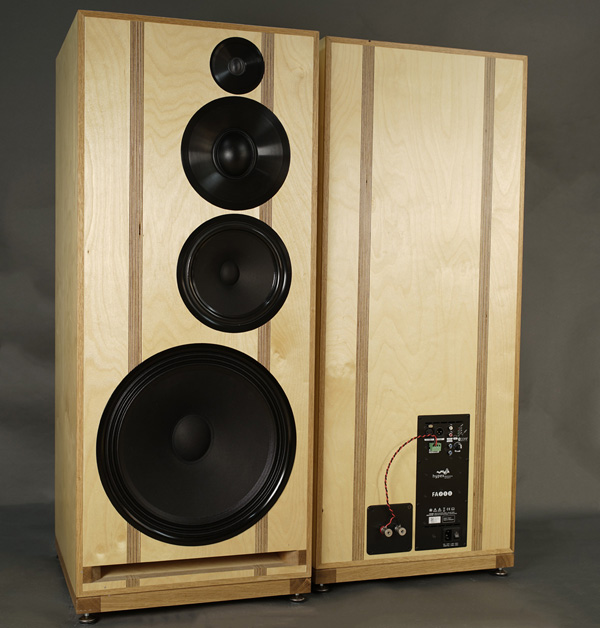
Pleased to release new ScanSpeak construction, the Ekta-TL
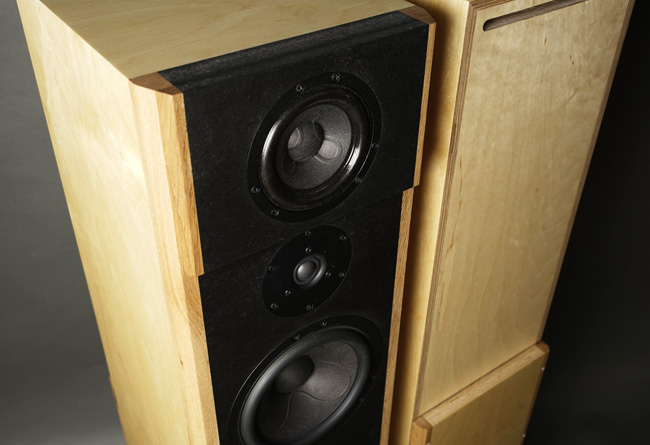
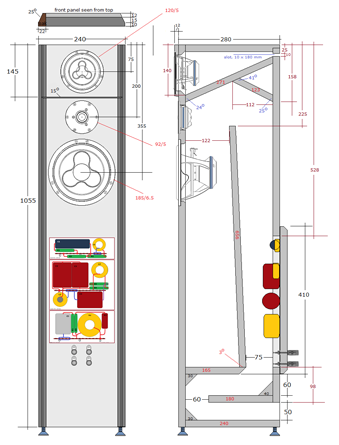
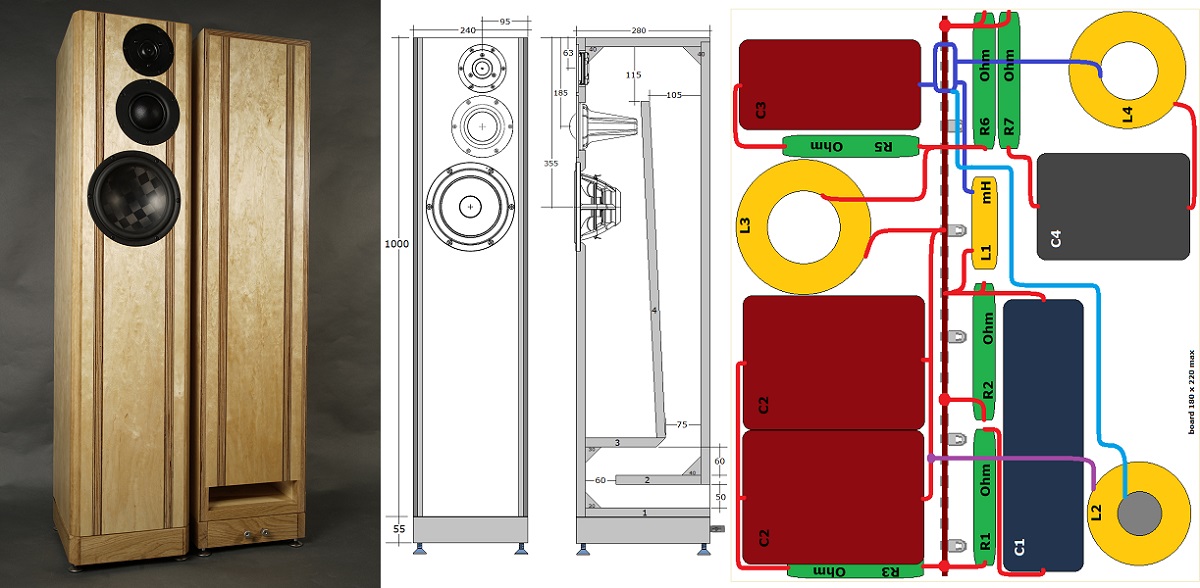
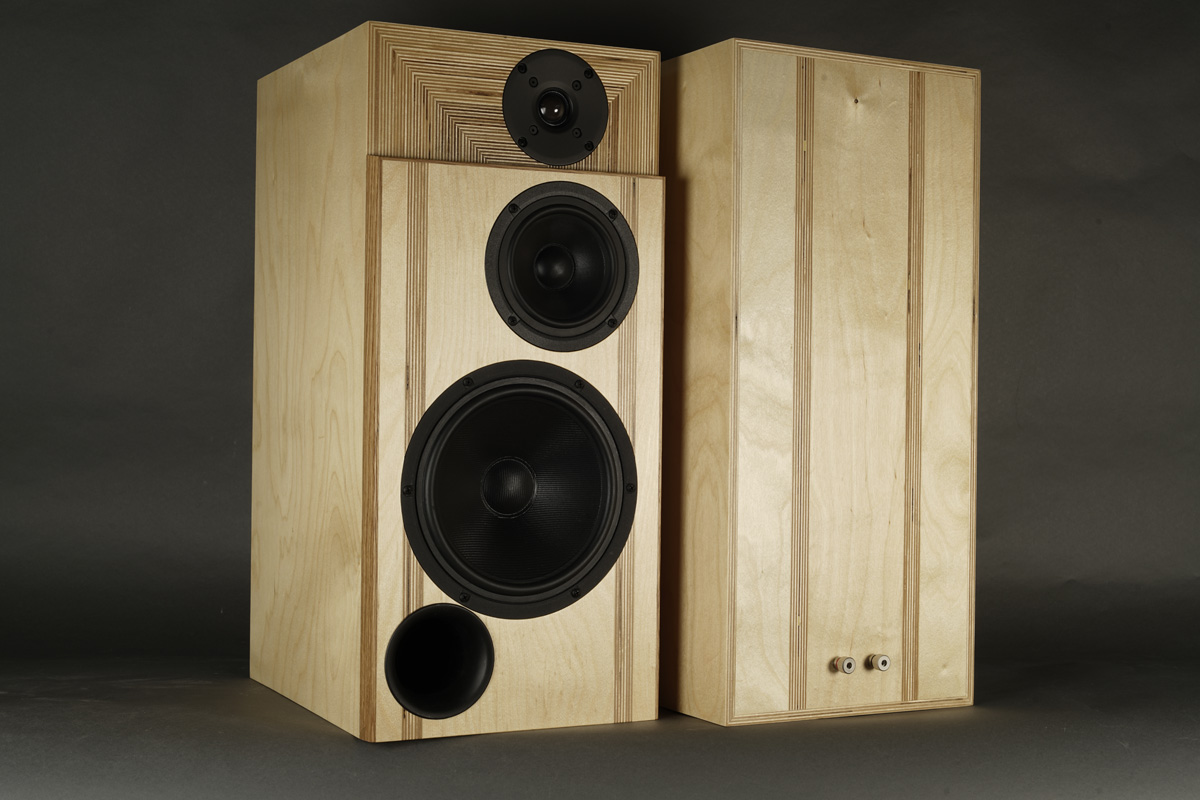
Every time I set up a transmission line I hear something I don't hear from conventional ported boxes, a quality of bass reproduction that is unique in its lightness and ease of reproduction of bass notes. By lightness I don't mean low or vague, but as the bass driver has been relieved of some acoustic resistance. I haven't made a lot of TLs, because it takes space and for a 3-way it's not always that easy to incorporate the midrange driver in the physical design. However, making the TL here is no more complicated than making a conventional vented box with braces.
29th March 2024
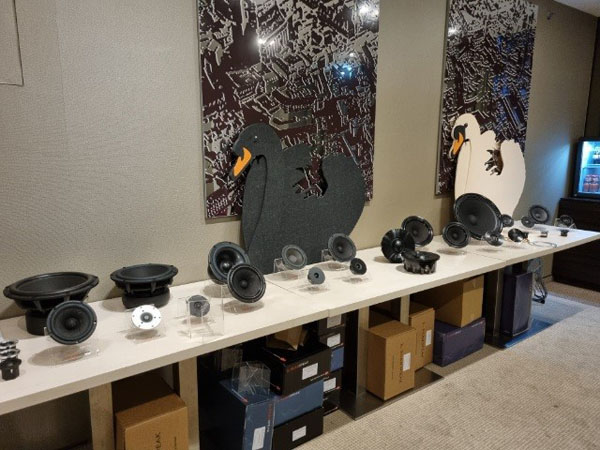
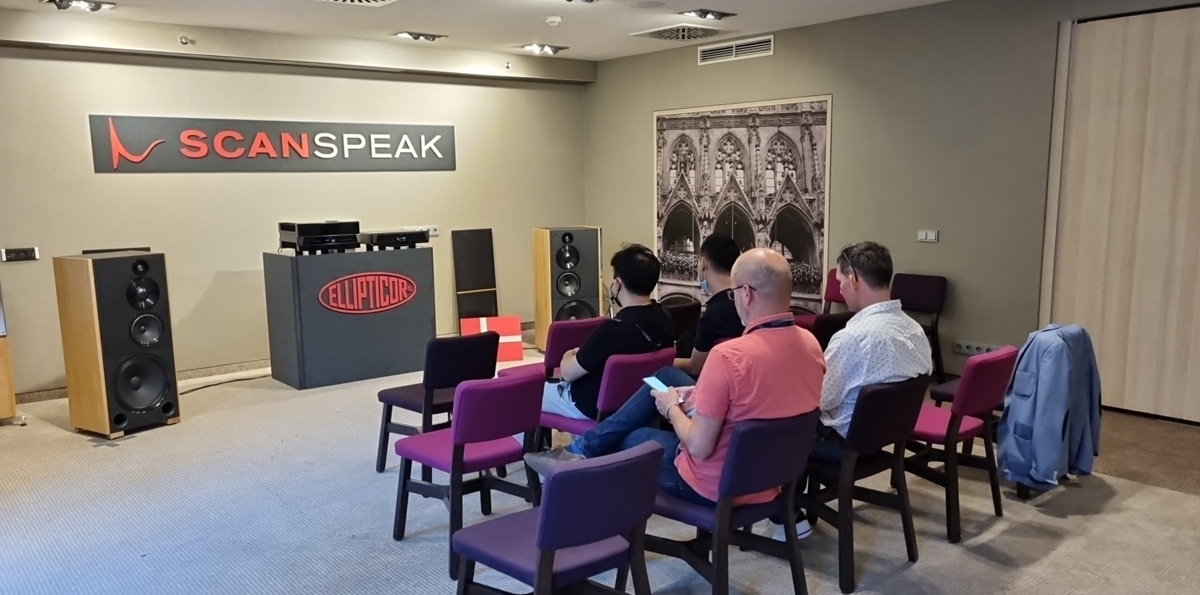
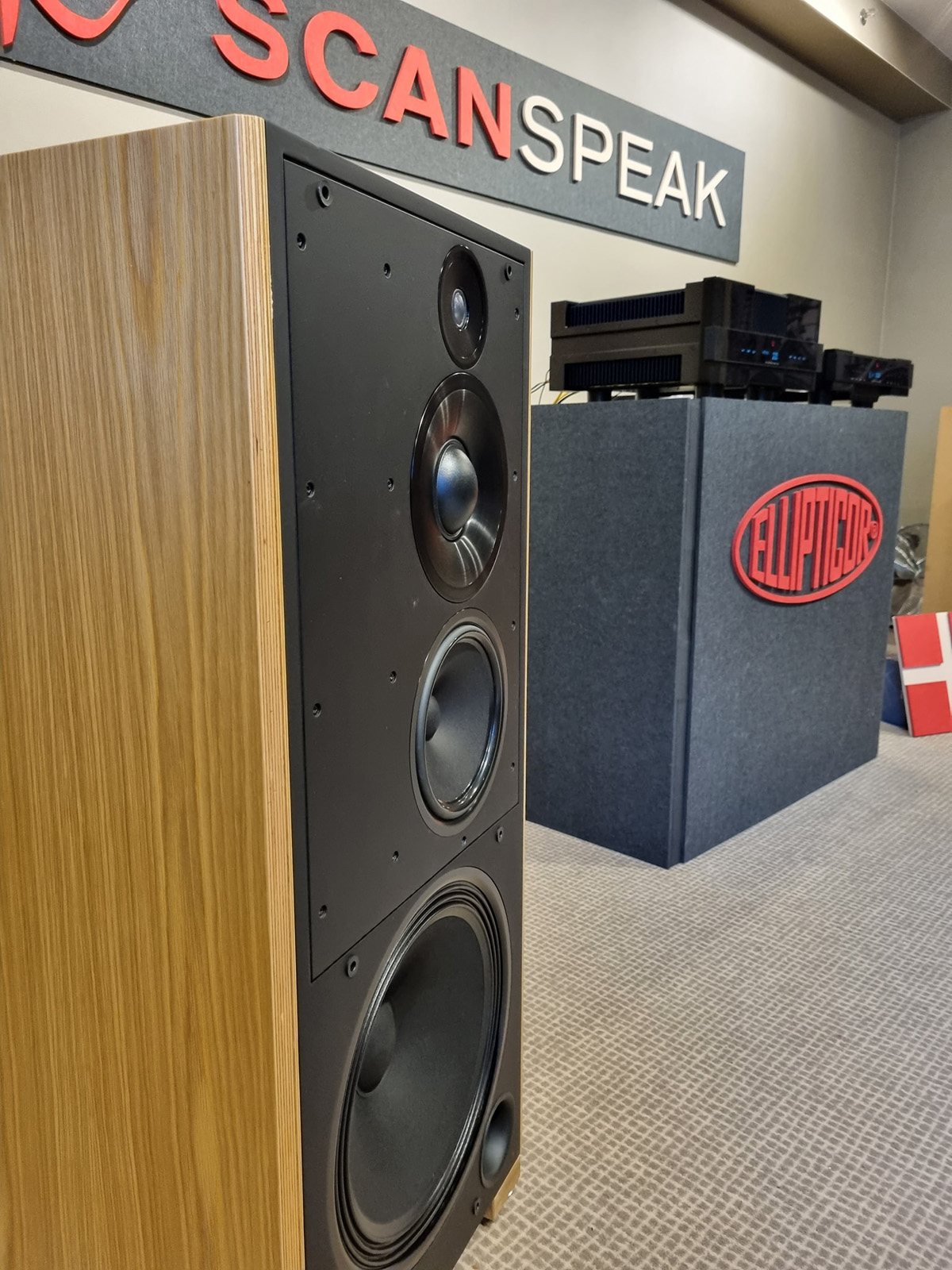
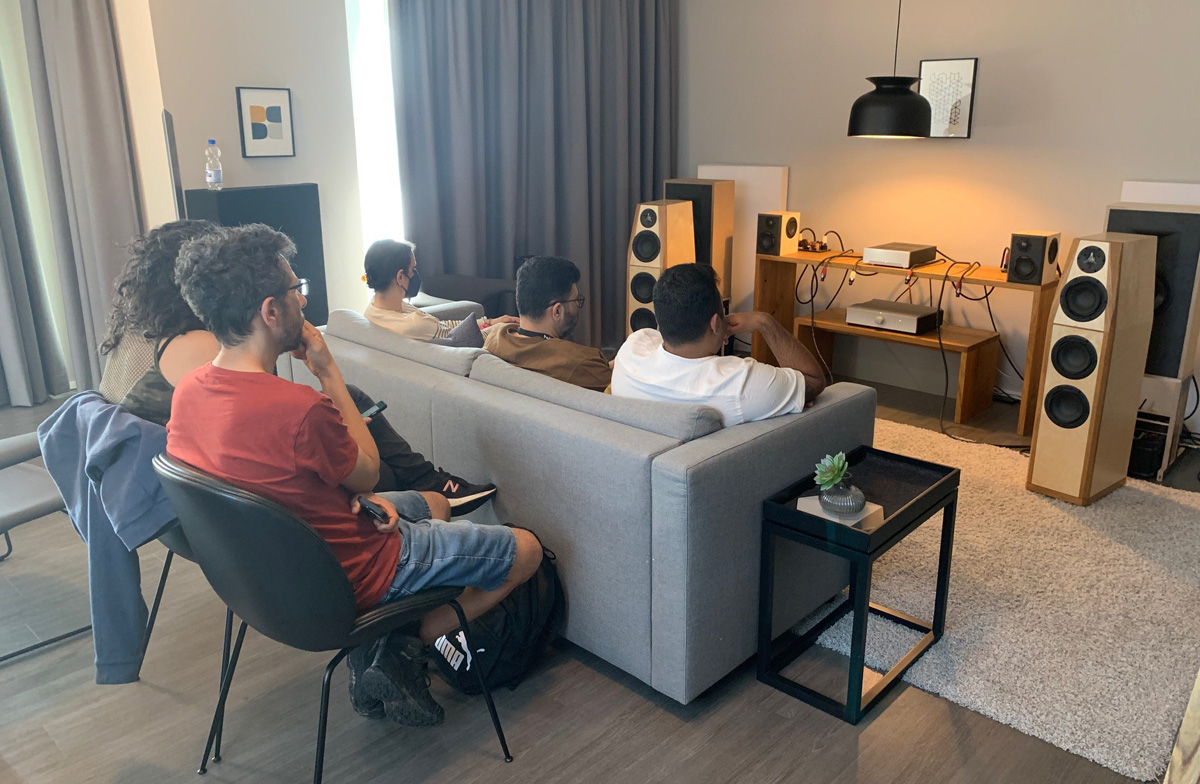
Pics from the Copenhagen hifi show, 2024
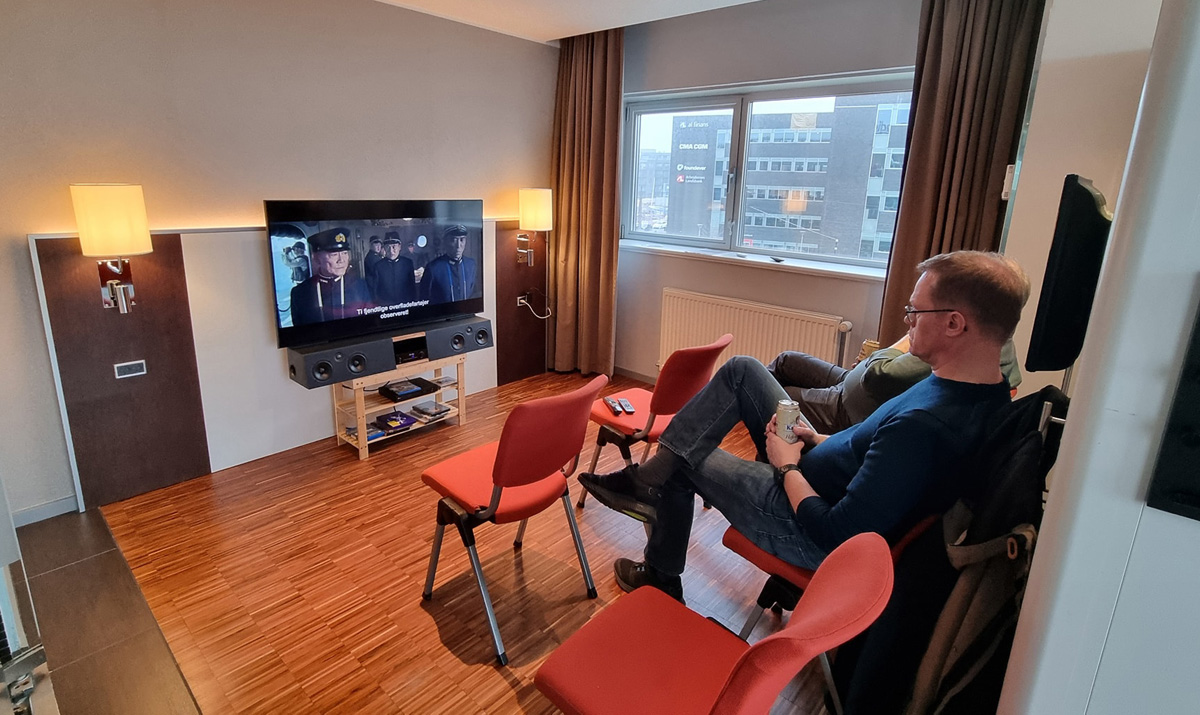
With excerpts from the Midway movie, attendants had to be told there was
no subwoofer hidden somewhere...
22nd February 2024
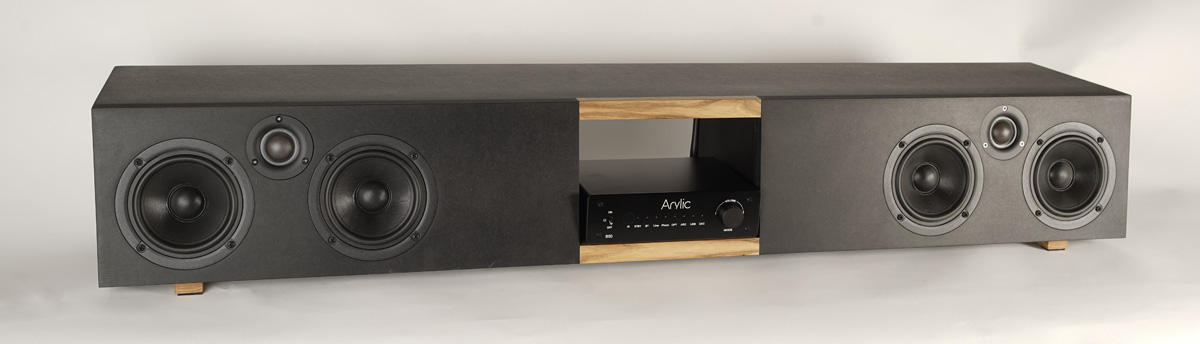
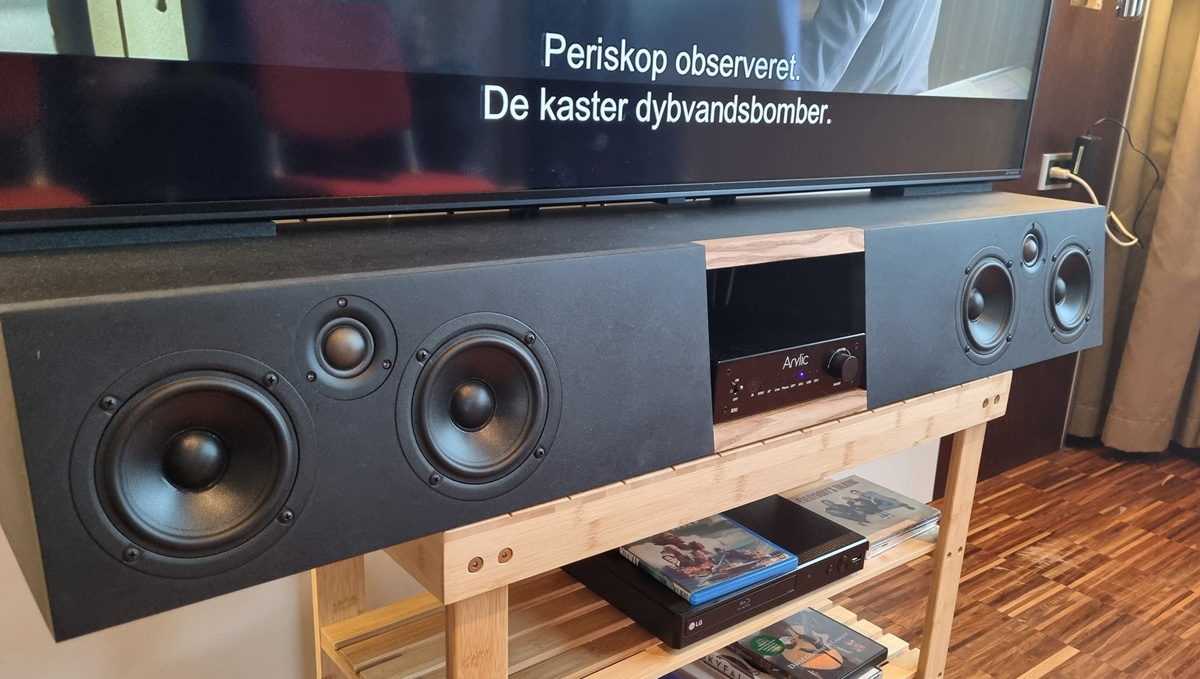
Jann Evers, Director of Sales, ScanSpeak, asked me to do a soundbar for
their exhibition at
Soundsociety
2024 in Copenhagen. A task well received, as I had for long wanted
to improve the sound from our own TV. Jann had tested the
ARYLIC B50
amplifier at home and found it to deliver excellent sound - not least
taking the price into consideration; I mean 140 EUR here in Europe...
Click heading or image to go to page.
The Acrylic amp does most as seen below:
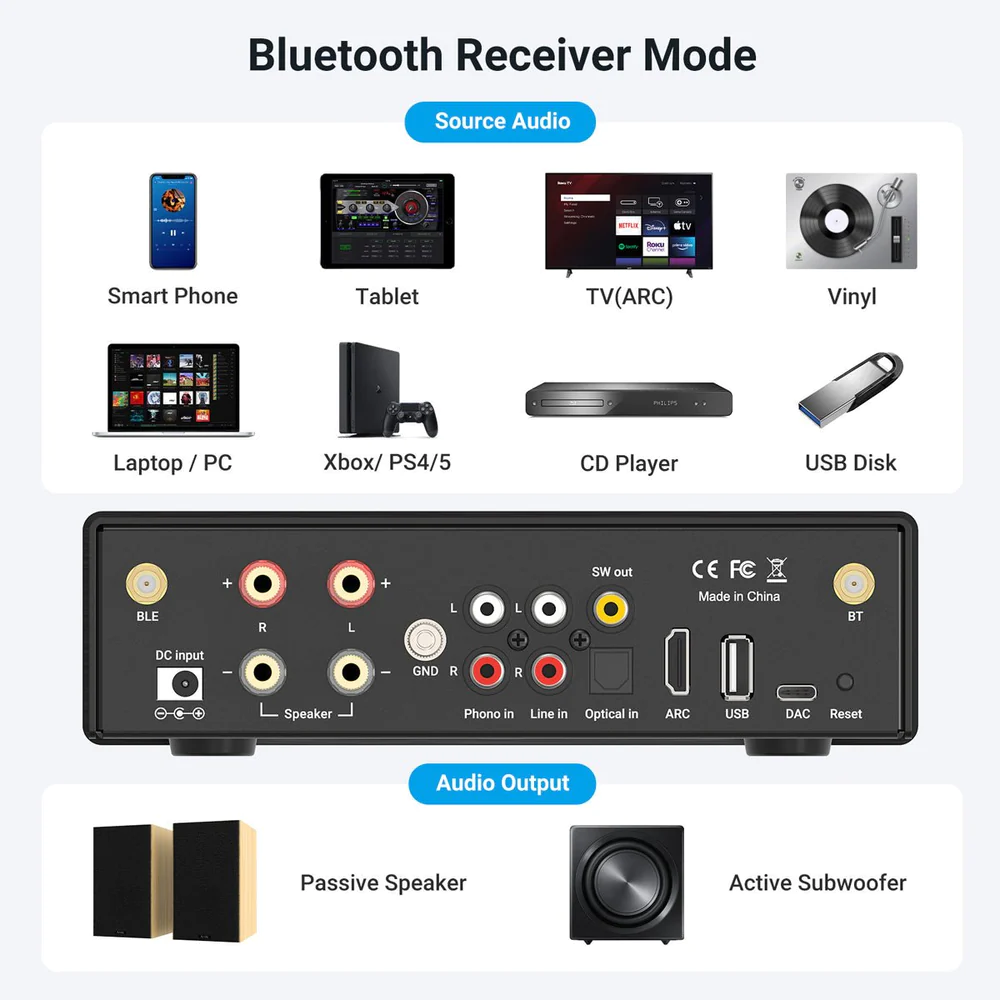
So, should you need a soundbar for your TV - or just a small "stereo" for your mantlepiece, then this may be an option.
23rd January 2024
CENTER SPEAKER FOR THE-LOUDSPEAKER AND FAITAL-3WC-15
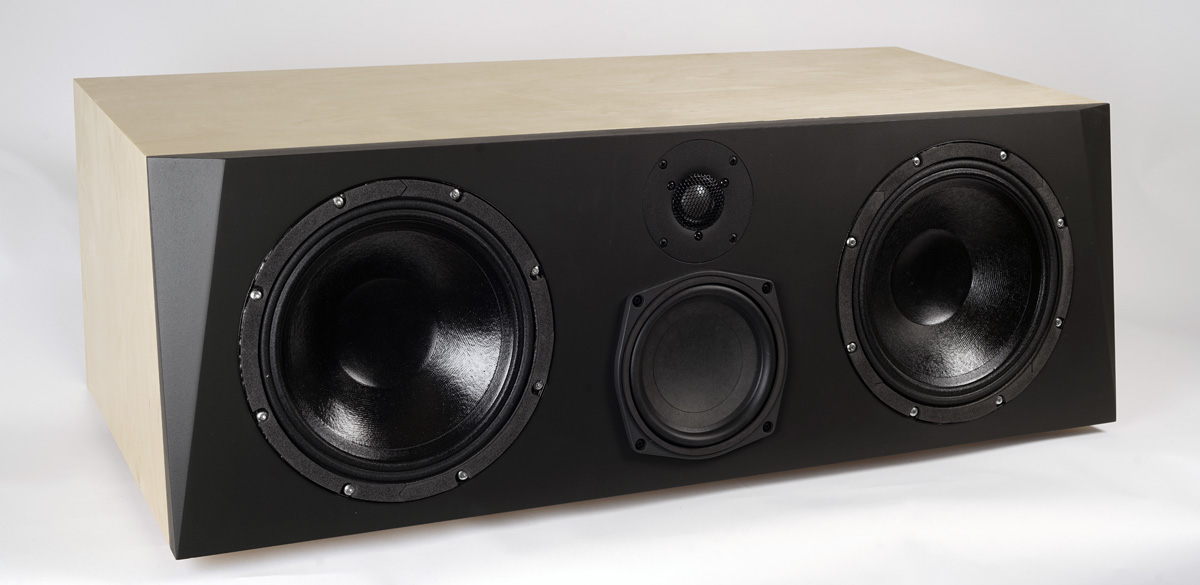
There have been requests for a center speaker
for the The Loudspeaker-1/-2/-3 and Faital-15, matching the potential of
these systems, and none of my existing designs are hardly up to the
task, maybe except the 8008-CENTER, but here is a design that will truly
match potent, high-efficiency main speakers in a surround system.
The magnificent Faital 6RS140 driver was an easy choice for midrange and
the SBAcoustics SB29BAC-C000-4 Beryllium tweeter another easy choice.
For bass there were several options and having quite some experience
with the 18 SOUND 10" bass driver, 10NW650, this was tried and found
more than suitable. This driver is seriously efficient and we have to
use two drivers in series, delivering a healthy impedance above 8 Ohms
in the bass region. Most amps will love this.
19th December 2023
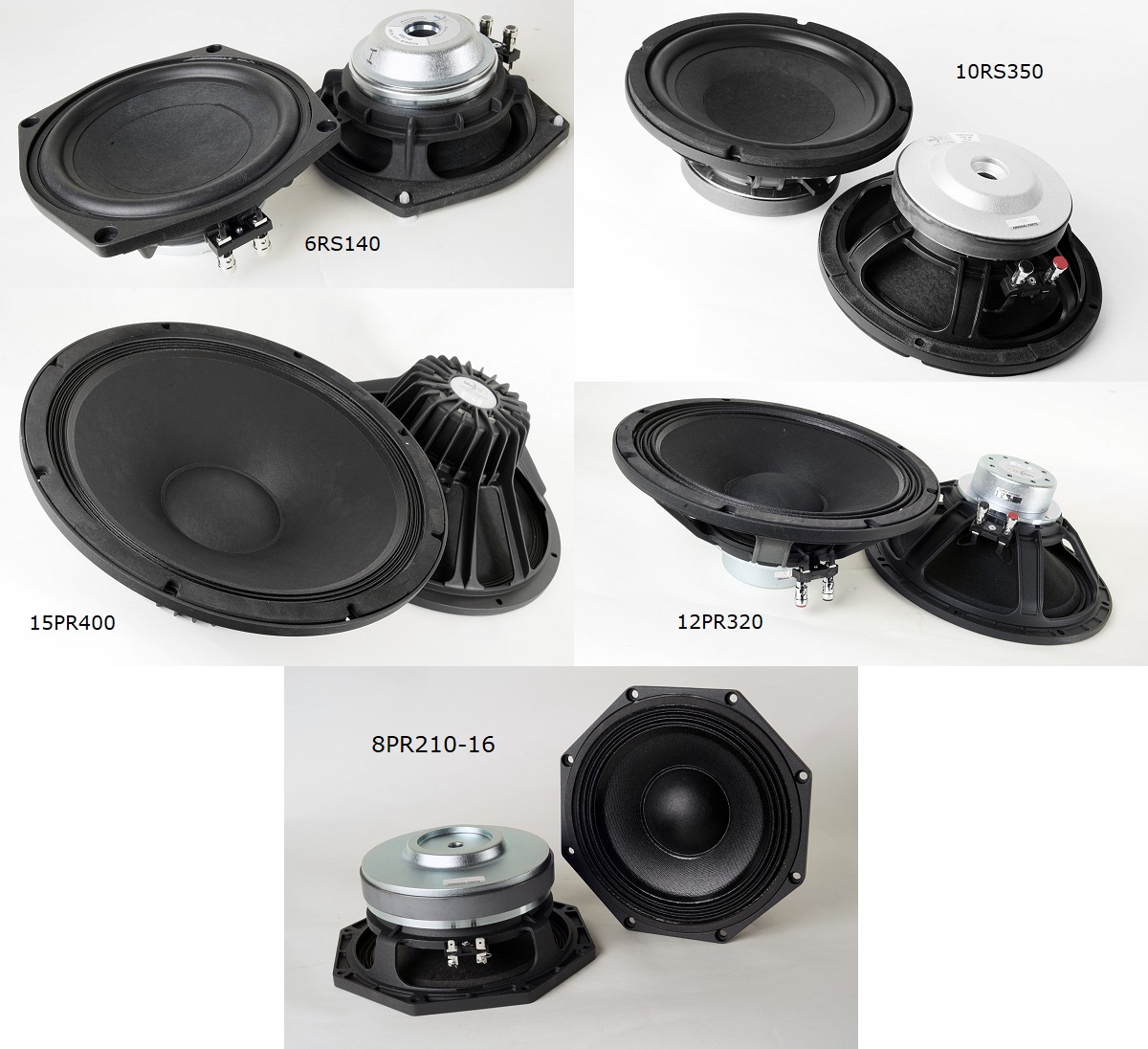
Faital drivers for all constructions now available from Jantzen
Audio.
Click
here for further info.
14th December 2023
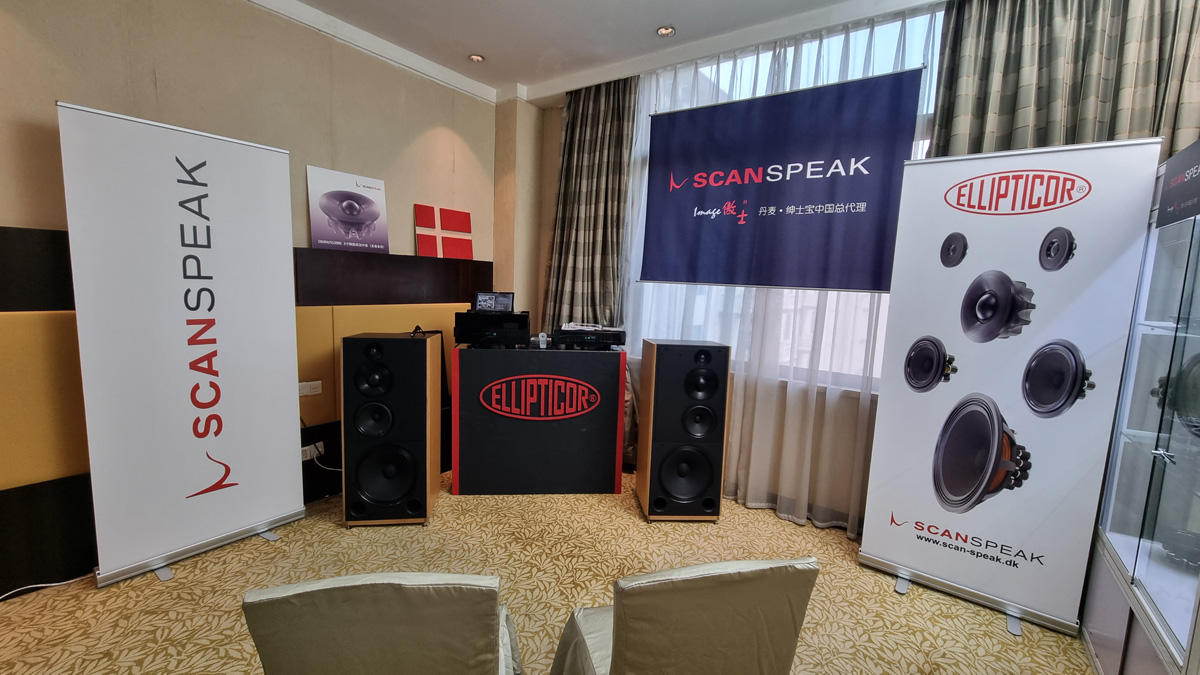
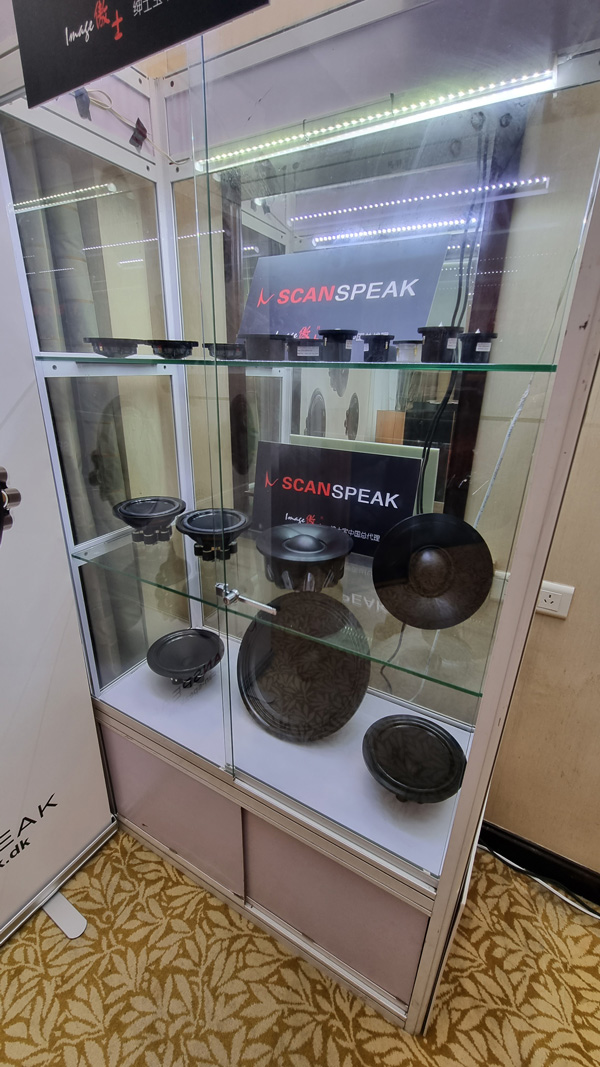
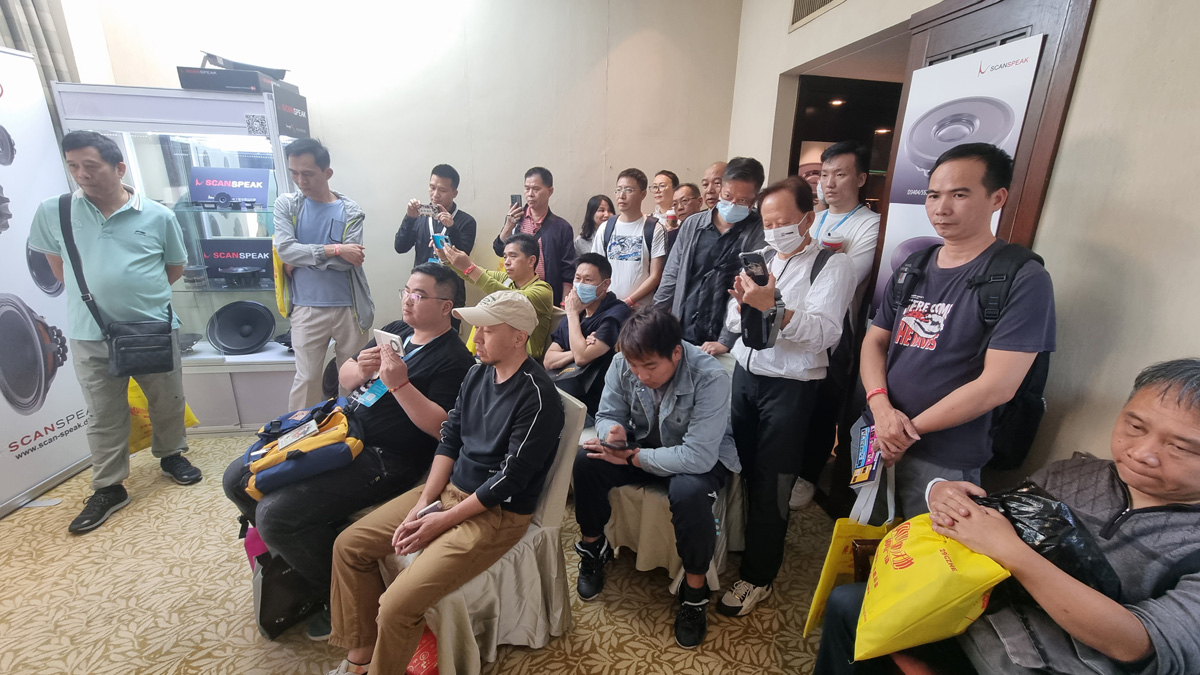
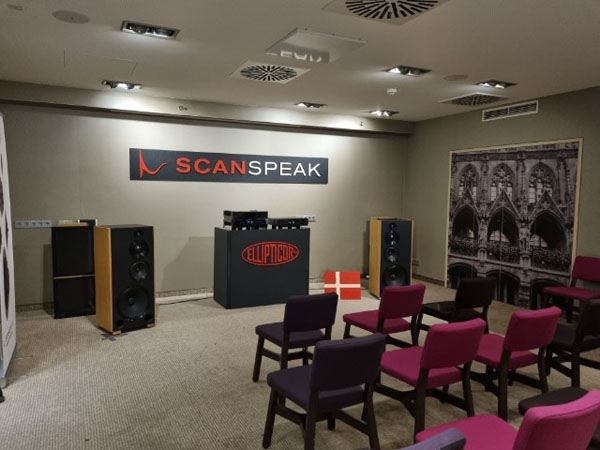
Some images from most recent hifi show in Guangzhou, China, where the
happy marketing boss, Jann Evers of ScanSpeak, presented the
Ellipticor-A50 speaker.
Now these speakers have pretty much been around the world, from Munich
to Chicago - and now China.
At least 6 visitors claimed they would build the speaker :-)
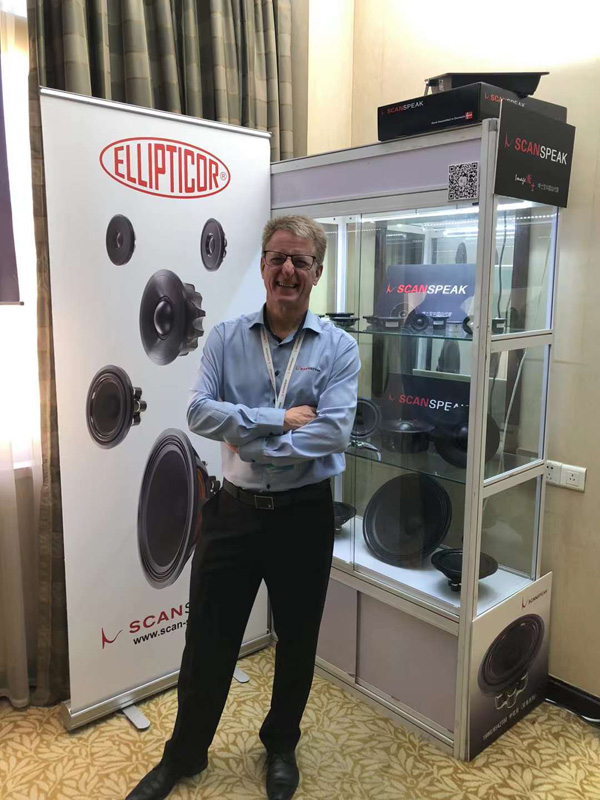
Jann Evers to the left.
7th December 2023
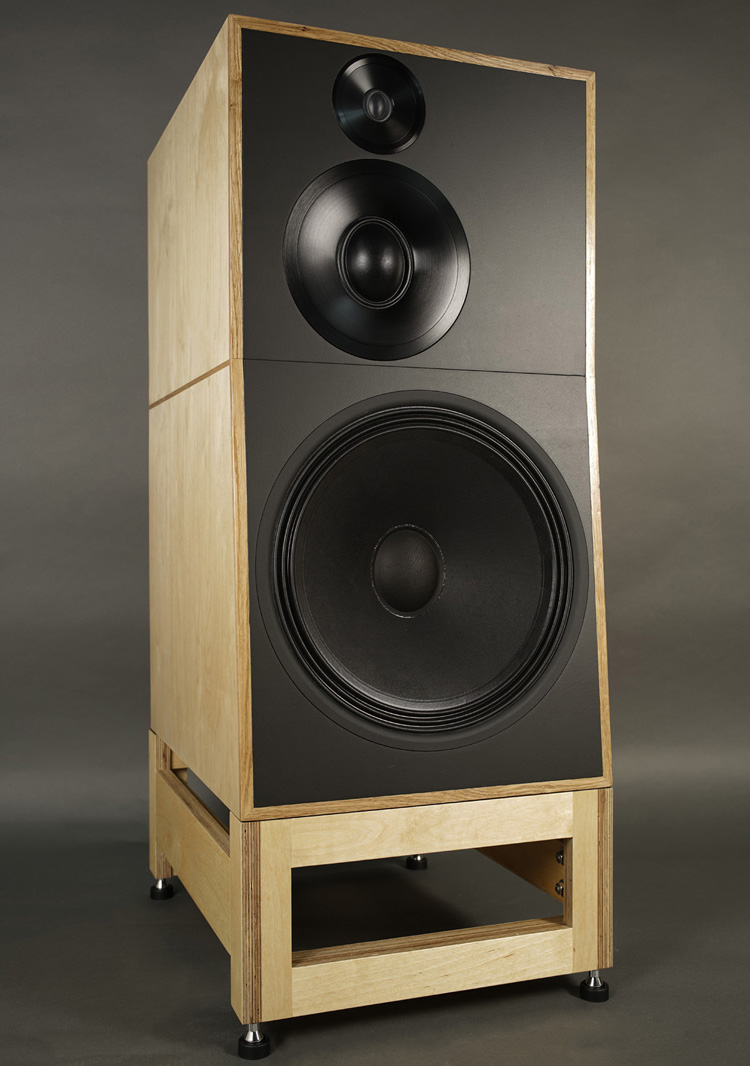
It had to be done.
Mating a large bass driver with a large midrange dome. Nothing new
under the sun, but very little used. I guess Acoustic Research was
the first to do it with their legendary AR3a speaker featuring a 12"
bass driver handing over to a 1½" mid-dome from around 575 Hz
according to specs. I never heard the AR3a, but a friend of mine
still have his AR11s with pretty much the same drivers - and it does
well - after I re-foamed his bass drivers.
Best known
today for this layout of drivers is ATC with their well regarded
range of studio/home speakers featuring the magnificent 3" double
spider mid-dome. British VOLT produce a couple of (single spider)
mid-domes, one 2" and one 3". Most recent addition to the limited
range of mid-domes is the SBAcoustics MD60N-6, which I tested in my
SBA-7MD
construction - and I very much liked what I heard. I just learned
Yamaha launched a new speaker with a 3-1/4" mid-dome, so maybe we'll
see more mid-domes in the future - and I certainly wouldn't mind.
Last year
ScanSpeak released their D8404/552000 mid-driver, a one-of-a-kind
mid-dome with elliptical voice coil of 84/68 mm - and double spider.
Never seen before and partly due to corona I spent almost two years
with the prototypes before final release at the Munich HighEnd show.
And suffice to say, I had some good times with the "D84", which
resulted in the
Ellipticor-A50-mkII.
Now, in mating a bass driver to the D84,
we should most likely not look for some heavy subwoofer type, rather
a driver with a more light-weight cone with the ability of playing
some midrange, possibly all of the midrange, although we're not
going to take advantage of this.
26th October 2023
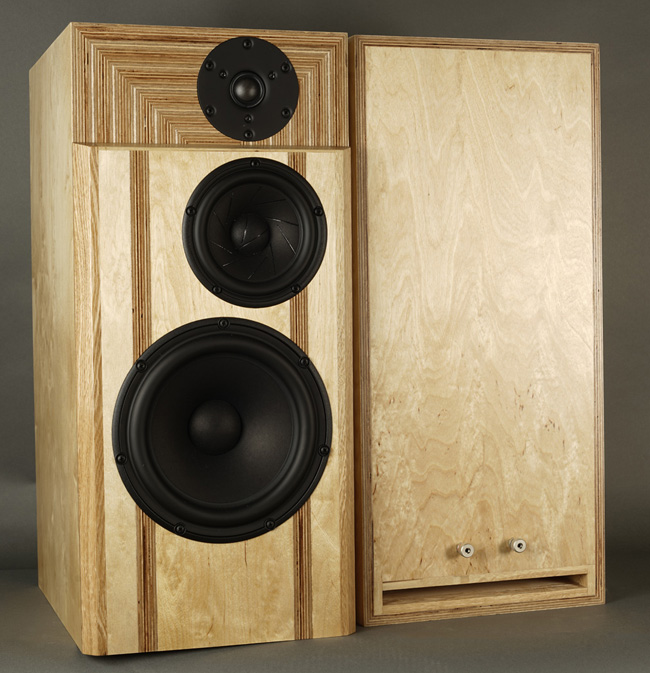
I have made a lot of these 3-way classics - and
for good reason. Easy cabinet construction is an important issue as a
lot of people do not have sophisticated workshops, rather hand tools and
basic workshop facilities. Does this mean we can only build lesser
quality speakers? Not at all! A classic 3-way may prove just as good as
any fancy looking speaker with high-gloss lacquer, etc.
With the Revelator drivers used here we're into high-end and with
high-quality baked coils, Superior-Z and
Alumen-Z
capacitors we're into super-high-end. A speaker is never going to sound
better than what crossover components allow to pass to the drivers and
especially capacitors are a key ingredient in high-quality sound
reproduction.
Click heading or image to go to website.
3rd October 2023
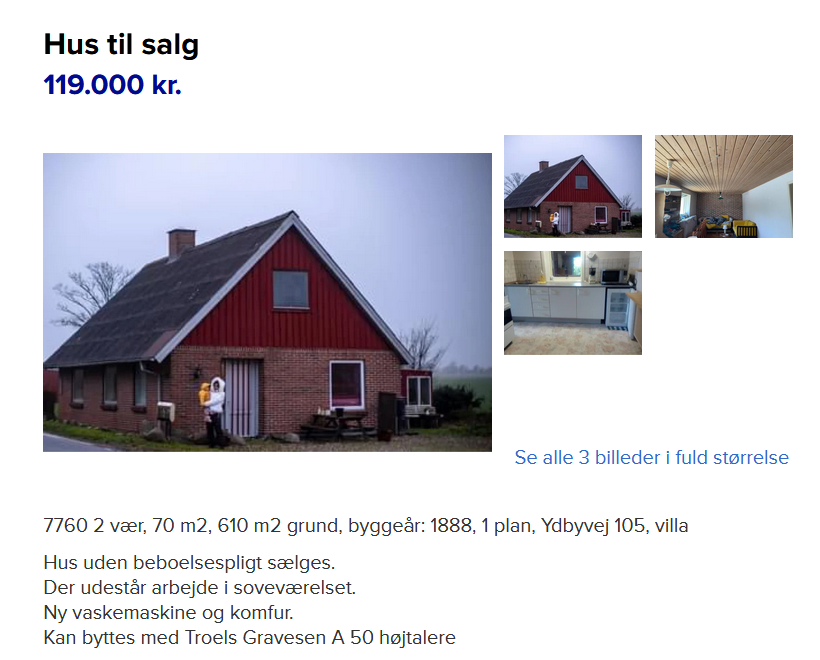
Now, here's a guy selling his house for a pair of ScanSpeak A50
speakers!!
Had not seen this coming :-)
Be prepared living on the west coast of Denmark, beautiful country, lots
of fresh air and close to the North See and e.g. kitesurfing :-)
25th September 2023

When I made the
Ellipticor-2F8 cabinets, I made several upper front panels to allow
the use of various brands of drivers. The bass module is more than
suitable for a wide range of drivers, thus here a version with the
updated SEAS W18NX003 midbass and my all time favourite SEAS tweeter,
the Crescendo T29CF002.
This speaker can also be regarded as a downscaled version of my
CNO-4.
The CNO-4 is a seriously large speaker and not all can accommodate
speakers this size.
Like the CNO-4, the filter can be made really simple due to the linear
frequency response of drivers. Midrange clarity and crystal clear
treble, fed through state of the art crossover components.
Combined with the powerful Faital 10" bass driver driven by the Hypex
module allows you unlimited room adaption. Corner placement, near-wall
placement and out on the floor, the Hypex module allows you to adjust
the bass performance to any room condition.
Fully passive version available should you not have any room
constraints.
16th August 2023
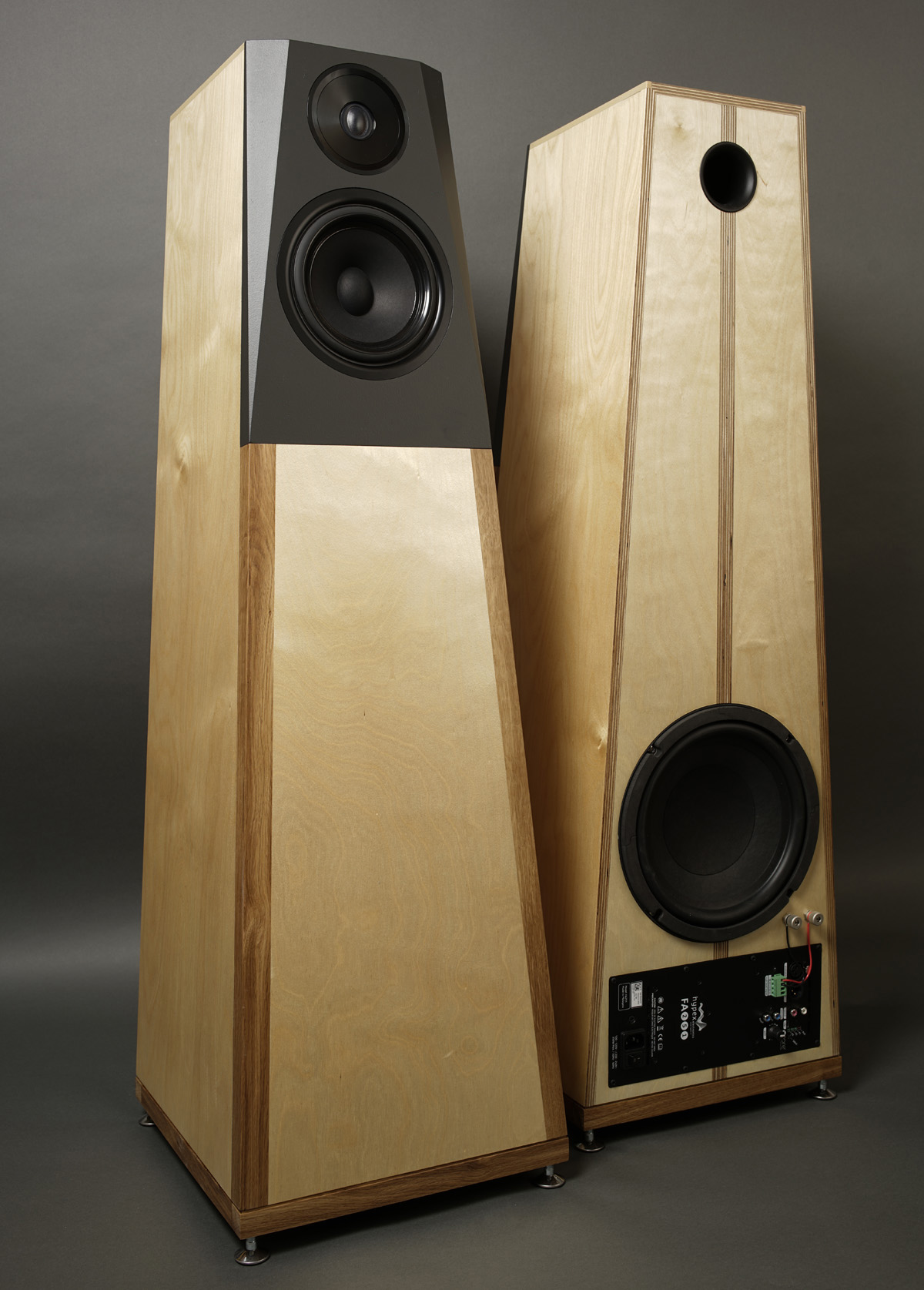
In hindsight, my
ATELL-3 was a keeper, but I was desperate for space and had to let
it go. Actually I may have to lend these to friends to have some space
at home.... Anyway, since then I wanted to make a semi-active version
together with a fully passive version, thus the 8 Ohms Ellipticor
18WE/8542T00 for mid-bass in order to keep final system impedance
relatively high.
With the Viawave ribbon tweeter not being available I decided on the
Ellipticor D2404/552000, being more expensive - but doing so well in my
Ellipticor-A50 it had to be this tweeter.
With the Hypex module running the bass, the MT-section impedance stays
above 7.1 Ohms - and you have almost infinite options for room-adaption,
something very much in demand as room acoustics leaves a lot to be
desired for most.
My 32 wpc EAR-861 runs the fully passive version from its 8 Ohm tabs
without trouble.
I also wanted to use the magnificent Faital 10RS350 for bass as it does
the same as the AudioTechnology 10C77 - and at around a third of the
price. If you're a strong believer in high cost equals better
performance, the AudioTechnology
10C77-25-10-KAP or the ScanSpeak
28W/4878T01 can be used, but only with the Hypex module as I don't
have the drivers and can't ensure proper function from the passive
Faital bass crossover.
24th July 2023
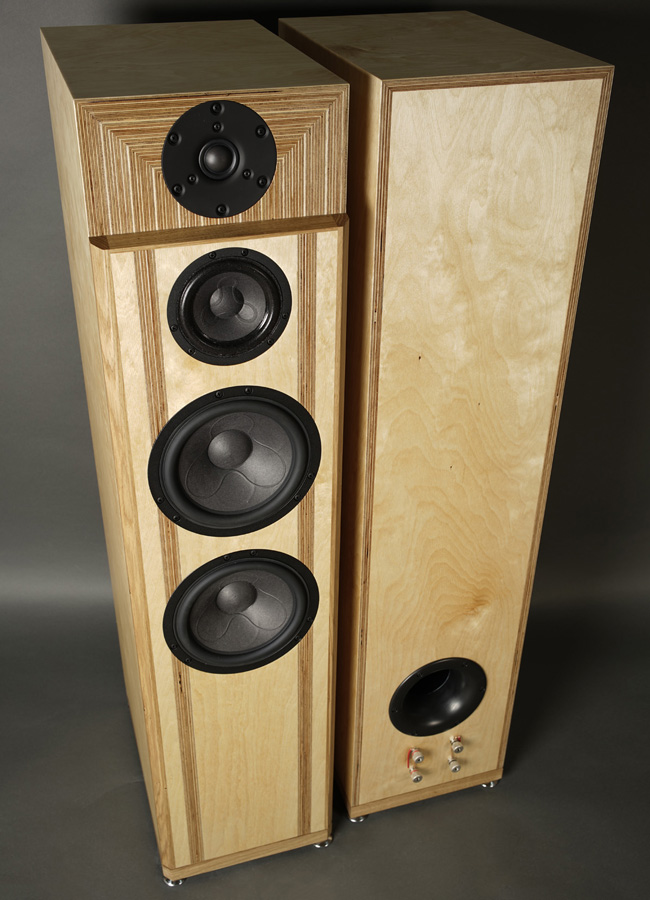
Ever since making the
Ekta-mkII
speaker, the extended version with two 18WU midbass drivers have been on
my mind, but building cabs take time... The
Ekta Grande,
based on Revelator drivers, has been going for many years and
still has some builders, but for years the use of the Illuminator
drivers for a similar construction was on my to-do list.
The sandwich cones and non-reflective magnet systems of the Illuminator
range of drivers have something to offer in terms of dynamic headroom,
uncoloured sound - and well, here it is, the GRANDE's update.
This speaker runs very well from my
EAR-861 amp at "only" 32 wpc - and from the 8 Ohm tabs.
Deep bass, smooth and extended midrange and lower treble from the 12MU.
No wonder this mid-driver has found its way into the most expensive
speakers on the market. What we as diy'ers can do - and very few
manufacturers can't - is using premium crossover components.
The Ekta-7741 is going to be one of my stock speakers as an example of this
configuration. I like it a lot!
22nd June 2023
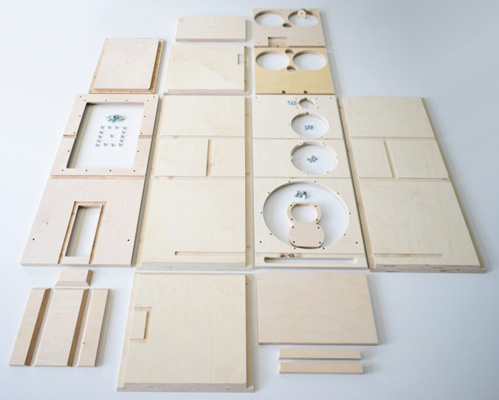
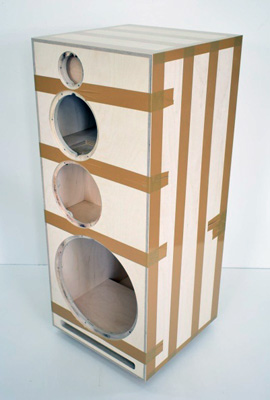
Flat-pack or ready made cabinets for Ellipticor-A50-mkII now available
from
EBEL Holstechnik, Germany.
Click images to go to website.
13th June 2023
Pleased to release the update to ScanSpeak Discovery-18W, now Discovery-18W-mkII
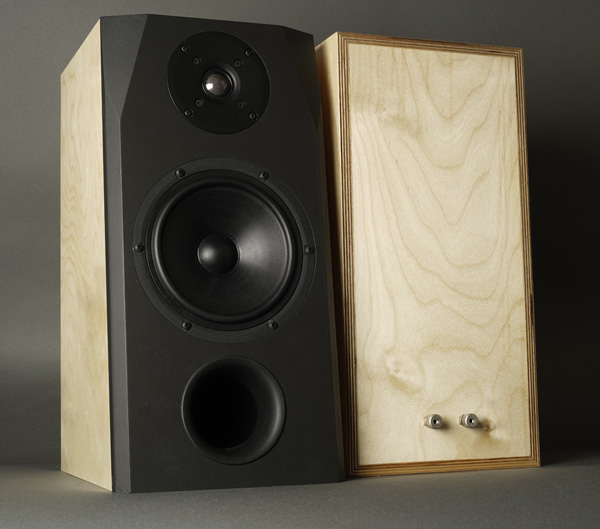
I can understand why some people refrain from
seriously expensive drivers - and not only for economical reasons - but
for the very simple reason, that if we never play very loud, a cheap
drivers can sound just as good as an expensive one. What expensive
drivers should give us is dynamic headroom. The ability to play loud and
still keep distortion low. And to be fair, quite a few expensive drivers
do that.
For midbass here I picked the 18W/4434G00 rather than the 18W/4424G00
due to it's larger voice coil and increased power handling. The 4 Ohm
version due to it's enhanced sensitivity and we can manage a system
sensitivity of 89 dB, even with a decent bass extension.
Nothing to add on my tweeter choice, the venerable D2608/913000. I have
used this tweeter extensively, even together with high-cost midbass
drivers.
7th June 2023
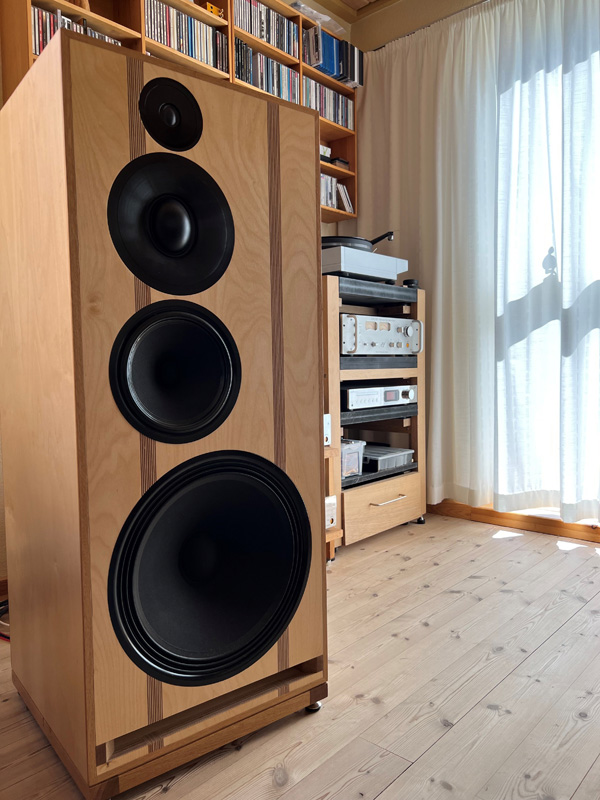
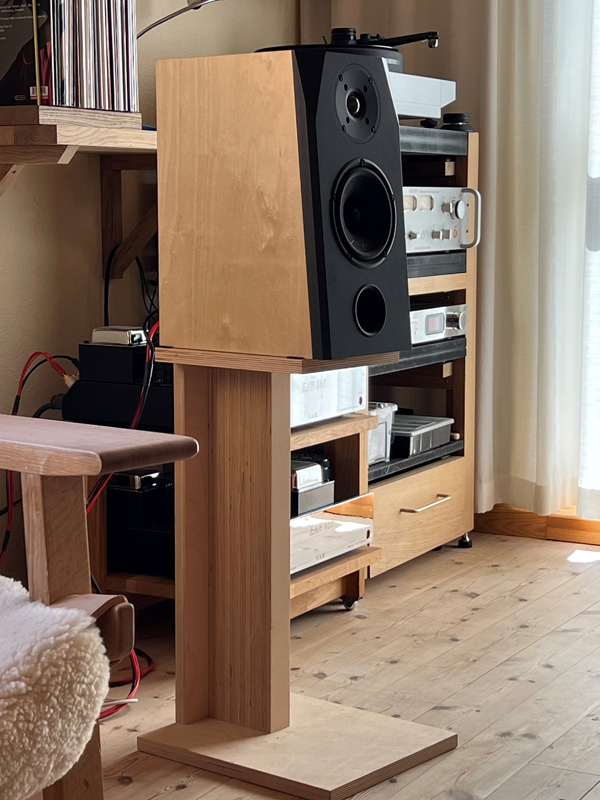
Seeing the images below may cause some to think that listening to the
Revelator-51 in comparison with the Ellipticor-A50 is unbearable. Well,
it isn't!
Obviously we don't achieve the same visceral impact from the Rev-51 as
from the A-50, but played at reasonable levels, the joy of music can be
just as fulfilling.
Yes, size matters and deep powerful bass is the foundation of music, but
I wouldn't say this makes the small 5+1 an intellectual exercise. With a
high-quality front-end, we may extract as much from our musical sources
as from bigger speakers. The tools for this is high-quality drivers,
premium crossover components - and obviously careful tuning of the
smaller speaker in terms of a non-aggressive upper midrange and a well
balanced treble. A small high-quality 20-50 watt amplifier and good
source material being streaming or vinyl-playback is what it takes.
Three speaker constructions were finished during the last months of
winter and spring and will be launched over the summer months, so stay
tuned.
2nd May 2023
ScanSpeak Revelator-51 release.
Click heading or image to go to
construction.
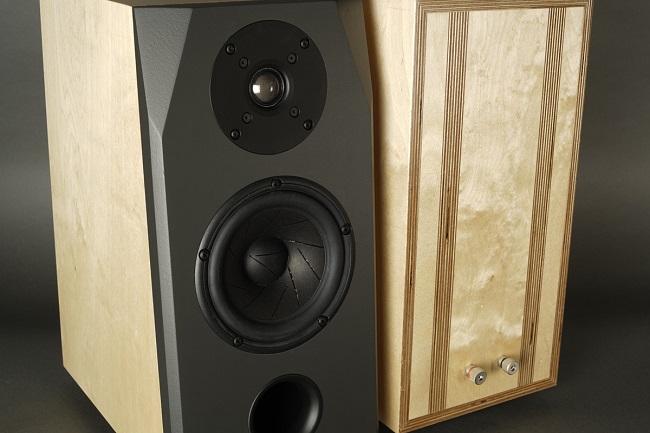
Two-way mini from magnificent Revelator 15W/4531G00 and Discovery
D2608/913000 tweeter,
delivering potent bass, ultra transparent midrange and a simple 2nd
order crossover that makes a seamless transition from midrange to the
treble. Easy cabinet construction.
24th April 2023
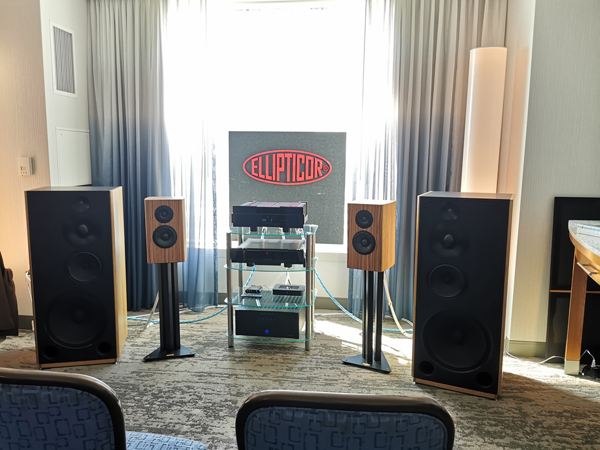
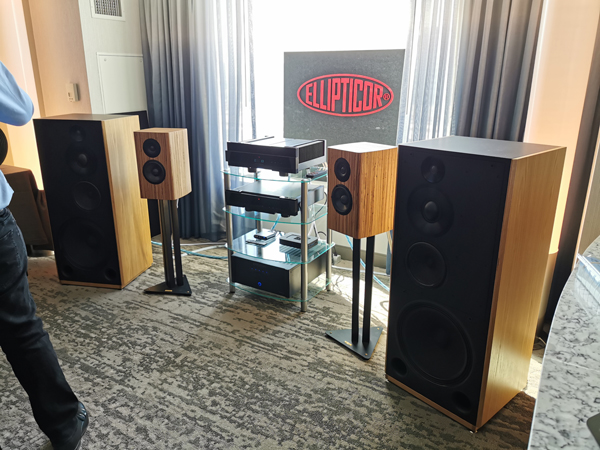
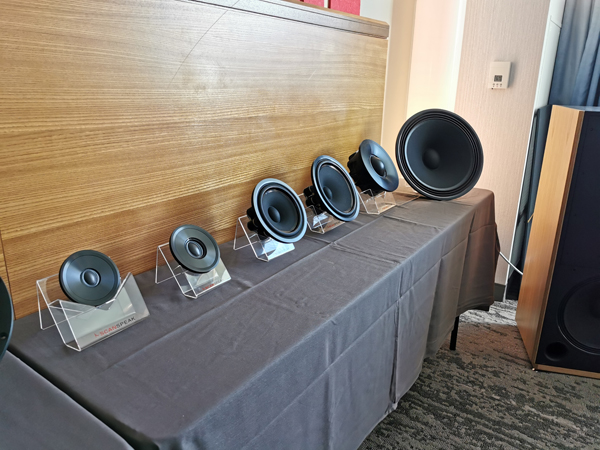
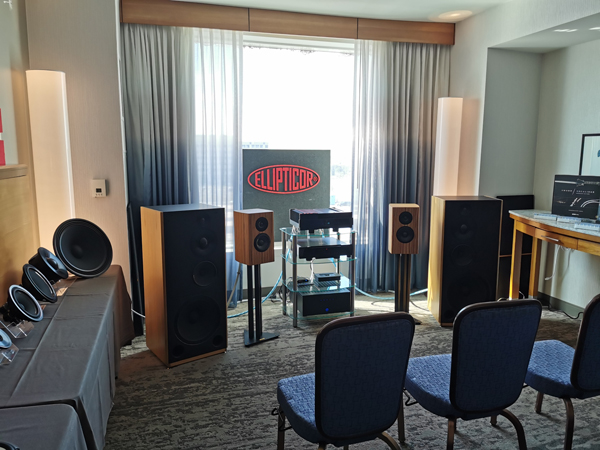
Pics from the Axpona exhibition.
Read feedback from visitor
here.
17th March 2023
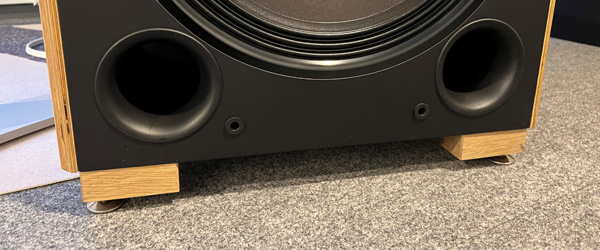
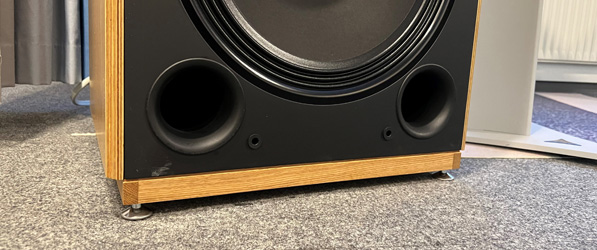
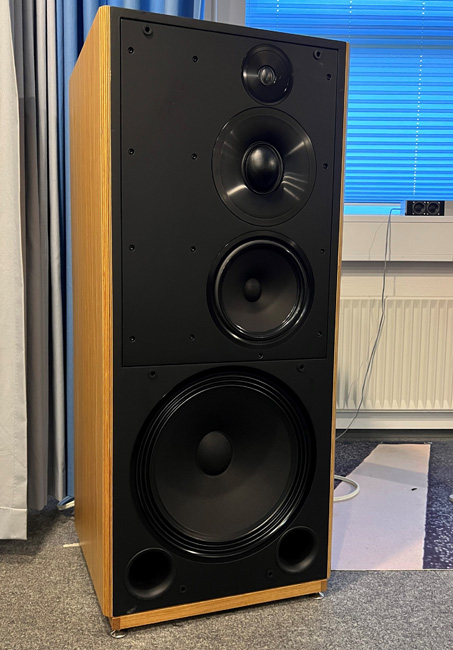
Went to the ScanSpeak factory in Videbaek yesterday to mount some new
solid oak base supports for their Ellipticor-A50s to hopefully make a
nicer appearance for their upcoming display at
AXPONA 2023 in
Chicago. I was in a hurry last year for the Munich exhibition and seeing
them at the show here in town a couple of weeks ago, I realised it could
be nicer.
Just this to notify our US kit buyers that should you be interested in
hearing more, then the Axpona is an opportunity.
06th March 2023
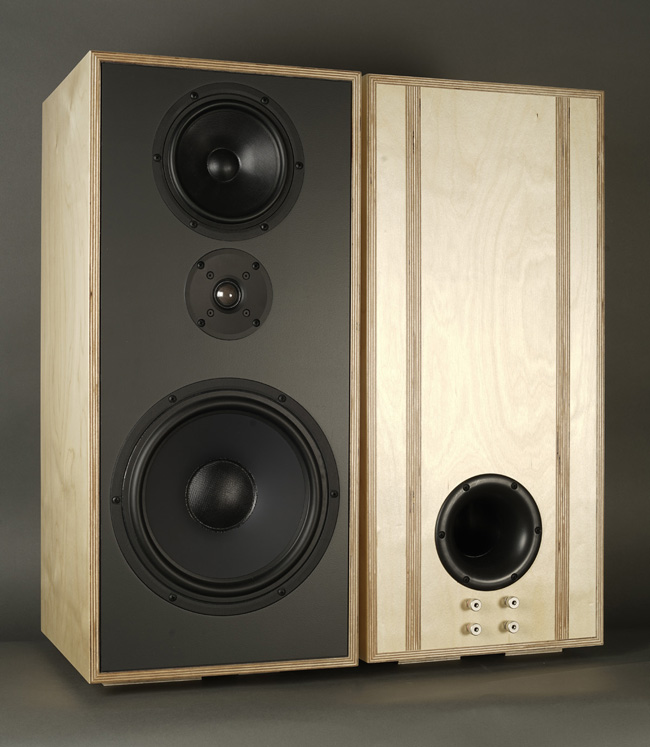
Pleased to announce the release of the ScanSpeak Discovery-3WC-10 kit.
Click heading or image to read all about it.
04th March 2023
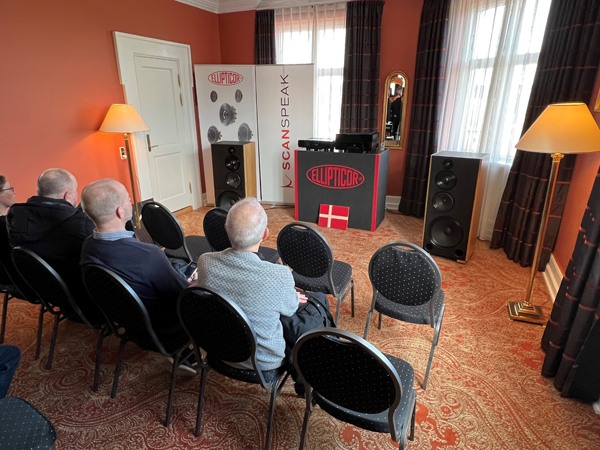
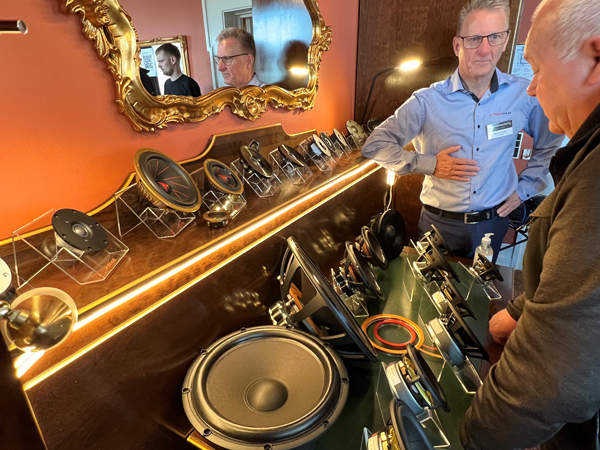
Pics from a local hifi show and my Ellipticor-A50s were on display.
Always exiting to hear your stuff in other surroundings and fortunately
most rooms at the Hotel Royal are well damped and acoustically well suited
for hifi shows.
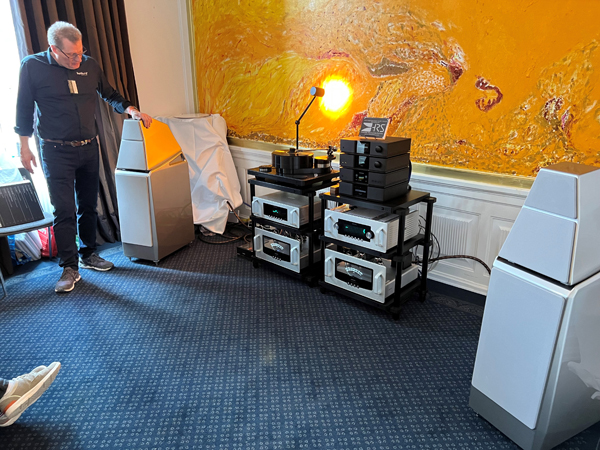
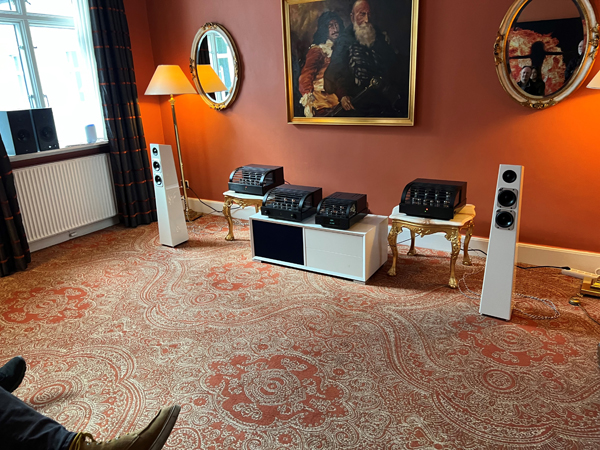
Going through a lot of room listening to streamed music, I think a heard
a noticeably similar sound from many - quite different - systems. What
stood out was the Audio Research/Wilson Audio room where a Brinkmann
turntable equipped with an Ortofon Diamond made me feel at home. Stellar
sound, and the Sasha/DAWs sounded so much better than what I once heard in
Munich. Overall a very well balanced system albeit too much room-gain in
the bass, but the poor guy couldn't do much about it. A visitor asked
for the removal of front grills and he declined! I agree. No grills
make us sometimes listen more with our eyes than our ears. And
Wilson Audio makes excellent grills from very slim glass fiber plates
(?) My guess. The exhibitor played a copper plate (mother) used to make
the
stamper when making LPs and compared it to the final vinyl. Not easy
to hear any difference, but interesting test.
The very slim Totem speakers to the right played really well too! Surprisingly deep
bass from so small drivers. Totem makes their own midbass drivers with PP
membranes and uses no low-pass filter at all. The tweeter, for good
reasons, have some sort of high pass filter but that's all we would know
from the exhibitor.
Two ScanSpeak constructions are in pipeline and ready for launch as soon as SS can deliver drivers. Due to the overall turbulent political situation, it seems the world is reorganizing in many ways and delays are common.
10th January 2023
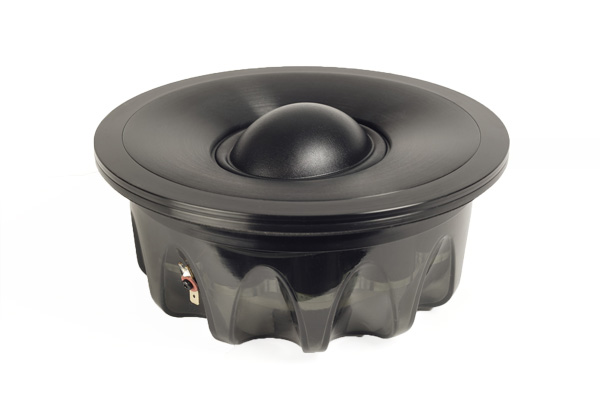
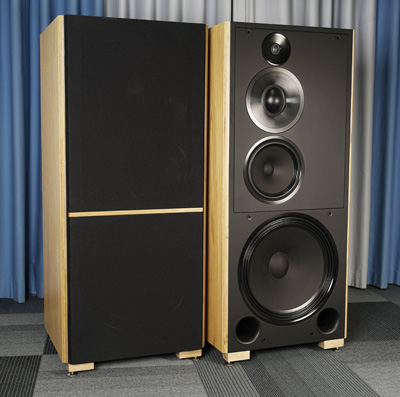
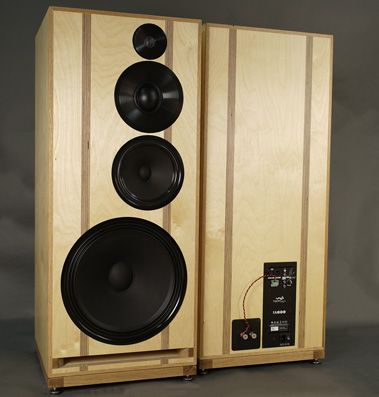
Finally! Jantzen Audio has received the final production samples of the new ScanSpeak Ellipticor D8404/552000 mid-dome and we can finally release the anniversary kits, Ellipticor-A50 and Ellipticor-A50-II, the latter semi-active and one of my few stock speakers and my reference for all speakers to come.
To go:
4th January 2023
Happy New Year!

Should some of you find the Purifi-Be above your budget, I have made a version with the SBA TW29RN-B-4 tweeter, saving some 250€.
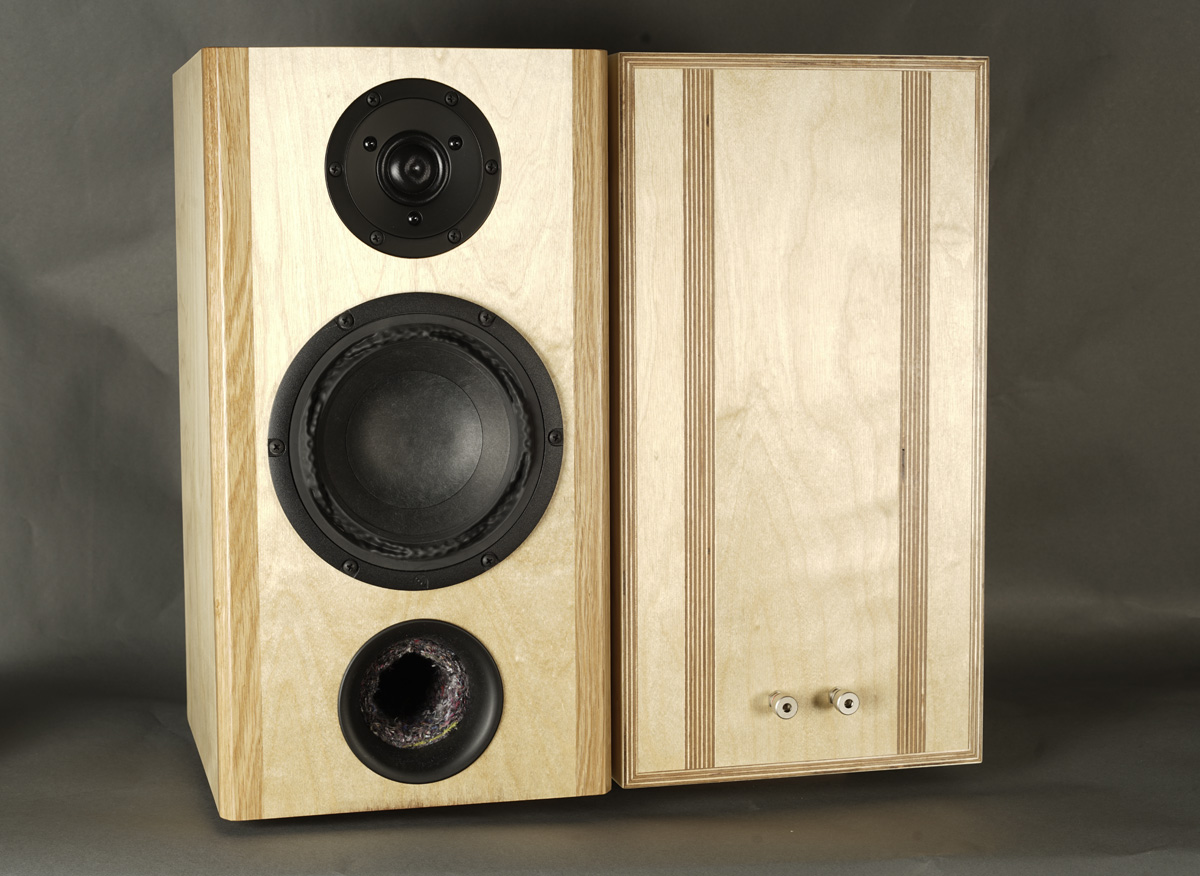
Purifi-Fa: Click image to go to construction page.
23th December 2022
November was busy selling stuff. From time to time I gather too much
gear and need to let go of most. If I had 200 sqm storage, I'd keep most
of my speakers, some of which the woodwork represents the best I have
done, like the ATS-4HE and Illuminator-4s. I'd also like to keep the
Ellipticor-3s and The Loudspeaker-IIs. But I don't have 200 sqm space to
spare. A number of speakers has left the
premises the last months and I hope they will do well with those who
bought.
Ideally I'd like to keep three larger speaker
constructions for reference like my current Ellipticor-A50-II, the CNO-4
and Revelator-851. Also a couple of stand-mounts is nice to
have in the collection, thus my Illuminator-71 and Purifi-6R/-Be.
Possibly my
QUAD 2812s have to go too - and I'll badly miss them, but they do take
up quite some space. Selling, packing and shipping - I hate it, but it
must be done once in a while.
2022 unfortunately brought back war to Europe. I
seriously hope Dmitriy of Viawave will be back in business some day in
the future although observers appear to be cautious of being too
optimistic.
These ribbons deliver state of the art performance - and at a reasonable price.
With the introduction of Jantzen Audio
MKT Z-caps a lot of files had to be corrected with amended parts'
lists, and drawings had to be updated. I hope it's all correct. In 2023
you will see
a new Jantzen Audio website with a configurator where you can design
your kit with regard to level and inclusion of drivers and accessories.
This will hopefully make it easier for customers and relieve Jantzen
Audio of a lot of mails back and forth.
2022 was a record year in terms
of turnover - never have Jantzen Audio shipped so many kits. We thought
corona was the cause of the increase in sales in 2020-2021 - and it
probably was - but the trend seems to continue. Thanks to all who trust
in our products. Currently some 80+ kits are available, hopefully
satisfying most
customers, and from feedback they appear to do so. What is out of our
hands is your room, your associated gear - and your expectations.
I hope some of you will enjoy my December holiday
Ellipticor-TQWT fun. Speaking of Ellipticor, I hope the Ellipticor D8404/552000 will
soon be released as we have potential
customers waiting for the Ellipticor A50 speaker despite its horrific
price.
Hope you have some relaxing holidays and a Happy and Healthy New Year!
15th November 2022
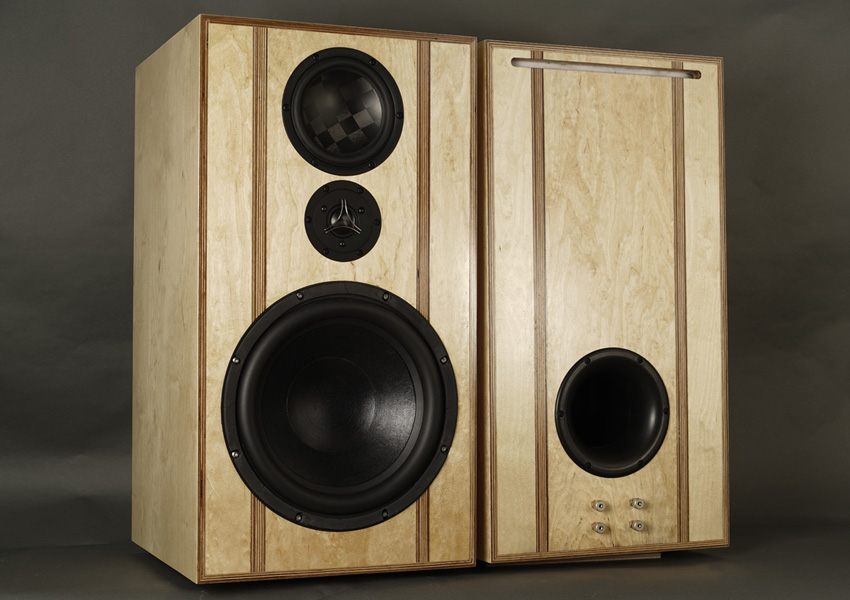
Pleased to announce this classic 3-way featuring SBAcoustics TX units
and BMS 12" bass driver. Doing the SBA-7MD speaker gave me appetite for
more of the TX drivers, hence now for midrange and tweeter. The TX
drivers offer exceptional level of transparency and dynamics.
The bass crossover has an new feature in that bass level can be
passively adjusted to suit most placements in-room, the everlasting
problem of room-gain from corner placement, out-on-the-floor, etc. All
speakers are subject to room gain and my speakers with the bass driver
driven from a Hypex plate-amp can infinitely adjust for room conditions,
but mostly simple means are suitable and here we have a passive solution
from adjusting the upper bass impedance peak.
Click heading or image to go to FUSION-22 page.
27th August 2022
Click image to go to website.
I hope you all had a great summer here on the Northern hemisphere, and
maybe have gotten speaker hungry again after the holidays. From July
sales I can actually see quite a few of you have spent some time in your
workshop also. I couldn't be more pleased.
The speaker above, the
SBAcoustics SBA-7MD, is a bit different from what
I use to do as it features a transmission line cabinet delivering
surprisingly deep and powerful bass from its MW19TX-4 driver. The all
new MD60N mid-dome ensures a smooth transition to the dotted dome
tweeter. The crossover features some new Jantzen Audio MKT-Z-CAP, which
will be separately introduced when ready for launch. I was very pleased
to learn Jantzen Audio taking in these caps, as it solves a lot of space
problems for me in designing crossovers, in particular bass low-pass
filters, where high-value caps are sometimes needed - and in tweeter
crossovers in case we need to linearise impedance. The new caps, and the
kit above, will be available from ultimo September.
In a lot of kits where I would use electrolytic caps or CrossCaps, these
MKT caps will be replacing these. 100 uF CrossCap is seriously large and
well, the small electrolytic caps just doesn't catch on with customers.
In many cases electrolytic caps are doing very well, but I (we) can't
convince customers this is the case and if something has been
established as the truth, not much we can do about it. Hence, the
Jantzen Audio MKT-Z Caps. You will have to pay for this, but if it makes
you happy, I'm happy too.
Click image to view large.
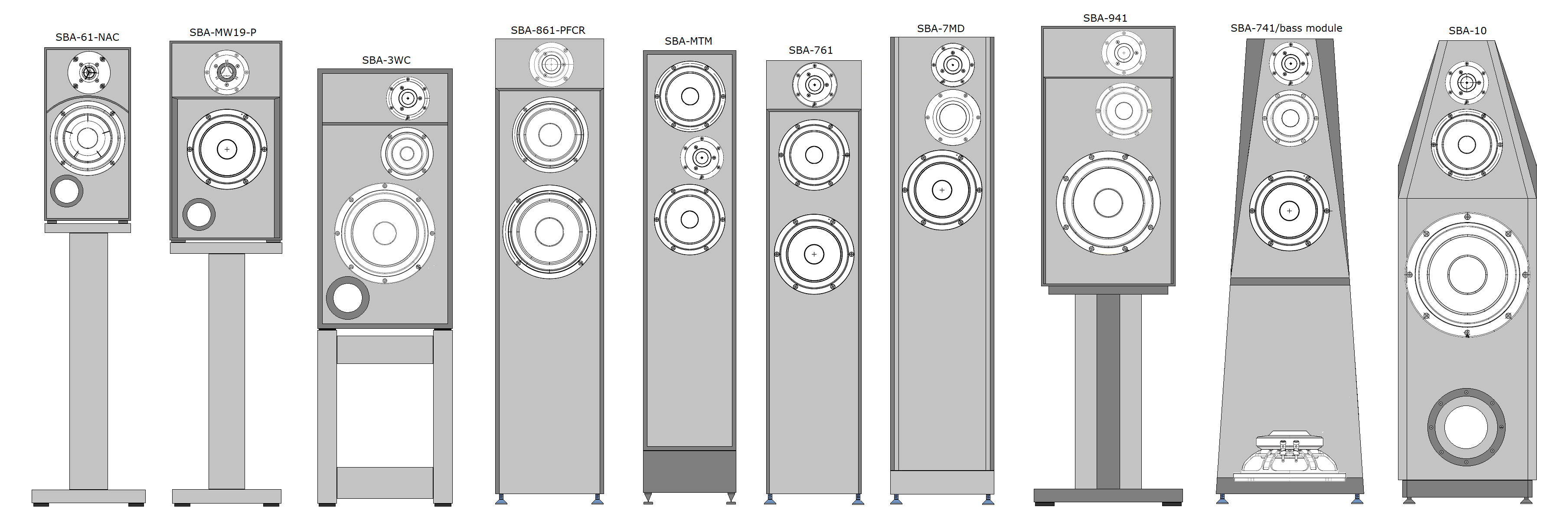
Above the complete range of SBAcoustic constructions supported by
Jantzen Audio.
The range has grown over the years and I pleased to add this latest
SBA-7MD.
By the way:
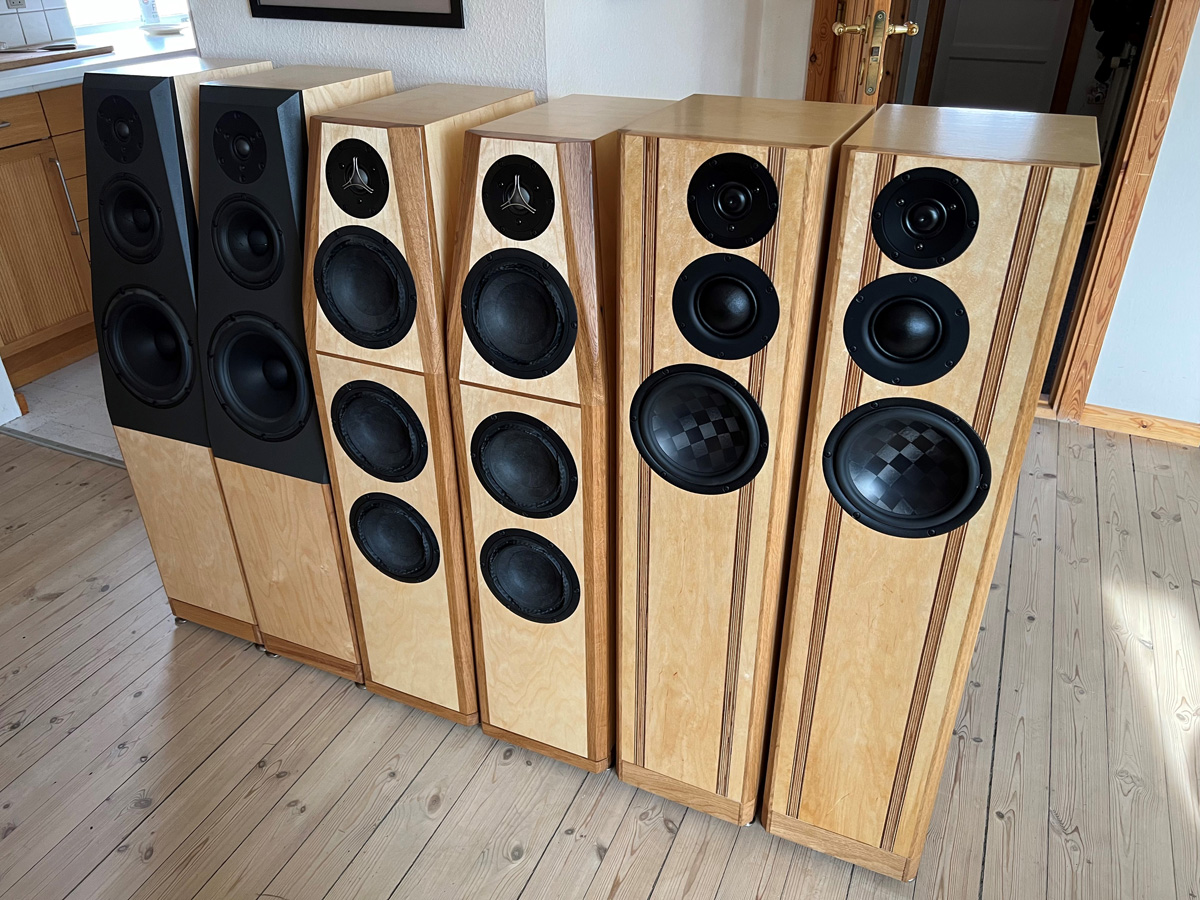
By the way: I just got my Purifi-6661s back from the Munich shown and
had the opportunity to compare these three floorstanders including the
new SBA-7MD. Been away for more than 3 months, I'd completely forgotten
how the Purifi would sound and it was a pleasant surprise to set them up
again and hear that magnificent clean midrange. The PTT6.5M08-NFA-01
midrange (terrible name) is certainly a potent driver delivering the
goods with exceptional little colouration. A tad - and I mean tad - more
clean than the ScanSpeak 15M driver, although I love the ScanSpeak's
slightly - and I mean slightly - more lush presentation. Since then I've
modified the Rev-851 crossover for the ScanSpeak D3004/664000 beryllium
dome and - again - made it a tad more neutral, not better, but slightly
more neutral in the overtone structure. Now, a new dome won't have
exactly the frequency response as before, so just a small change in
level here and there may count for our impression and it is easy to be
fooled. There will another update on the Rev-851 with Be dome as some
has requested this.
The SBA-7MD certainly shouldn't have the bass capacity of any of the
others, but the MW19TX in the transmission line certainly makes up for
this and could easily make us believe we're hearing an 8" bass, that's
how potent it is.
I can't say any of these speakers sounds significantly different from
the others, but they clearly tells there are many ways to aural nirvana.
12th June 2022
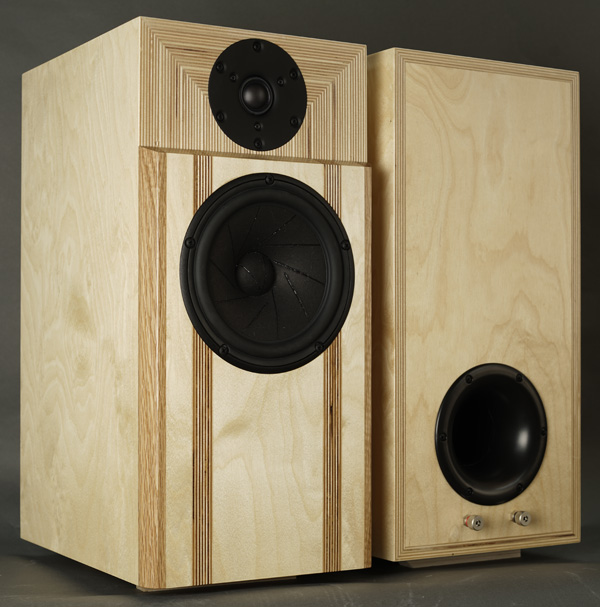
To complete my ambition of a wide range of speakers primarily based on
ScanSpeak Revelator driver, I'm pleased to release this
Revelator-66.
I many ways similar to my
Illuminator-71, but these sliced paper cone drivers stand the test
of time and deliver the goods decades after release - and most likely
for decades to come.
19th May 2022
It is with great pleasure I can finally release these two files on the
ScanSpeak 50th anniversary speakers. They have been two years in the
making, being delayed for many reasons, but now finally finished and on
display at the Munich 2022 High-End Show.
Below to the left, the speaker I made for ScanSpeak, and to the right
the one I made for myself. One is fully passive and the other have the
15" bass driven from a plate-amp also handling the low-pass filter.
The D8404/552000 midrange dome is the only large midrange dome ever made
with an elliptical voice coil, double spider and a gigantic magnet
system delivering some 92-93 dB sensitivity. It's the heart of the
system and it's a game changer in handling some four octaves from around
300 Hz and way into the treble range. Not having any crossover in this
region pays off. Truly the best speaker I have ever made - to my ears!
Please read
here.
Click images to go to websites.
Be prepared kit prices ex. VAT will be in the area of 12.5 kEUR.
With an average VAT of 20% we're talking 15,000 EUR.

Here my Purifi-6661 speakers at the Munich High-End Show.
08th April 2022
Pleased to release these two center speakers
completing the range of
ScanSpeak
Illuminator speakers and the SEAS speakers based on the
magnificent nextel coated midbass W18NX001 and W18NX003 drivers.
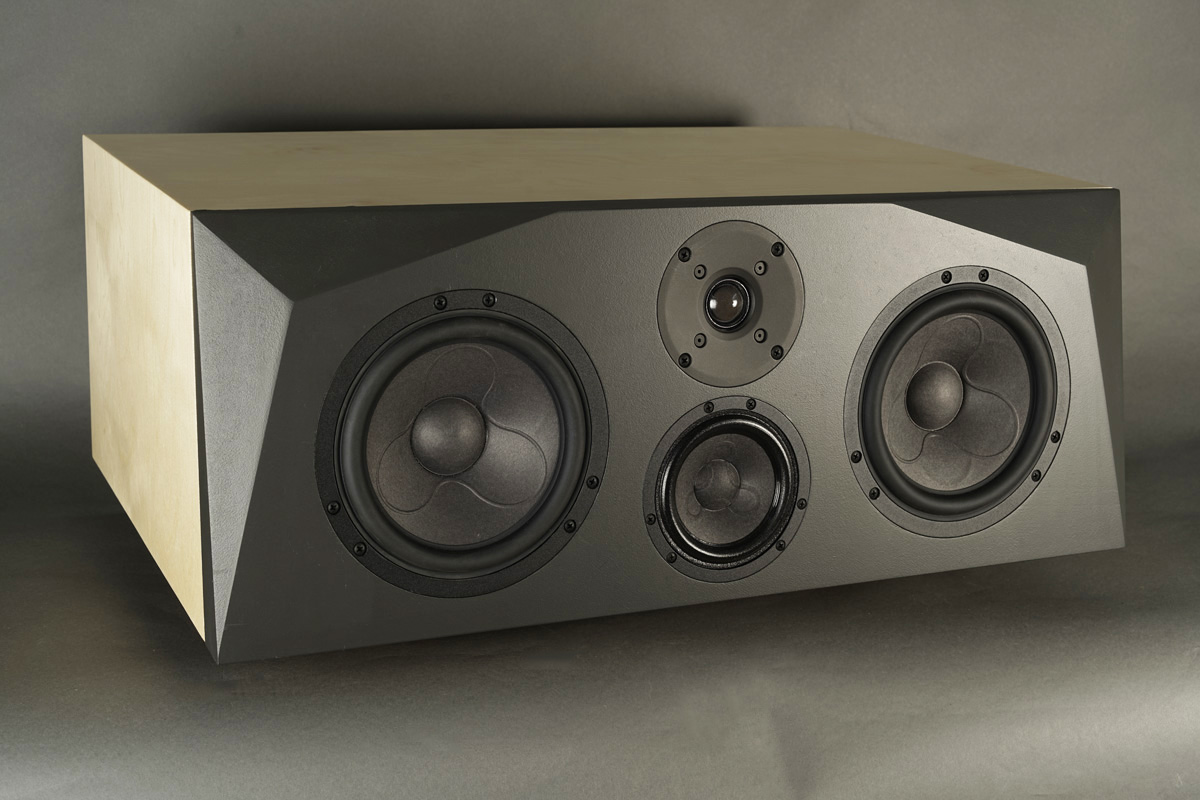
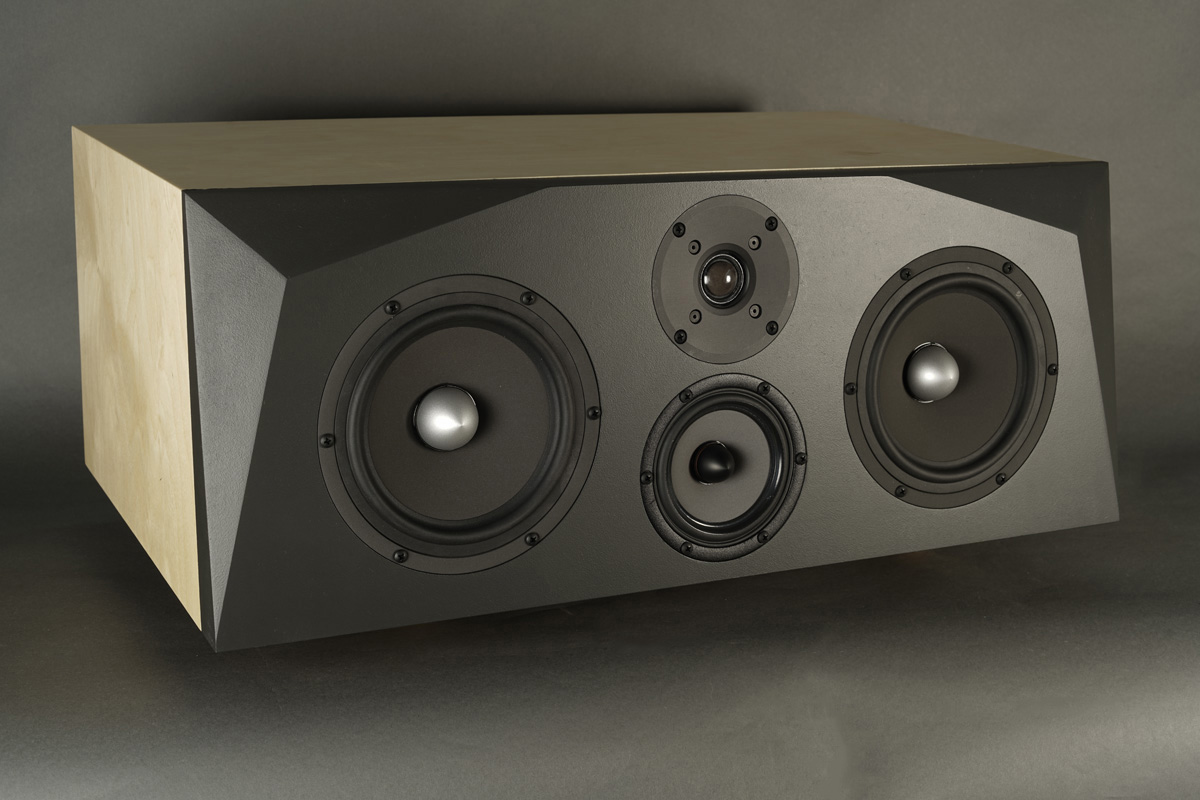
SEAS-CENTER-EXCEL with W18NX001 midbass
drivers.
Both versions featuring the new edge coated ultra linear W12CY006 midrange driver.
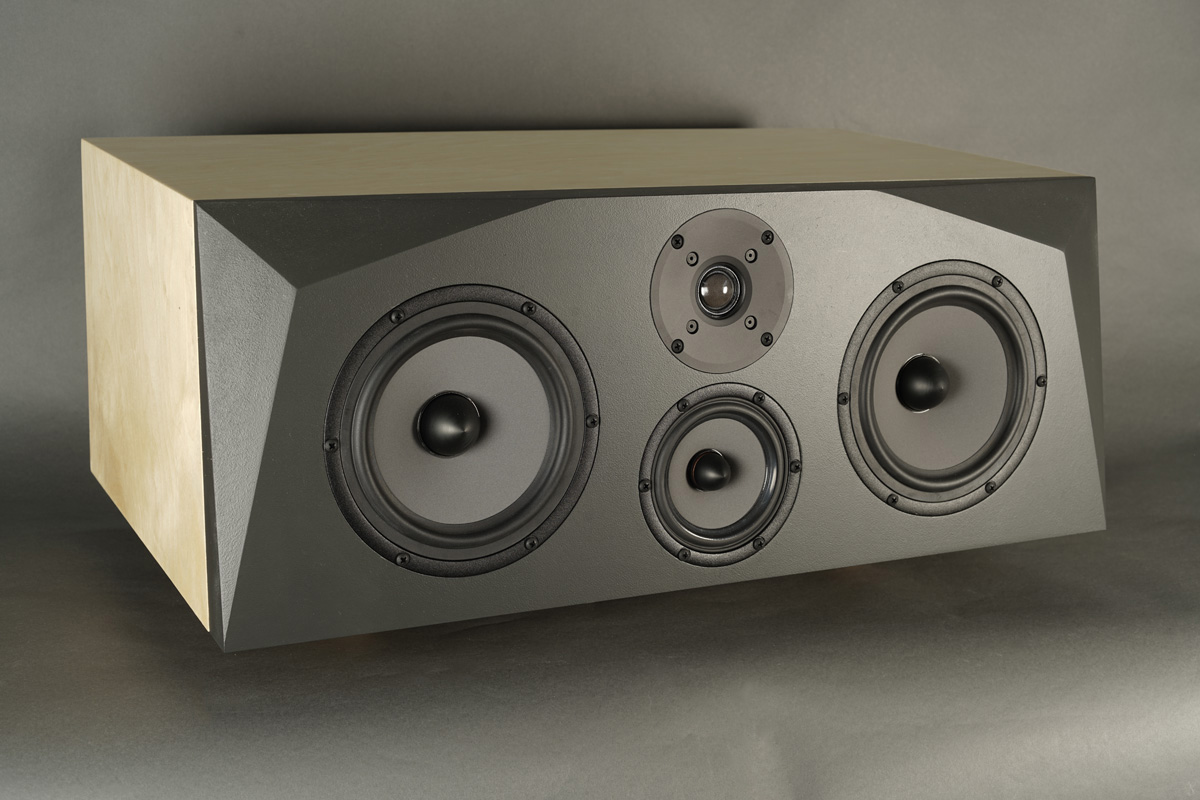
SEAS-CENTER-EXCEL with W18NX003 midbass
drivers.
17th March 2022
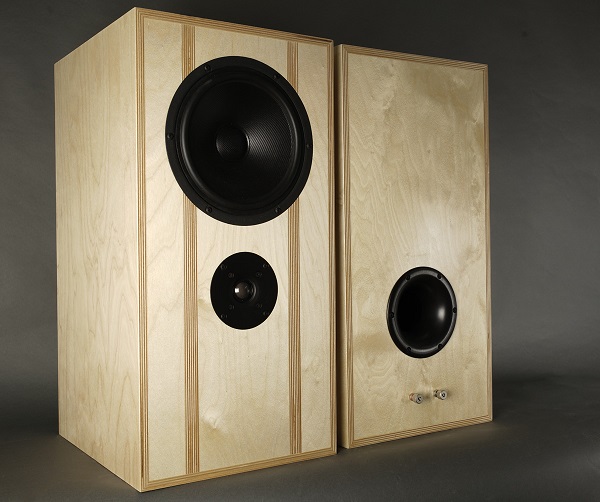
Pleased to release the Discovery-81 speaker project.
This is both a beginners' project - and a project for the discerned
audiophile. Having a high-quality 8" midbass driver handling all of the
bass- to upper-midrange without any crossover interruptions has its
benefits - as has been for many years now from my TQWT/DTQWT
constructions also featuring a wide-range 8" driver and the basic
foundation.
All speakers are compromises and should you want to engage in DIY, this
may be a place to start. Cabinet can hardly be more simple and crossover
is easy as well. Click heading or image to go to website.
19th February 2022

Listening is important and I hope these two guys can hear one another!
Listening without prejudice is as important in speaker evaluation as in
politics. From what we know - or think we know - and not least from what
we see, we may fool our perception of the real world and be
disappointed.
25-02-2022: Apparently even the highest level of empathy cannot foresee
madness.
Anyway, I'm pleased to release this ScanSpeak Revelator-851. Since working with the 15M/8631G00 in 2018 in a custom design, for which is was created, I've wanted to do my own in a smaller version of a classic 3-way. The custom design was a big speaker with two 8" bass drivers - and then this 15M/8631G00, a phenomenal midrange driver.
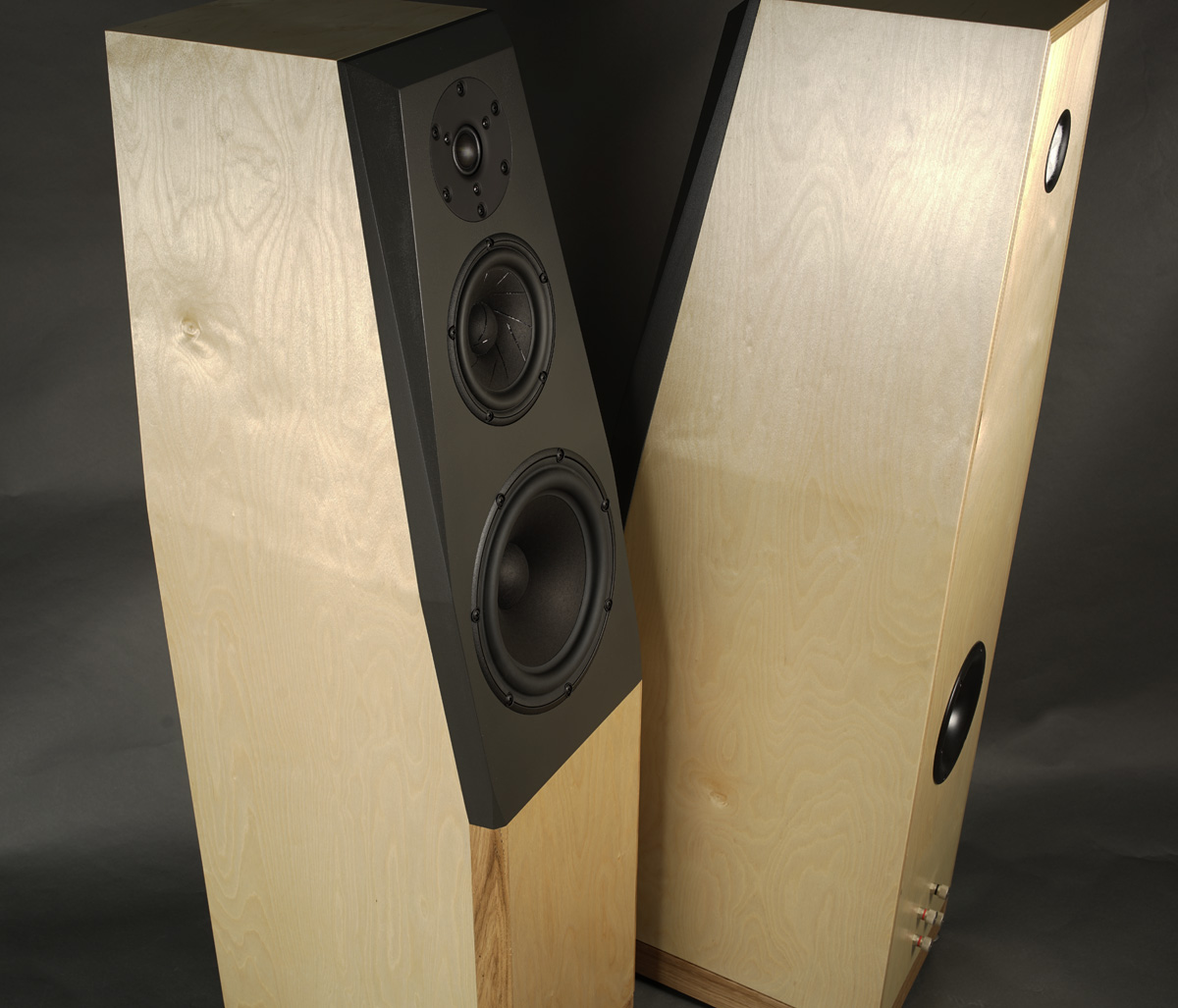
A classic 3-way with an 8" bass, 5" midrange and a 1" soft dome tweeter. Read the story by clicking image or this link.
A lot more ScanSpeak constructions are on the to-do list in 2022, so stay tuned.
1st January 2022
Better New Year!
Thanks to all for your support and trust in our projects throughout a fantastic 2021.
17th December 2021
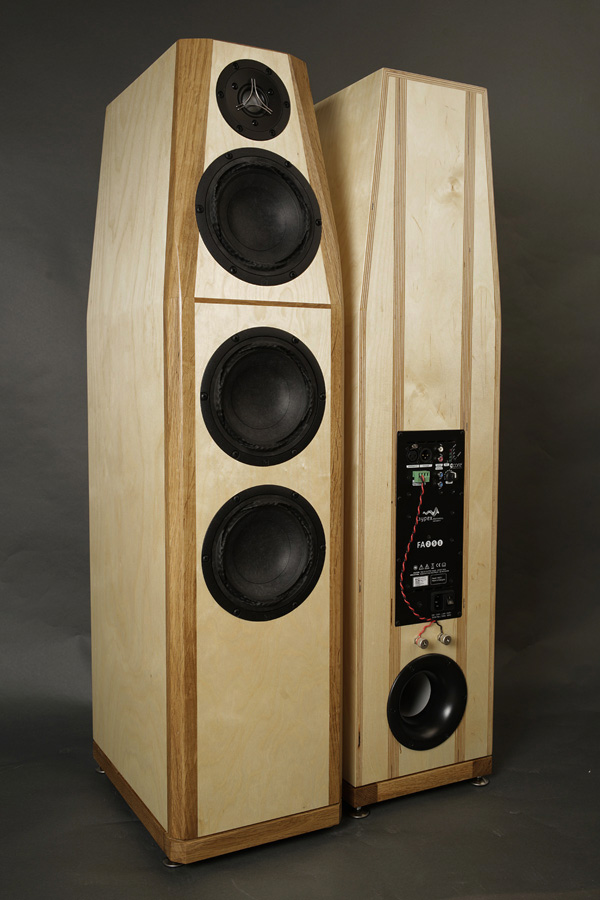
Very pleased to release the final construction of 2021. And not least
very pleased for it being this Purifi 6661 speaker. As mentioned in the
intro, if you want it small, powerful, deep bass, smooth midrange, silky
treble - here you've got it. "Silky" is a misleading term, because many
acoustic instruments can be anything but "silky", but this Be dome
delivers what you feed it, being rough, ear-piercing or - silky.
The speaker comes in two versions, one fully passive with a minimum
impedance of 4 Ohms - or semi-active, with a Hypex module running the
bass drivers, leaving an impedance of 9 Ohms for the mid-tweeter
section, yummy for all tube amps. Using the Hypex for the bass section
leaves all options for room adaption. Kit price is
ready.
08th December 2021
It has come to my attention (through Jantzen Audio)
that people have different perceptions of the quality of "levels" in our
kits. Many kits come in "Level-1", "Level-2", etc. It turned out that
some customers regard "Level-1" being the lesser quality version! WHAT?? I
think it was mostly in the US, that people would think "Level-3" would
be the ultimate version. I couldn't believe it. I think I have a gene
coding for level 1 being the best, level 2 the second best and level 3
the lowest quality. One, two, three... gold, silver and bronze! Right?
NOT SO.
I admit that level ratings like North and South are arbitrary concepts.
So, I went to wife and asked if she had to buy a pair of shoes and these
shoes were available in three levels, level 1-2-3, which would you think
were the best? Level 3 would be the best, she said. WHAT? BUT WHY? Well, my
wife is a teacher and third grade would be higher than first grade.
Hmm... that does make sense.
Anyway, when it comes to loudspeaker kits from Jantzen Audio and these
are available in various levels, level 1 is the best, etc. We're not
going to change that as we would have to change an infinite number of
webpages.
"Do you have a speaker that doesn't make mp3 files sound too bad?"
Had that question some mails ago - and to be honest, I don't know. First
of all I never listen to mp3 - except a few times on YouTube. But this
is always via ear plugs - and in fact I have no idea of the bit-rate
from YouTube. A speaker that doesn't make mp3 sound too bad.... It got
me thinking. What would it take to do so? What the writer suggested was
that a high-end speaker would just make the lack of depth, transparency
and the slightly rugged treble sound even worse on a good speaker.
Basically I would think that a not so good speaker would make mp3 sound
even worse and that a really good speaker would make the best of mp3. I
don't think there is a definitive answer to the question as mp3 is mp3 -
for better or for worse. What may be an option is a speaker with less
energy in the - say 800-4000 Hz range. Upper midrange and lower treble,
where the ear is most sensitive. I would probably not pick a speaker with
a dedicated 4" midrange as these small units usually can be demanding on
source material. But it all depends. I found the
Discovery 3WC-mkII a good compromise with its 5" midrange and not
too critical on source material - despite its high resolution. Bottom
line is I cannot point to a speaker that makes mp3 sound less bad.
Few days ago i picked up 6 sheets of 20 mm Baltic birch for my winter stock. Compared to a purchase September 2020, the price had gone up 81%!! What is happening in the world? From friends in industry I know they're struggling to get components, to have it on time - and rising prices on almost everything. This corona virus has indeed stirred up the world and shown how interconnected we are. We had an extremely fine-tuned global village, where the slightest disturbance in the supply lines has repercussions in all directions.
Due to time constraints, I have ceased to do DIY-SERVICE, where people
could come with their speakers and have a crossover made. One Danish
supplier of drivers and crossover components offers calculated crossovers
and I had a terrifying example recently.
I have done all those drivers and I couldn't help trying to simulate the
construction based on measurements I had from files derived from a
baffle not too different from the writer's cabinet. The writer thought
the speaker became too harsh at loud levels. No wonder! Treble range
some 10 dB above system sensitivity and a midrange way too loud. And
this calculated 2nd order filter would only work with time-aligned
drivers - and they were not.
I have only one comment: Shame on you dealers that make customers buy
seriously expensive components for such crap! Crossovers CANNOT be
calculated:
crossovers.htm
Last, but not least:
I had a mail from someone wanting a flat front panel and asked
if he could do the time-alignment by just making a hole for the tweeter.
Now, this would spell total disaster! I guess what he asked for was
something like this:

There is a reason front panels have the dimensions they have - and
there's a reason the drivers are placed exactly where they are placed.
To make an initial frequency response as good as possible given the
design criteria. Very often design must be changed because crossovers
become too complicated and will sound less good. I'll try later to
illustrate the example to the right.
There will be one more new construction this year, a 3-way Purifi floorstander. If you want small, powerful, deep bass, ultra-transparent midrange, smooth treble, here it is. Stay tuned.
10th November 2021
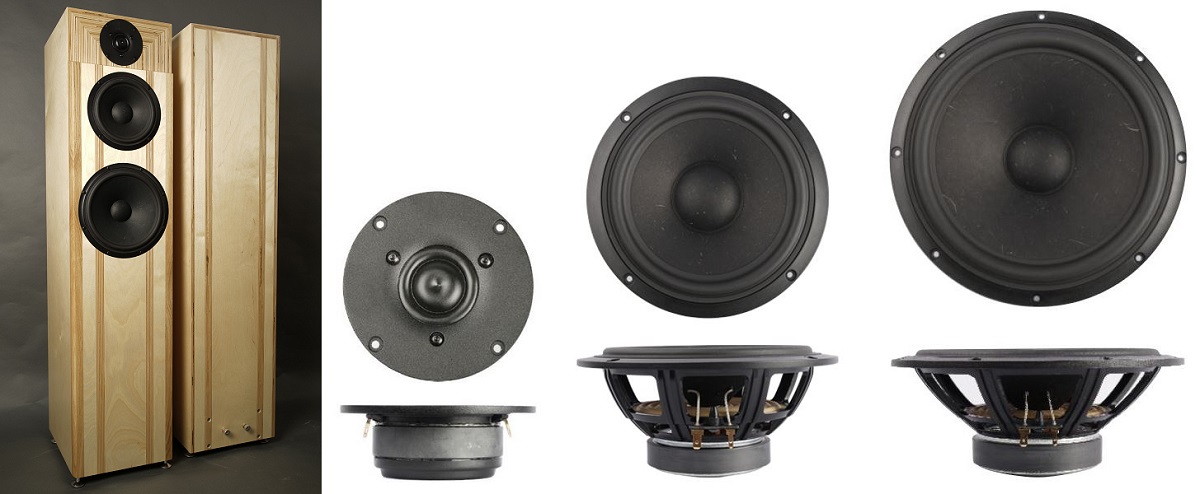
How about building a potent 2½-way floorstander for 280 EUR + VAT?
The target of this project was to make a kit for less than 400 EUR. A
kit that could deliver a significant soundstage and potent bass.
Low-cost drivers often leave a lot to be desired when it comes to
reliable data sheets. Not so with SBAcoustics. Testing the above shown
drivers reveal that these drivers deliver exactly what SBA has promised.
What made me proceed was the 6" driver having a ruler flat frequency
response up to 4500 Hz with none of the all too common rubber resonances
in the 1 kHz area. Nice paper cones, low-loss rubber surrounds and
fairly high sensitivity from the 8 Ohms versions. Where we have to give
in is the polymer chassis, but these are good looking, fairly rigid and
in comparison with other low-cost drivers non-magnetic.
Usually low-cost drivers do not have the dynamic headroom of more
expensive drivers - and these drivers are no exception - but to overcome
this we can have membrane area, and working in a 2½-way fashion we have
some 340 cm^2 membrane area for all of the midrange, more than many 10"
drivers. Large membrane area equals minimum membrane excursion equals
minimum distortion.
I've had visitors: "Well, I'll be damned!". Did you say 280 EUR???
Click heading or image to go for further info.
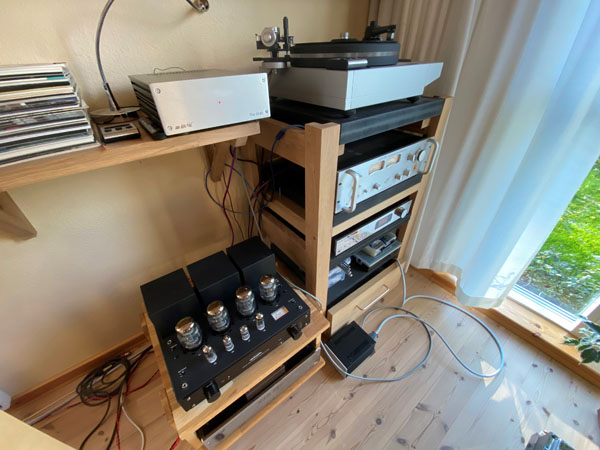
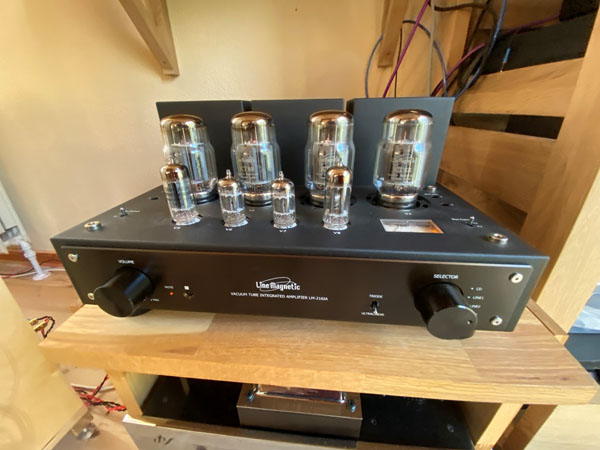
I rarely recommend components as I have access to only a few for
comparison. A friend came by with this Line Magnetic LM216IA integrated
amplifier PP tube amplifier. To this end we hooked up the turntable via
my van den Hul The Grail phono stage to the LM216 and had it
run the midrange-horn section of my The Loudspeaker-3 - and it was
magic. Really, really good sound. Highly recommended if you want to try
out tube amps. With 38 wpc in ultra linear mode and 20 wpc in triode
mode it runs most speakers although I wouldn't recommend it for
low-efficiency heavy coned bass systems. I have seen a few products from
Line Magnetic and they appear to be very well made in a non-BS way with
decent cabinets and impeccable internal wiring, which - and I'm sorry to
say - we only see from China.
I have ordered new Miflex copper foil coupling caps for my friends amp
and will report later.
17th October 2021
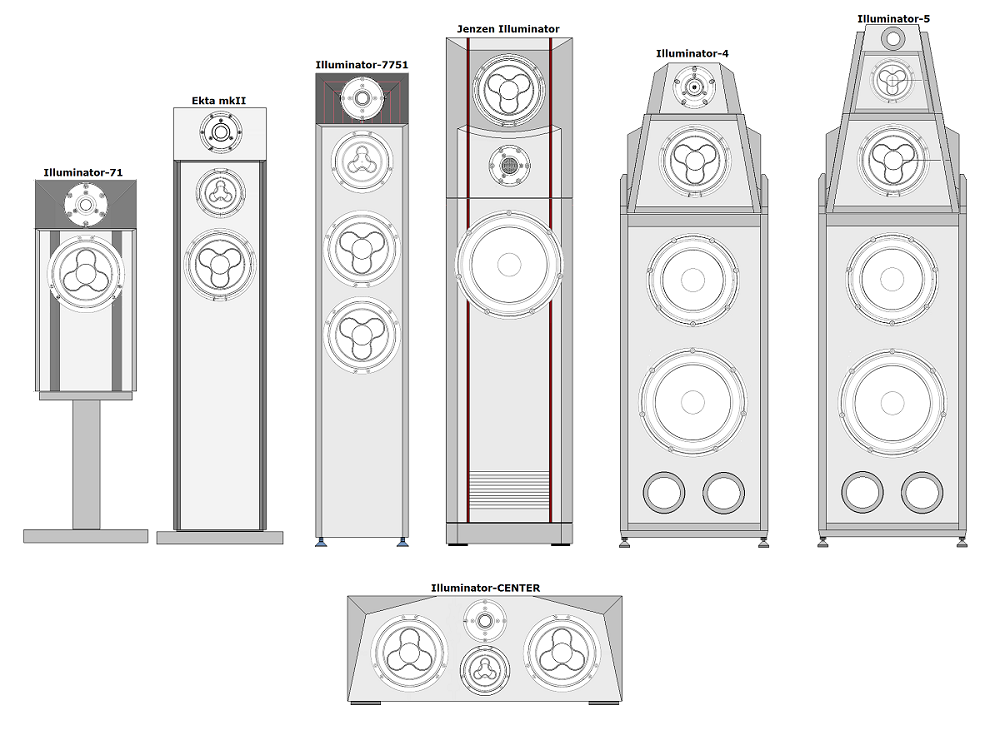
It's been almost ten years since I started working with the Illuminator
drivers. Actually it took me some time to realise how good they are. I
started out with the Illuminator Monitor with an elaborate all-pass
filter to the tweeter taking care of time alignment. I liked that very
much and went on with the Illumina 66, a 2-way floor-stander built by
quite a few people. Since them the series have been extended to include
Ekta mkII, Illuminator-7751, Jenzen Illuminator, Illuminator-4 and
Illuminator-5, the latter three including Revelator bass drivers as the
Illuminator series does not have have 8" and 10" drivers - for obvious
reasons.
These speakers kind of makes my Illuminator series complete. There won't
be a "5+1" as too few people build these small speakers.
I'm very pleased to release the newest Illuminator-71, replacing the
Illuminator Monitor and Illumina 66 speakers as the Illuminator-71 may
be realised both as a stand-mount and a floor-stander. A significant
simplified crossover to the 18WU driver with two tweeter options, the
D3004/660000 and R3004/662000 ring radiator.
Illuminator-CENTER to come 2022.
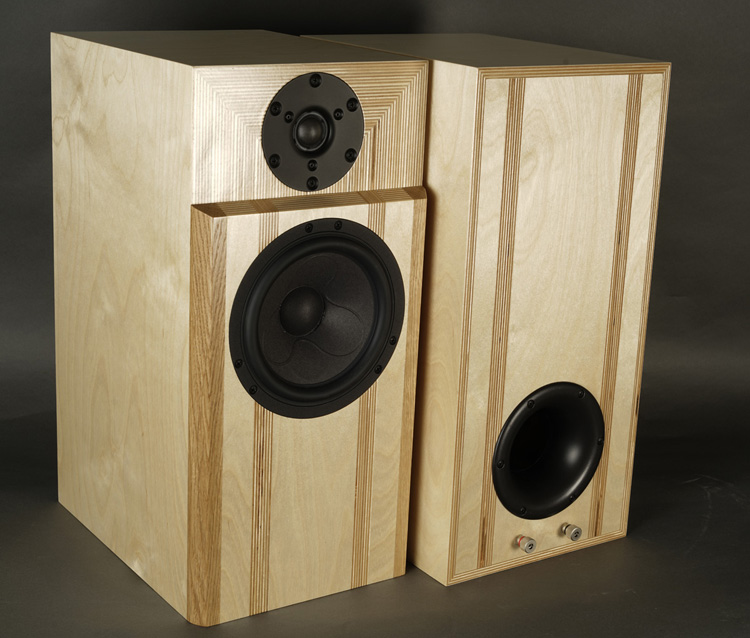
Click image or link above to go to website.
28th September 2021
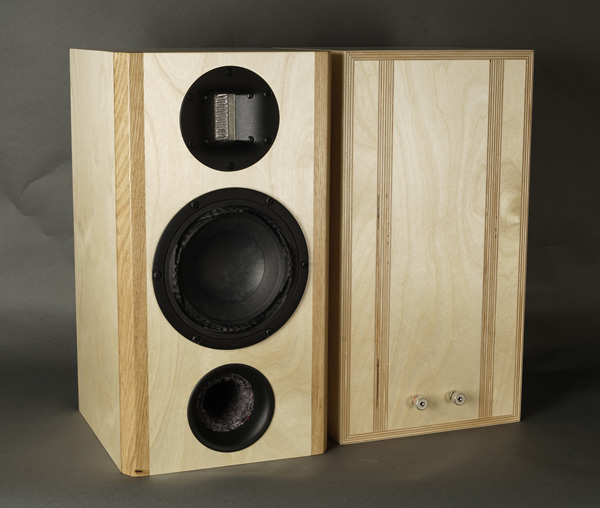
Should you be in the mood for a 2-way stand-mount, take a look the
speaker above. Click image to go to website. It's been some time since a
ran a test on the Purifi PTTX04-NFR-01 driver. Read
here.
Little did I know what I had in store. The Purifi driver offers some
fascinating initiatives to reduce distortion in dynamic drivers and it
pays off. Clarity, resolution, lack of smear are superlatives that come
to mind when hearing this driver mated with the Viawave ribbon tweeter.
Not the last thing on Purifi you will see from this website. Happy
reading!
31st July 2021
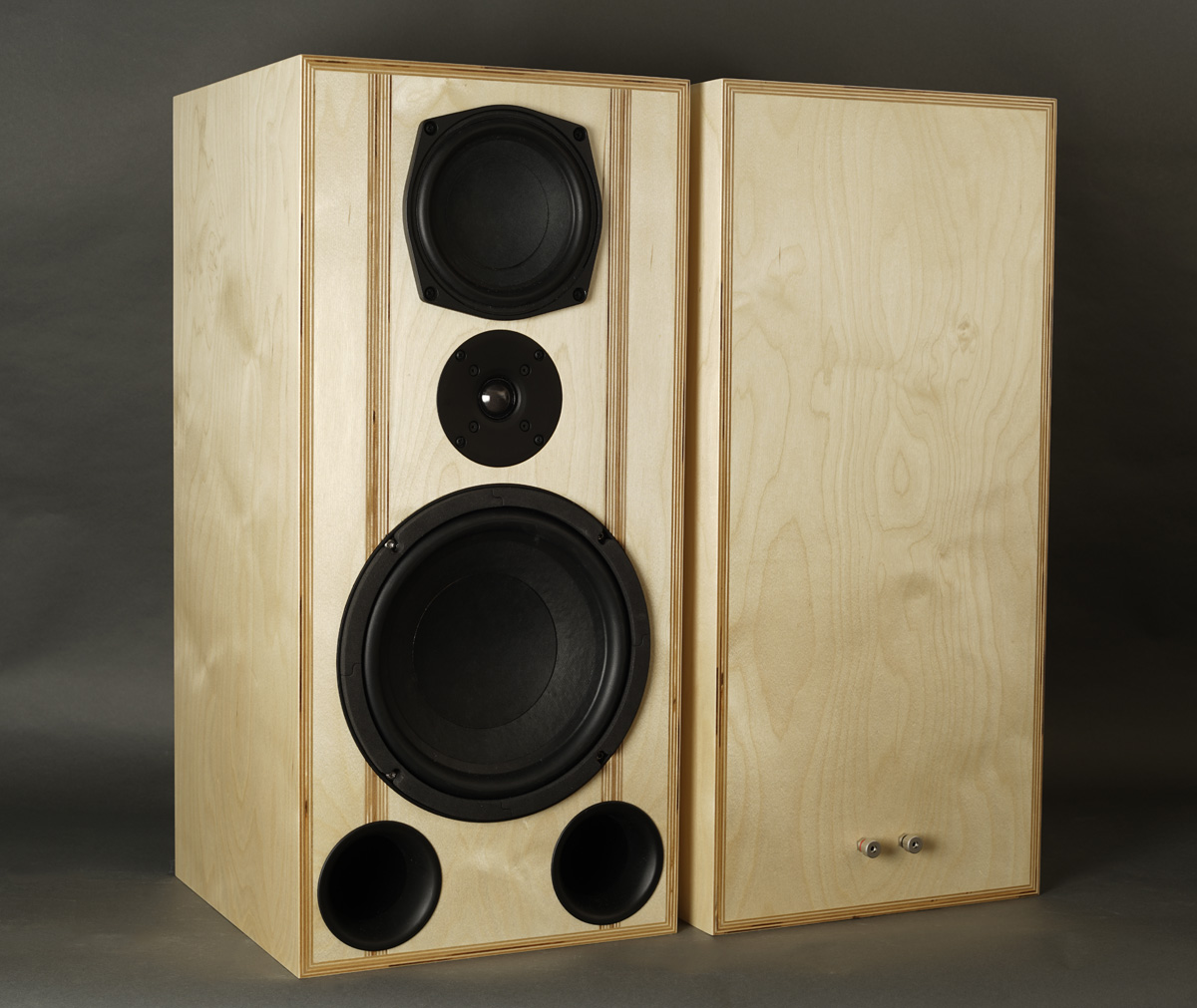
Very pleased to have launched the final speaker in the popular Faital range, the Faital 3WC-10:
Click image to get the full story.
16th July 2021
All Jantzen Audio kits are going through an update with new
presentations
and revised kit prices will be available August 2nd.
Thanks for your patience and have a great summer!
Links on my pages are being updated continuously and should be
ready by the end of July.
9th July 2021
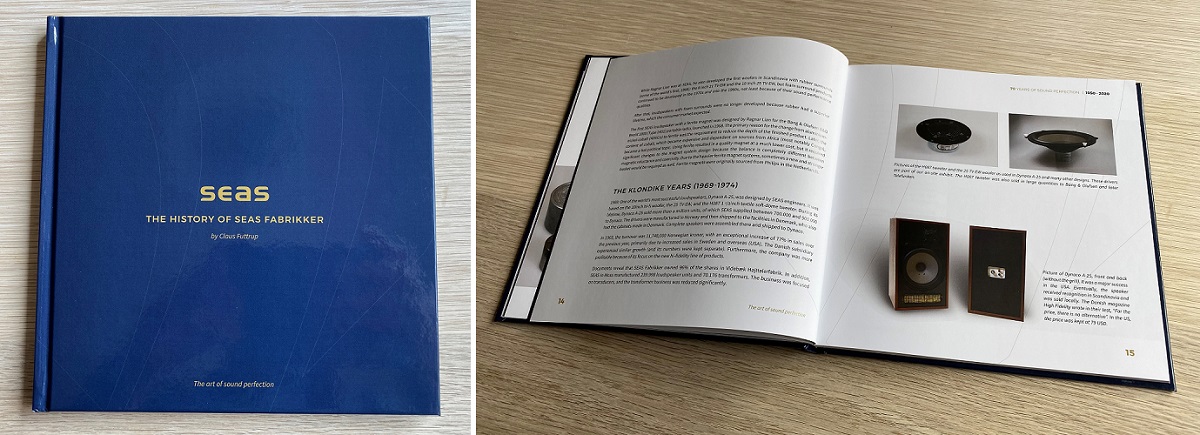
Just received this book from SEAS. The history of SEAS and some
interesting reading for all SEAS fans. I'm sure Claus Futtrup spent
quite a few corona-hours writing up the fascinating story.
The book is available from Audiatur Bokhandel in Moss, Norway and they
have a webshop and ships worldwide.
http://audiaturbok.no/forlag/seas/seas-the-history-of-seas-fabrikker
SEAS website: http://www.seas.no/
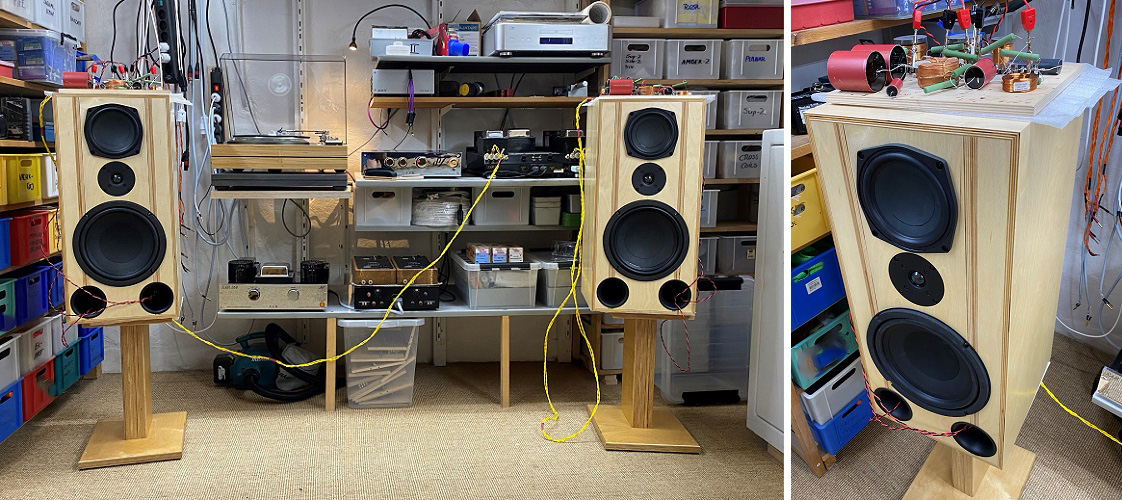
Also the upcoming Faital construction is in the final stages of crossover fine-tuning and should be released this month. Here's a photo from the first workshop setup with test crossovers. Very promising sound I can tell with surprisingly deep bass from the 10" bass driver.
10th June 2021
Thanks for asking, but all well. No corona - and just now fully vaccinated :-)
Spring time is time for house maintenance and doing the vegetable
garden, so little speaker work done, although a lot in pipeline. More
than 6 new constructions. Please don't ask for more.
Hopefully at least two of these will be finished before the end of this
year. Next speaker in line is a Faital 3WC-10, a ten inch version of
these incredible popular speakers. The drivers will be Faital 10RS350,
Faital 6RS140-8 and ScanSpeak D2608/913000. Size will be 68 x 32 x 34
cm (H
x W x D), so quite a bit more manageable that its bigger siblings.
#2 in line is a slim floorstander, Ekta G Illuminator, maybe not going to be a sales hit due to costs, but just something I'd like to add to the portfolio.
Space is becoming an issue again, when wasn't it, and the
Discovery 3WC mkII and
Discovery MTM (14-06-2021: SOLD) will be up for sale shortly.
All the best for a summer where hopefully some corona restrictions can
be lifted and life get back to maybe not normal, but none the less more
enjoyable.
4th April 2021
Most recent update is a small file on what to most of us may be trivial:
Polarity. Due to corona, we have seen a lot, and I mean quite a lot,
of newbies to speaker building, which is excellent, but also poses some
problems that may cause people not to hear what they should from their
investment.
Most people are aware that drivers have polarity, the terminals are
marked plus and minus, either by symbols or by a red dot at PLUS
terminal. For e.g. JBL drivers, it is sometimes opposite, so finding the
polarity of a driver is crucial - and it's easy:
http://www.troelsgravesen.dk/polarity.htm.
However, a few builders have thought a red wire should always go the
plus terminal - because it just seems logical. However, depending on
what kind of crossover we're using, some drivers may have to be
connected with inverted (opposite) polarity to make correct summation.
Thus my epistle on polarity. I'll add the link to the suggested links
following each new construction or whenever a file is updated.
Useful links
(Please read before writing!):
http://www.troelsgravesen.dk/tips.htm
http://www.troelsgravesen.dk/crossovers.htm
http://www.troelsgravesen.dk/LCR-RC.htm
http://www.troelsgravesen.dk/Inverted-Polarity.htm
FAQ
(Please read before writing!):
You cannot change cabinet front panel dimensions and drivers' placement
without needing a new crossover - and I cannot help.
You cannot use any other drivers with the crossover shown here.
Please read these files before e-maling:
http://www.troelsgravesen.dk/crossovers.htm
http://www.troelsgravesen.dk/choices.htm
23rd March 2021
Pleased to announce another speaker construction with ScanSpeak Discovery drivers - and Revelator 9900 tweeter, the Discovery MTM:
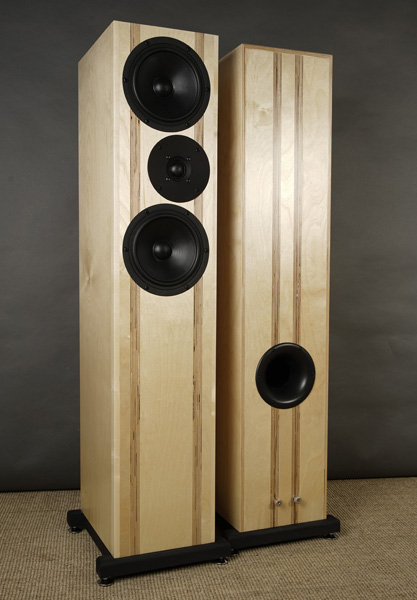
MTMs were introduced back in the 60'ies and became popular after the
concept was further developed by Joseph d'Appolito in the 80'ies (?) and
have been used by many commercial manufacturers, e.g. Dali and Living
Voice. Various crossovers have been used with MTMs, all with the aim of
reducing
crossover lobing.
Adding a second driver obviously doubles the radiating area, in this
case to 274 cm^2, close to the size of a 10" bass driver, thus capable
of quite some sound level. Another benefit of having two drivers in
parallel is reduction in crossover complexity compared to e.g. 3-ways or
2½-ways, although the latter not so much if drivers are well behaved
like seen in the
Discovery 861.
Click here - or at image and go to website.
25th February 2021
I'm more than pleased to release this update of a popular kit, the
ScanSpeak Discovery 3WC, now mkII. Click image to read the story.
Some years ago I had the ambition of updating a range of my SEAS and
ScanSpeak constructions, thus the updated range of SEAS CNO speakers and
ScanSpeak Ekta mkII, Studio 101 mkII, etc. Most of the ScanSpeak
construction made even 5-8 years ago I would leave as is and regard as
mission accomplished. The Discovery 4, Jenzen Illuminator, Illuminator-4
and -5, I don't think I could improve these constructions. What I would
like to add to the range of ScanSpeak constructions is an "Ekta G
Illumina" based on Illuminator drivers. Also an Illumina 66 mkII and an
Illuminator Monitor mkII. We'll see how things work out.
I'm thoroughly enjoying the Discovery 3WC mkII in our living room and
amazed from what can accomplished with moderate priced drivers. The
transparency of this new 3WC is amazing. What characterises the
Discovery range of drivers, from 12W to 22 W, is the linear midrange
response. Not a sign of any rubber resonances and only moderate rise in
amplitude towards the upper limit of their frequency range. These
drivers were designed to replace the old Vifa range of drivers - and so
they certainly do. Some of you may remember the Vifa P13 and P17
drivers, either with paper cones or PP cones, the latter easy drivers
ideal for a DIY community without measuring gear.
If there was a 5" Ellipticor driver, I would make a replica of this
speaker and hear what you can get from a speaker that would probably
cost 10 times as much, and I dare predict we might be chocked by
comparing the two. I'm not predicting the Ellipticor wouldn't be better,
but I'm sure it would illustrate how much we pay for even small
increments of improved sonics. I would also like to make a Revelator
version of this speaker with the new 15M/8631G00, an amazing midrange
driver I used for a Chinese construction, but this would be a modest
sized floorstander. No lack of plans...
Some of you interested in crossovers may find the current 3WC mkII
crossover intriguing and I look forward to your response. I'm also
pleased I picked the larger 15W for midrange and a lower point of
crossover to the bass. This gives male vocals a crisp presence I really
like. And the exceptional linear response of the 15W makes a smooth
transition to the 9130 tweeter. The luxury version of the kit will be
below 1200 EUR and the economy version some 400 EUR less.
8th February 2021
Hello again!
January was absolutely crazy with kit sales way above anything seen
before. Thanks for trusting our business and we wish you some happy
workshop hours. Mails are poring in and from a lot of people I've never
heard from before, and also from people who just want to tell their hifi
story or people having ideas to new constructions. Thanks to you all,
and again, I apologise for my short replies.
Vaccines are being rolled out and journalists again and again ask the
poor virologists when well we have a normal life again. I think they
after the first 12 months are being more and more cautious about
promising anything, and what seems pretty clear is that we will have to
live with corona for years to come, albeit in a more controlled fashion,
but 100,000 people on a football stadium or at a music festival is
probably some time from now. Will the Munich hifi show be in September
as planned? Who knows.
Have spent some time weeding out some of my old constructions. A lot of
the stuff from some 10+ years ago just don't sell any more and will no
longer be supported from Jantzen Audio. Some files are still on the
server, but you must source local dealers for crossover components. A
few files have been deleted as I can see I would just do things
differently today. The last 15 years on the web has been a learning
experience for me trying out various crossover topologies in the
beginning and going, also thanks to better drivers, towards more simple
designs.
Most of January was dedicated making a true 1. order 4-way speaker
system with the main drivers all connected with positive polarity.
Quote: "A first order system achieves its perfect (in principle)
results by keeping the phase shift of each roll-off less than 90° so
that it can be canceled by the roll-off of the other driver that has an
identical phase shift in the opposite direction. (Phase shifts greater
than 90° cannot be canceled.) The phase shift is kept low by using very
gradual (6dB/octave) roll-off slopes which produce a phase lag of 45°
for the low frequency driver and a phase lead of 45° for the high
frequency driver at the crossover point. Because the phase shift of each
driver is much less than 90° and is equal and opposite, their outputs
combine to produce a system output with no phase shift and perfect
transient response." Source: Thiel, "Coherent Source Loudspeakers".
Technically the speaker was a success, sonically not so much, and I
haven't finished analysing the results to come to a conclusion on why it
just didn't turn out the way I wanted. Maybe some other time, but for
now there are others ways of making good sound.
On the Jantzen Audio website you will find no less than 73 active kits,
from 10 litres to 300 litres, stand-mounts, floor-standers, bookshelf,
subwoofers, etc. And there are more to come.
Currently three new ScanSpeak speakers are in pipeline, two with
affordable Discovery drivers, which I have grown increasingly fond of
over the years, and one seriously expensive NNNN speaker. These
constructions should all be available in the first quarter of 2021. So
stay tuned!
January also meant the release of two new SEAS drivers, the W18NX003 and
W12CY006. I was very pleased to see so.
http://www.troelsgravesen.dk/SEAS-W18NX003.htm
https://audioxpress.com/news/seas-unveils-new-w18nx003-excel-nextel-woofer
http://www.troelsgravesen.dk/SEAS-W12CY006.htm
https://audioxpress.com/news/seas-announces-new-excel-nextel-w12cy006-midrange
30th December2020
2020 has indeed been a crazy year due to the pandemic. As I'm writing
this in the last week of the year, vaccines have started rolling out all
over Europe and US, but I guess we're looking into the Autumn of 2021
before life may - slowly - start looking like something we knew before.
Speaker building has been equally crazy during the pandemic and Jantzen
Audio has been busy as ever shipping speaker kits all over the world.
Delivery of Italian speaker drivers was a problem in the summer, but was
resumed during the Autumn months, and
LEAN/UK has been a steady supplier of drivers for The Loudspeaker-1
and -2 and the popular Faital 3-way classics. And now the Brexit! Well,
with the UK not being a member of the EU, you can purchase drivers from
LEAN without British 20% VAT - and have to pay our local VAT rates. Most
likely there will be 4.5% tax and handling fee, but otherwise business
as usual. But I guess we will have longer delivery times and maybe 5-10%
overall increase in driver costs. There really are no continental
dealers with the same extended portfolio of drivers like LEAN. I'm very,
very sad the Brits are leaving. I buy a lot of stuff from the UK.
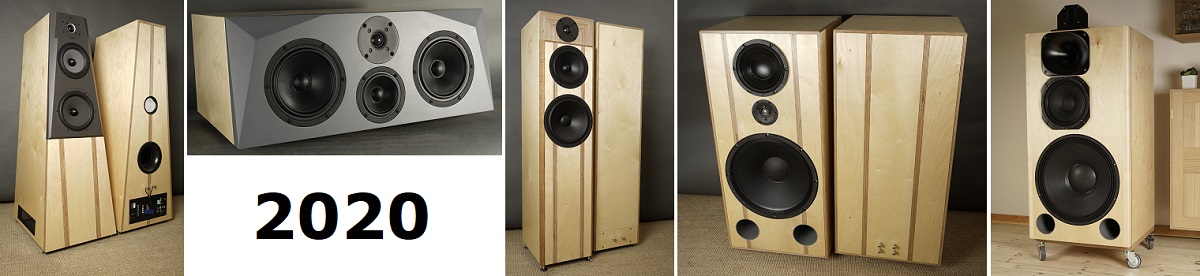
Above the speaker construction launched in 2020, CNO-4,
Discovery-CENTER, Discovery-861, Faital 3WC-15 and The Loudspeaker-2.
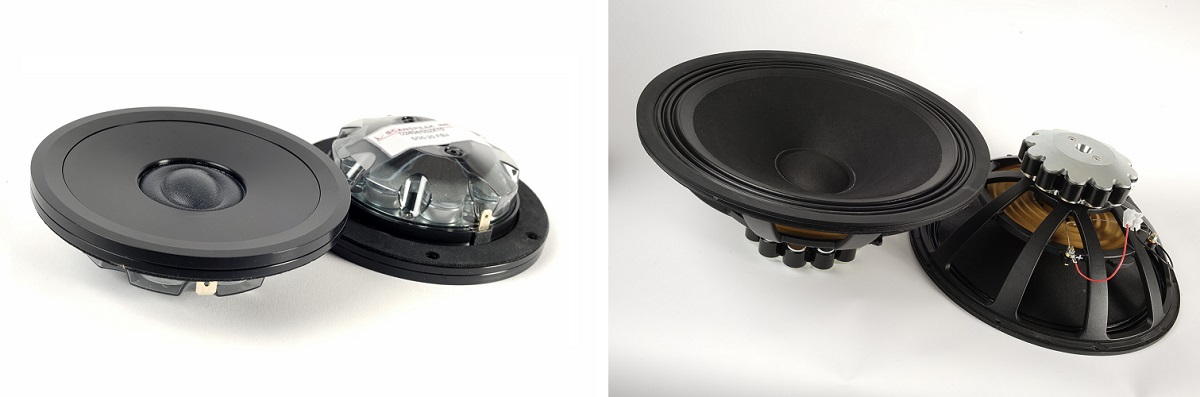
Since April I've had the pleasure of playing around with prototypes of
ScanSpeak 38WE/8582T00 driver, the most sophisticated 15" bass driver
ever made. Elliptical voice coil and a powerful very open magnet
structure. This is not a subwoofer, but a bass driver featuring a fairly
light-weight paper cone, delivering agile powerful bass from around
100-150 liter cabinet volume.
And some months ago I had the smaller sibling of the Ellipticor tweeter,
D2404/552000 - and I like it a lot! Based on specs and measurements I
can't point out why, but this tweeter is doing something right in the
4-way construction where I use it.
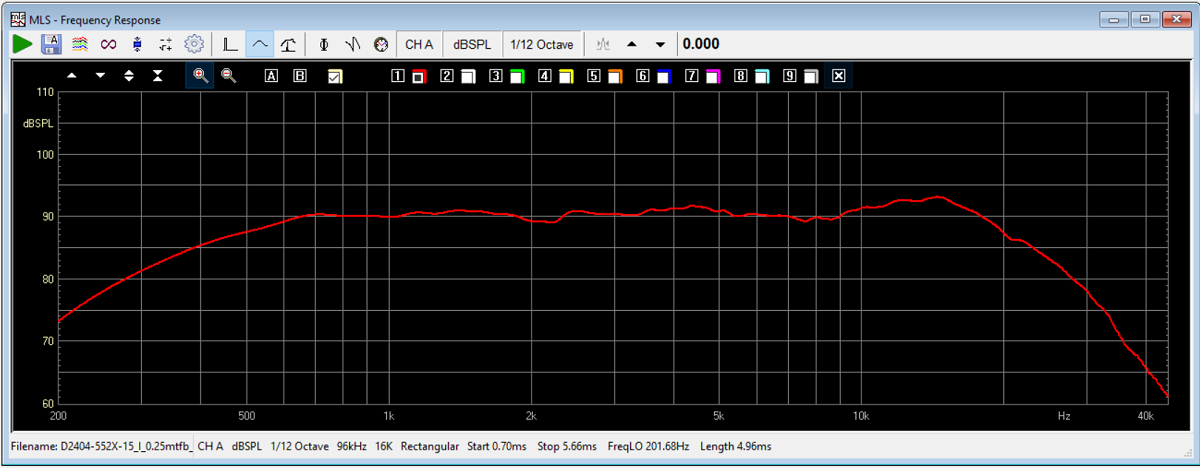
This is my measurement of frequency response flush mounted on a 80 x 120
cm baffle. Extremely flat in the overall important 700-10000 Hz range -
and with a minor lift in the 10-20 kHz range and with a smooth roll-off
all the way to above 40 kHz. My microphone is not reliable above 20 kHz,
so probably quite an extended tweeter. The ScanSpeak measurements
suggest an upper limit around 35 kHz. Maybe it's the minor lift in the
upper octave that gives some extra airiness that becomes my aging ears
well.
2021
Lots of things in store for 2021. Below The Loudspeaker-III, a powerful
3-way from 18 SOUND and Faital drivers. 18 SOUND bass driver driven by
a 500 watt Hypex plate-amp/DSP. I'm afraid it's a keeper too - although
some of my larger speakers must go as I simply do have not space for
more speakers this size with the recent addition of this TL-3 and the SEAS
CNO-4. Our house is full of large speakers and I bless my wife for being
so tolerant.
With the powered bass you can run this speaker from as little as some
15 watts - and they better be good watts.
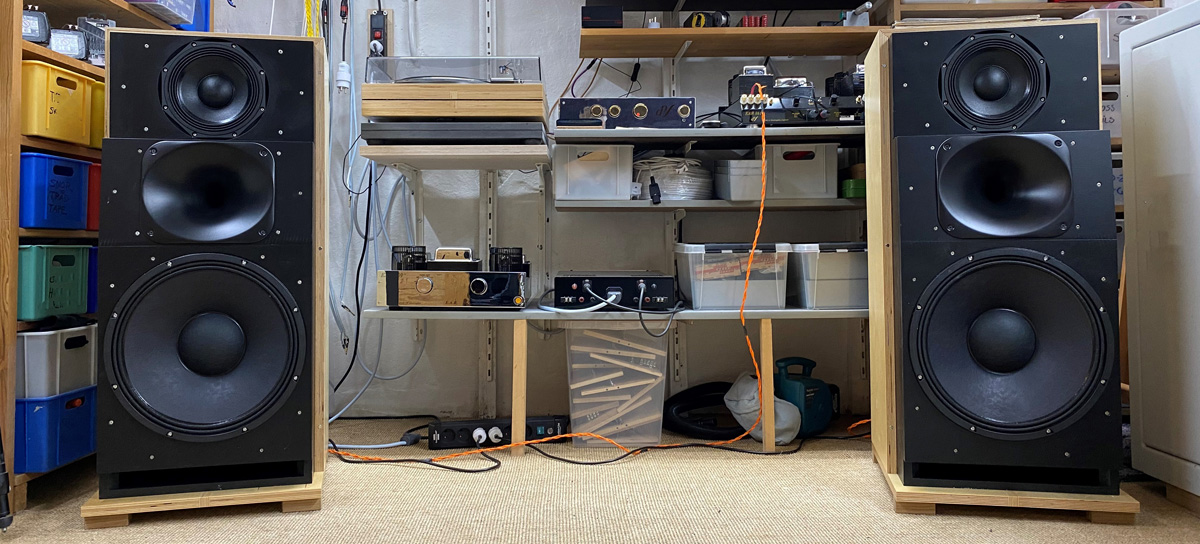
I had hoped to present these with front grills before 31st Dec. Didn't
make it, but they are ready for presentation.
Click image to go to website.
Some of you may have noticed I'm fond of EAR Yoshino amplifiers and I was very sad to read Tim Paravicini has passed away due to cancer. (Link to Stereophile announcement). He was a unique character and made some great gear. Fortunately there should be nothing preventing these products still to be produced for years to come, and time has shown that these products do not need constant revisions and upgrades. If it works, don't change it.
17th December2020
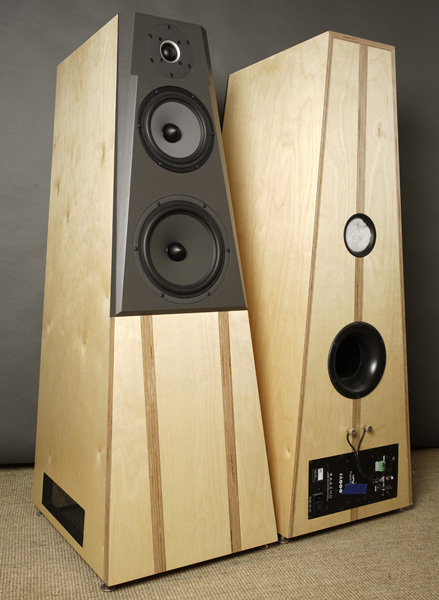
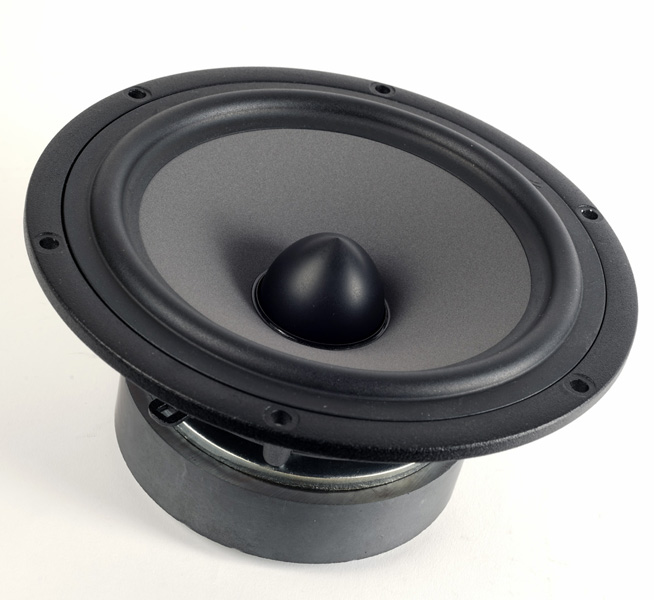
Click images to go to website.
Very pleased to launch this 4-way SEAS construction. The prototype
W18NX003 midbass drivers have been playing this speaker and the other
CNO updates for more than a year now and finally, this - my SEAS
statement - can be launched.
The W18NX001 has been one my favourite midbass drivers for many years
since launch of the
Acapella SEAS more than ten years ago and by keeping what works and
improving what can be improved without altering the basic performance is
the way to go. An improved magnet system and a new titanium voice coil
former takes this popular driver to new levels. Improved dynamics and
without sacrificing the ever so smooth midrange frequency response.
The new W18NX003 can replace any W18NX001 in the CNO-mkIII, CNO-25 and
CNO-GRANDE without changes to the crossovers. Happy reading.
CNO-4
W18NX003 test
07th November 2020
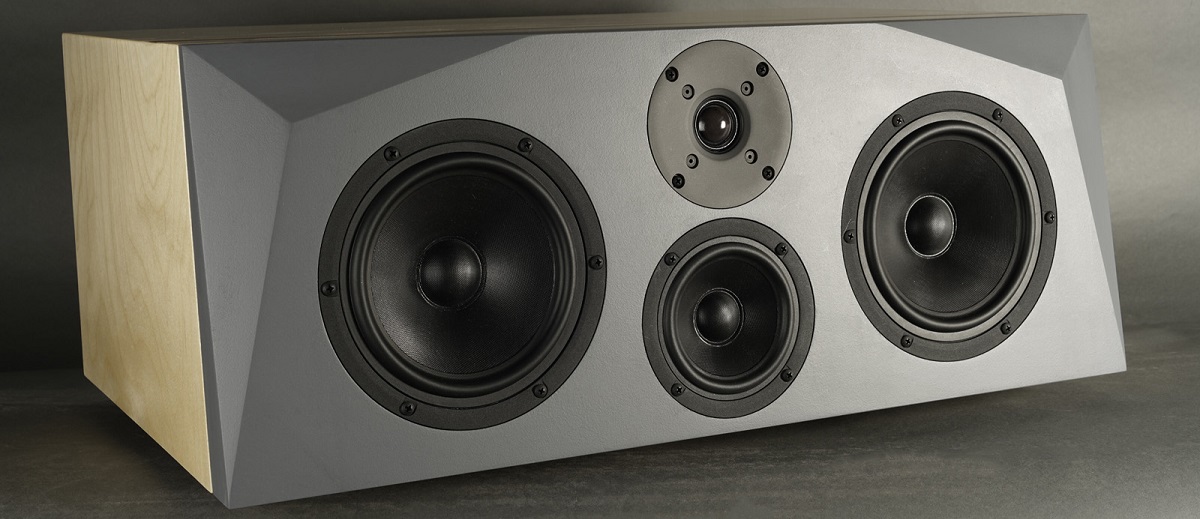
Click image to go to website.
This center speaker has been on the to-do list for a long time and
having just rediscovered the 18W/8534G00 driver in my Discovery-861,
there was no escape from a center companion, although center speakers
are not in high demand in the DIY community.
The Discovery 18W drivers are fairly efficient, thus we have the two in
series here and can tune the system to around 89 dB. This calls for the
4 Ohms version of 12W/4524G00 midrange driver and a few more uF for the
high-pass filter. Having a tilted front panel we can manage a 2nd order
filter between mid and tweeter and we can fully enjoy the exceptional
linear response of the 12W driver in the 500-2000 Hz range, actually all
the way to 4-5 kHz. No need for any edge coating here!
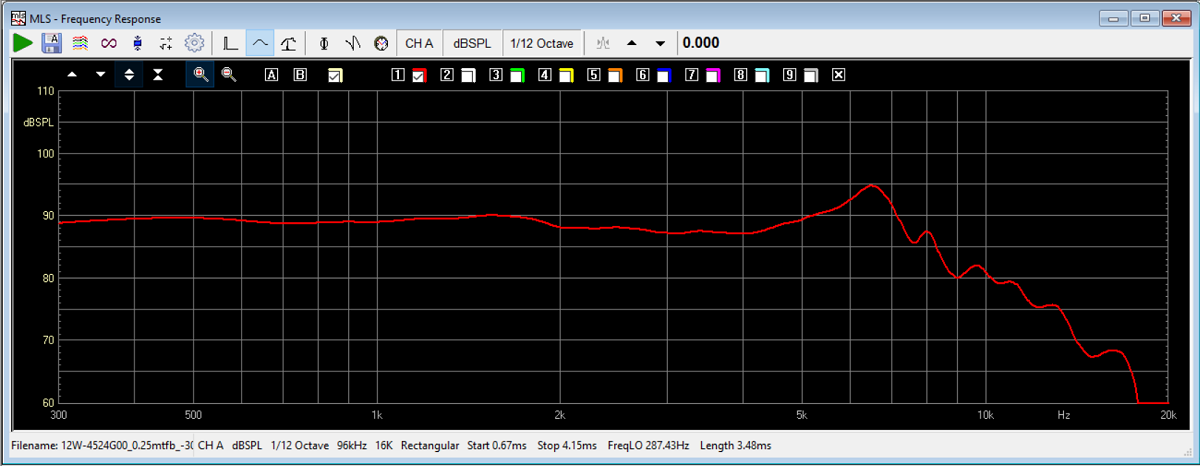
Frequency response of 12W/4524G00 on actual baffle.
23rd October 2020
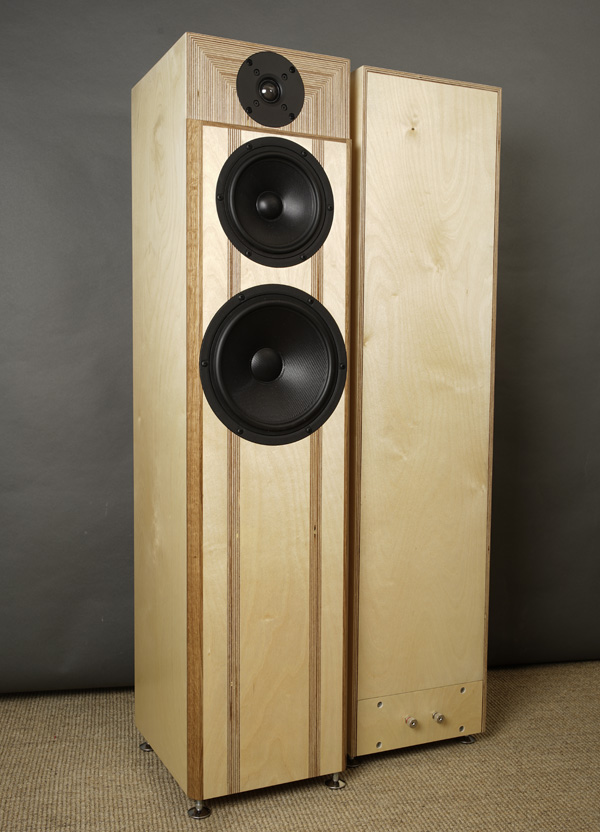
Click image to go to website.
It's been a while since last update, but clients' work has taken a lot of time. Also due to covid19 the number of DIY projects has increased dramatically - hence numerous mails every day.
I'm exited and very pleased to launch the above speaker construction
delivering - to my ears - unprecedented quality for money. On the given
baffle the 18W/8434G00 midbass driver delivers a smooth response I
haven't seen since the Ellipticor 18WE driver - and that at a price only
one-tenth of the Ellipticor.
Discovery-861 is a 2½-way construction featuring the 22W/8534G00
bass driver in a vented cabinet with the in-built port facing the floor
giving extra room-gain. The 18W midbass works in a closed box filled
with sheeps wool and can be run from a 1st order filter. This is in fact
the smoothest 6" driver I have ever tested. Due to the closed box the
18W can be run without a high-pass filter and having the 18W and 22W
running in parallel delivers a warm and solid foundation to all musical
genres.
In its best version, featuring Alumen-Z for tweeter and Silver-Z for midbass and bass, we can stay below 1000 EUR for the complete kit.
Happy reading - and stay safe in these troubled times!
24th July 2020
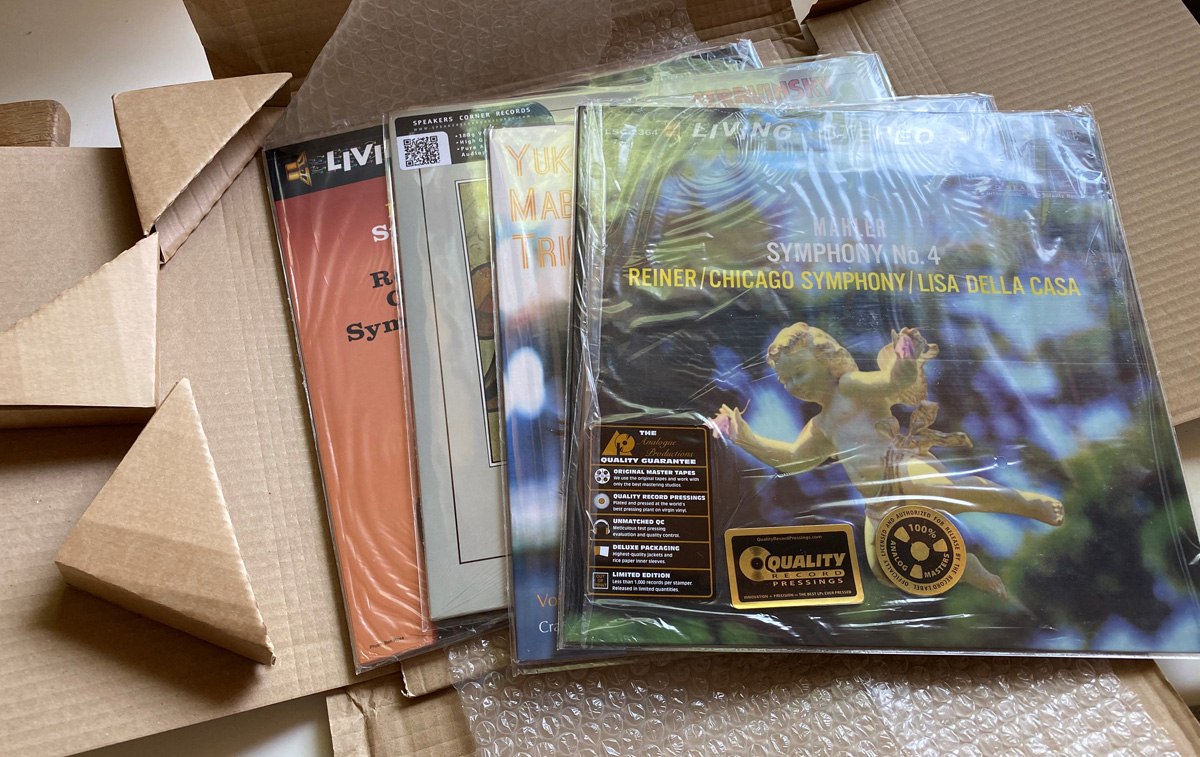
For those loving vinyl there's an update to my turntable page here. In addition to my Kuzma StabiR/4Point9/Anna-D set-up, I have added a Jelco TK850S to carry my MSL Eminent EX cartridge, as I found out I would all too soon be wearing out my Anna-D cartridge. This is how good it is.
It's all great fun acquiring new gear but nothing - to my taste - beats
getting a package of new LPs! Above my recent harvest from snvinyl/UK.
Mahler's 4th was what got me started on Mahler and I have two worn-out
original LPs of this Mahler/Symphony #4/Lisa Della Casa/Reiner/Chicago
Symphony Orchestra recording. One I bought 2nd hand and one I bought on
eBay, stated near-mint - and anything but near-mint. Thus, I was more
than pleased to see this particular recording being re-issued. I may not
be the greatest recording of 1960, but the music is just great. Even
more so Stravinsky/Le Sacre Du Printemps/Sir George Solti/Chicago
Symphony. This recording is simply spectacular.
I guess summer holidays are coming to an end soon for most people
and should you have some days left - enjoy.
I can see from Jantzen Audio sales, that July has been a good month too,
where March/April/May/June were record breaking. With corona a lot of
people have been at home and gone to the workshop building cabinets.
13th July 2020
Faital 12PR320 back in stock at
LEAN, UK. Now we just need the 6RS140 and we're
back to normal on the Faital 3WC kit.
All drivers for
The Loudspeaker and
The Loudspeaker-2 are in stock at
LEAN, UK.
26th May 2020
The
Faital 3WC kit and also the
The Loudspeaker-2 kit has sold in unprecedented quantities and I
have been worried about situation at the Faital and 18 SOUND
factories in Northern Italy.
So, I was in contact with Nigel at
LEAN/UK
to hear what he knew about the situation and he could tell this:
18 Sound
They are now back at work, we have a shipment of NSD1095, 10NDA520 and
XT1086 arriving Monday, most of these have been sold, however I am
guessing that some these will be heading to people that have been in
touch with you.
We have more arriving mid June.
Faital Pro
They also are back at work and shipping 12PR320 and 6RS140 Mid June.
BMS
We have plenty of stock.
Going forward we will be holding more stock of all the drivers.
We have added both of your designs to our recent newsletters and I hope
this has helped with your sales.
If you could let your builders now that stock is now on its way and that
the shortages will be over.
Given the number of kits sold, I'm very relieved to hear so :-)
10th May 2020
When I made the notes below March 1st on the local hifi show, rumors of
covid19 were already circulating and the hifi show in Munich had already
been cancelled. By now we all know the horrific stories from around the
globe and the world is certainly a different place from what we all
expected.
Denmark has by now been shut down for a couple of months and we've
learned to keep distance at supermarkets and all other places. Right now
we're in a phase a slowly opening again and we'll have to see how things
develop before further advances are made. From the daily statistics we
can see Denmark has done well with very few deaths/100k inhabitants.
There has been no launch of new constructions since the
Faital 3WC, which has sold in surprisingly numbers, and a larger
brother is in pipeline from a 15" bass driver. Probably ready for launch
after the summer holidays.
Two more constructions are in pipeline but delayed due to corona. The
4-way SEAS construction mentioned below has been finished since 15th
October last year, but awaits the final drivers from SEAS.
The other construction is a large 4-way with a 15" foundation and some
unusual drivers, but this is all I can tell by now.
The last two months have been very busy on mails as covid19 has kept so
many people at home, now having time to go to the workshop and kit sales
from Jantzen Audio has exploded. Certainly creating a lot of mails!
To make space for new speakers, some of my prototypes have been up for
sale
and money invested in new
gear. An second My Sonic Lab Eminent EX cartridge has been
bought and my workshop EAR-868L line stage was sold to a friend and
replaced by an EAR-868PL, slightly
modified. I'm very, very happy about this pre-amp, truly rivaling my
EAR-912 pre-amp.
I've always wanted an
EAR-869 integrated and found a 2nd hand mint condition at reasonable
price - and well, I love it! Great sound and great amp for testing
high-efficiency speaker in the future. And BTW, this amp runs my
TL-2 top without any trouble given the Hypex FA501 doing the 18"
bass driver. More phono cartridges has been ordered and also a new
turntable, Kuzma StabiR and 4Point9 arm. Can't wait to hear what this
will do to my reference system. The TL-2 has been in our living room for
a couple of months by now, and I think my wife has forgotten how big
they are :-)
22nd March 2020
It's a strange world for the time being! Covid19 keeps spreading around the world. We see horrific images from Northern Italy and country after country shuts down to contain and even out the pandemic in order to keep hospitals capable of treating people. Buzzing Denmark is silent, few cars in the streets, cafes and restaurants closed, shopping centers closed except for supermarkets and pharmacies. Singing and playing from balconies has spread from Italy to Denmark and shows how deeply rooted our need for music is. In times of crisis we think new and invent new ways of communicating, new ways of being together. Our comfort zone is seriously challenged as nobody knows what's around the next corner.
Despite the pandemic, people keep building speakers - maybe even more so than usual due to many workplaces being shut down and people may be forced to take holidays in advance, etc.
The Loudspeaker-2 and Faital 3WC constructions have had more response than ever anticipated. The Faital 3WC is selling like hot cakes and orders have been poring in to Jantzen Audio, and my recommended European suppliers of drivers for the these construction are still up and running as can be seen from the inserts below. What does worry me is that both 18 Sound and Faital factories are located in Northern Italy, and who knows how the situation is at the factories there right now, as all not-vital businesses are asked to shut down.
So, stay tuned to your local health authorities and their recommendations and all the best for an unforeseeable future. Corona is dead serious.
1st March 2020
Hifi Messe by Soundsociety at Hotel Royal, Aarhus/DK, Feb 2020
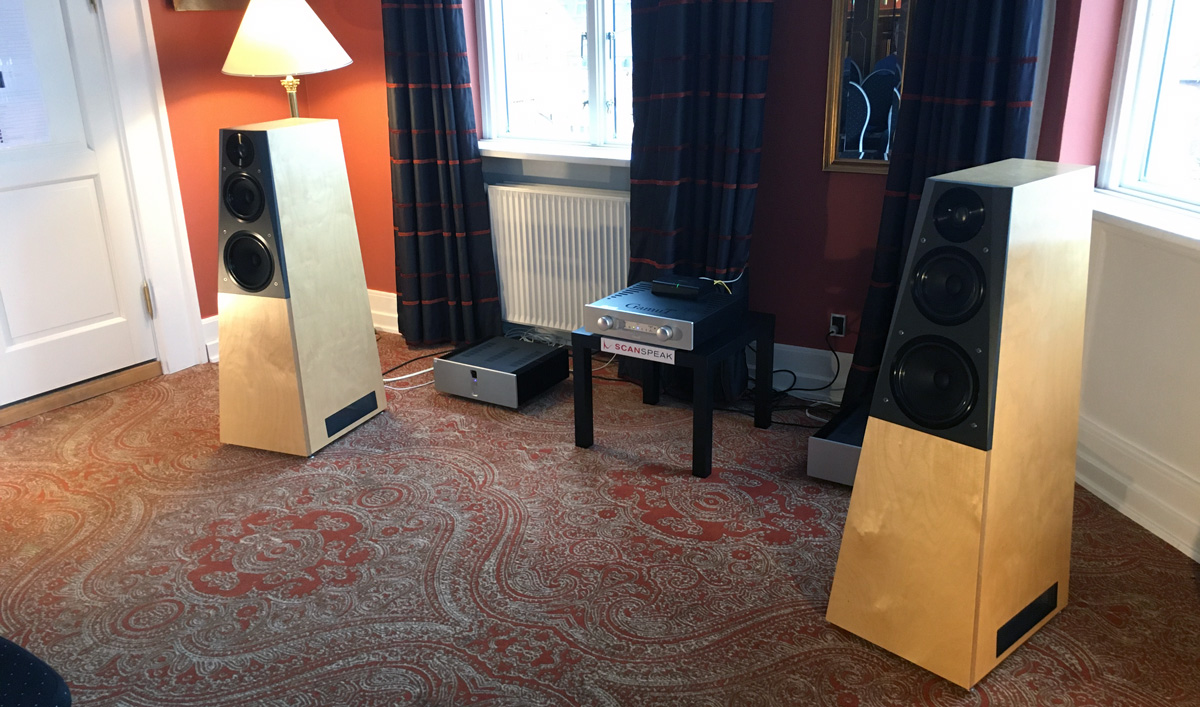
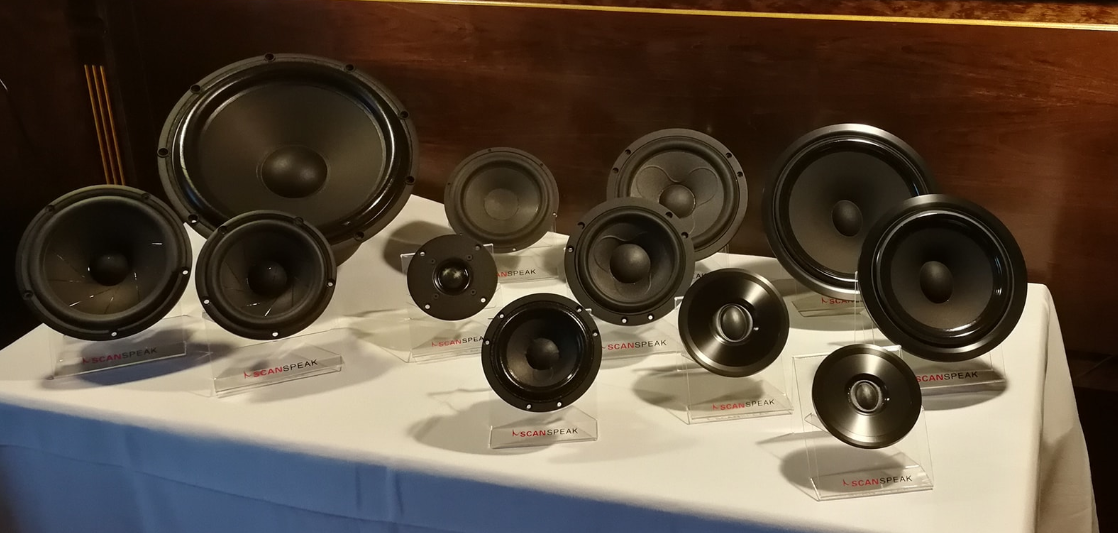
Great fun this weekend! Hifi Show at Hotel Royal here in Aarhus - and ScanSpeak had a stand - and we sat up the Ellipticor-3s for an audition. Also a range of drivers were on display, among these a new D2404 Ellipticor tweeter.
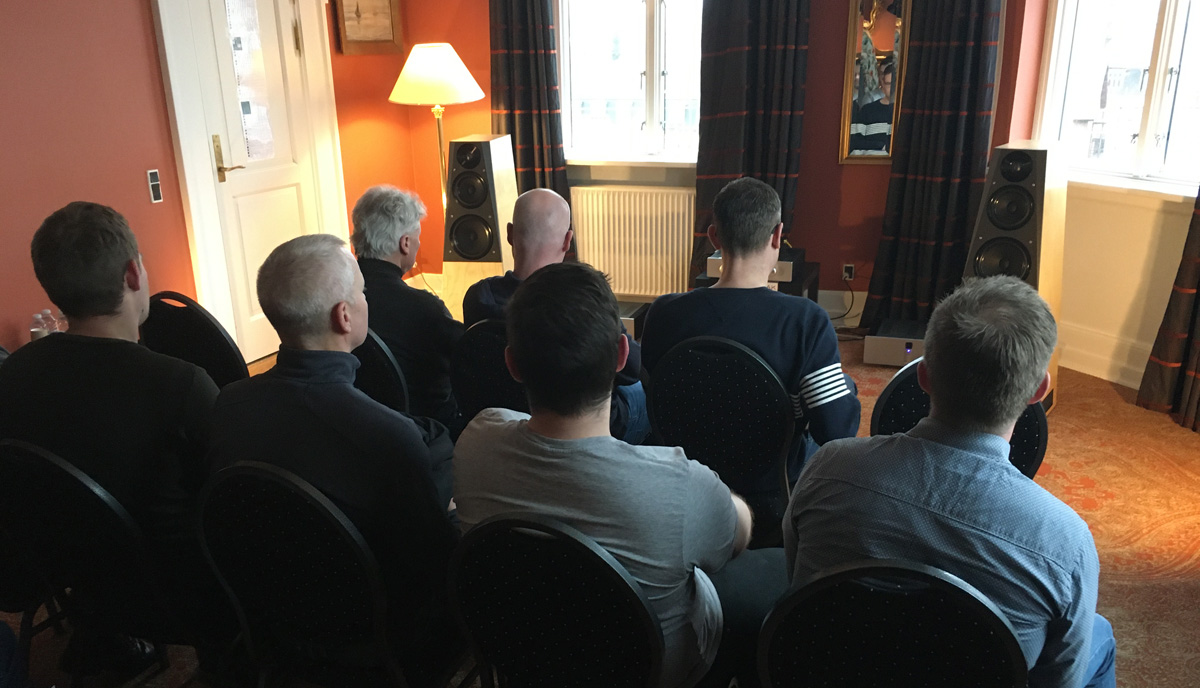
Quite a few people got to hear the Ellipticors and response was
positive. With some of the source materials the speakers were put to
test more rigorously than I ever done at home.
This old hotel has some magnificent rooms with very good acoustics,
which - I think - made it easy for most exhibitors to make good sound.
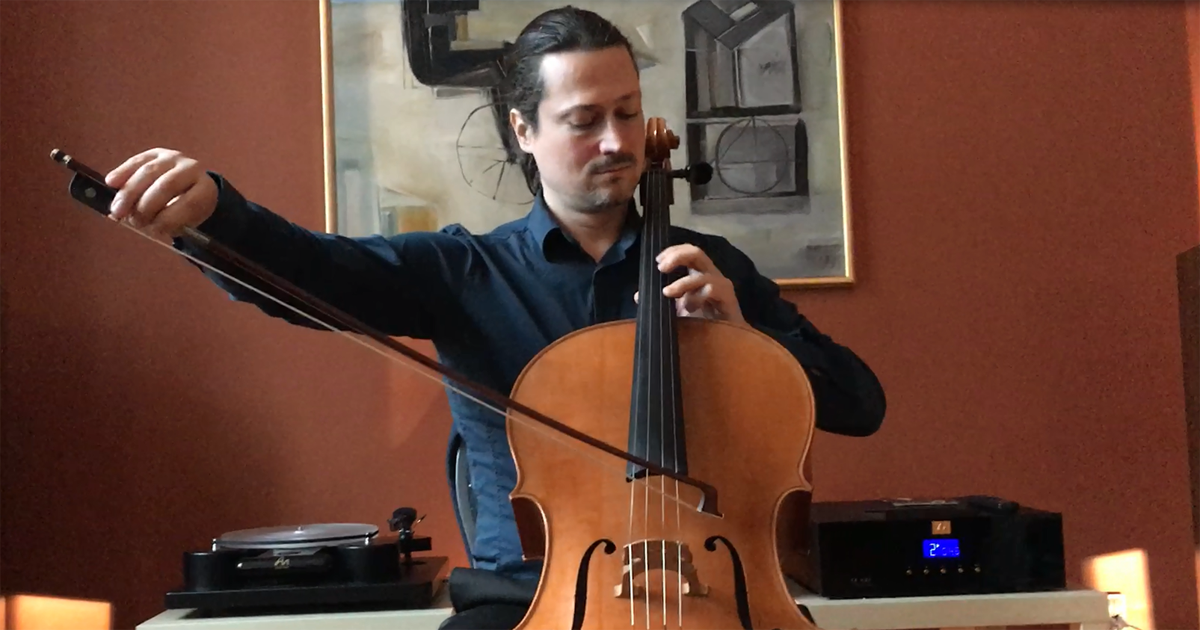
I have a couple of times displayed the LP cover of a recording by Canadian cellist Vincent Bélanger - and before entering the show I had just played one of the tracks for a friend. Much to my surprise on entering the AN demo room, I had Bélanger face to face and could compliment him for his playing and magnificent recording. Later he played his cello to the delight of the small audience - and I had him sign his latest LP "Là".

The really sad news this weekend was the cancellation of the High End Show in Munich in May - due to corona virus. Really, really sad as I had so many plans for this coming event.
13th Feb 2020
A lot of things has happened since last up-date. A minor, but significant thing, is the addition of a Beryllium dome option for the Faital 3WC speaker.
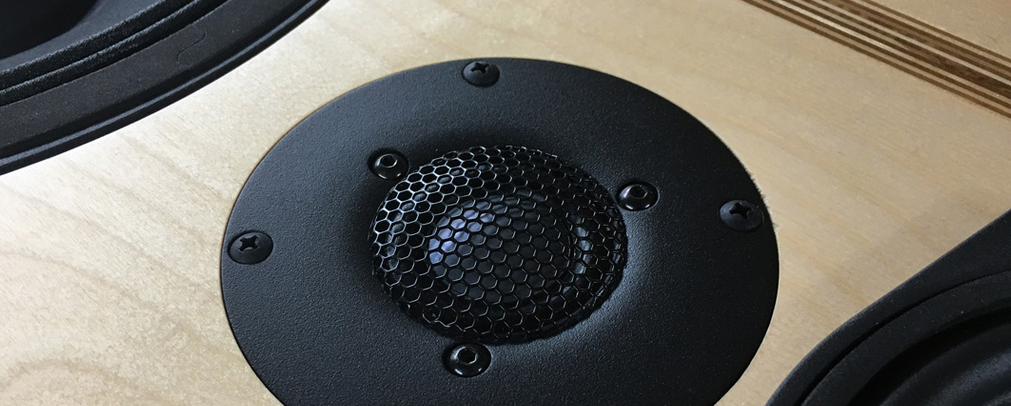
The magnificent - and price sensible - SBAcoustics SB29BAC-C000-4 dome
tweeter takes this speaker a notch higher in fidelity.
Check it out
here.
Most of January has been spent in the workshop making cabinets for my The Loudspeaker-2. I have badly missed my The Loudspeaker since last year and I found a way of being able to store the speaker in our home by reducing overall width to 55 cm and I can now roll them out from time to time, because they're still too big for permanent placement in our living room.
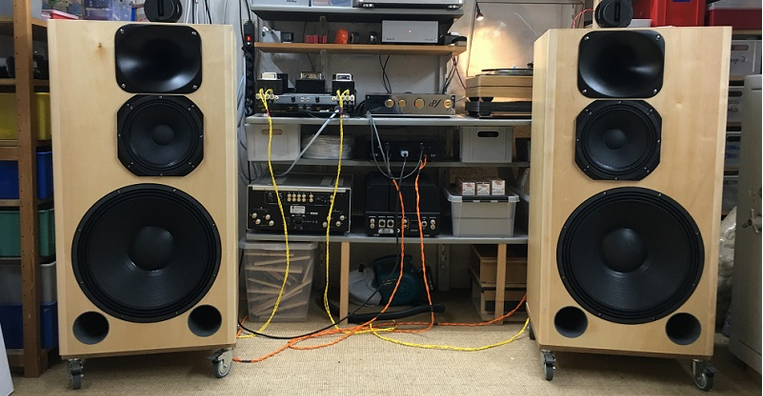
Click workshop image to go to The Loudspeaker #2 page.
This version is all sails set with Alumen-Z for the Midrange and Amber-Z
copper foil caps for the horn and super-tweeter. Cost pretty much a
fortune, but there will be sensible options too with Superior-Z for
midrange and Alumen-Z for horn and super-tweeter. But I need this to be
my ultimate reference in designing future speakers.
As pointed out on the TL-2 page, if you have room for #1, build this and
maybe add some of the features from #2 like improved bracing, etc. The
Fostex FT96H super-tweeter has been discontinued by Fostex, but there
are now six options for super-tweeter included, so take your pick.
I'll take some more photos of the TL-2 when I have done a proper stand
for my JBL 2405H super-tweeters. The kit will be ready for sale around
March 1st.